NR 222/ NR222 Exam 1 (New 2026/ 2027 Update) Health and
Wellness Guide |Questions & Answers| Grade A| 100% Correct
(Accurate Solutions)- Chamberlain.
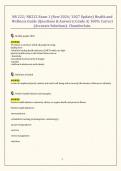
Q. Healthy people 2030
ANSWER
-Promotes a society in which all people live long,
healthy lives
-Identifies leading health indicators (LHI'S) which are high-
priority health issues in the United States such as:
- homicides
-household food insecurity & hunger
-suicides
-children & adolescents with obesity
Q. Definition of health
ANSWER
a state of complete physical, mental, and social well-being and not merely the absence of disease or infirmity
Q. Positive health behavior and examples:
ANSWER
Positive health behavior maintains, attains, or regains health and prevents illness.
Positive health behaviors:
-immunizations
-scheduled screening (mammograms, colonoscopy)
-proper sleep patterns
-exercise
-stress management
-nutrition
1
,Q. Negative health behaviors and examples:
ANSWER
Negative health behavior are practices that are harmful to health such as:
-smoking
-drinking
-risky sexual behaviors
-poor diets
-Medication refusal to necessary medications
Q. What is the health belief model?
ANSWER
This is a model that healthcare professionals understand factors influencing patient's perceptions, beliefs, and
behavior. This knowledge is used to plan care that will most effectively assist individuals in recognizing their
risk for disease, the significance of a disease, and taking action to prevent disease.
Example: A person who has a family with type 2 diabetes being more likely to get tested than someone without.
Q. What are the 3 components to the health belief model?
ANSWER
1.) A person's perception and susceptibility to an illness.
Example: a person with a family history of death from heart attacks recognizes there is a familial link to
coronary disease and perceives a personal link to heart disease.
2.) Individual perception of the seriousness of the illness. This is influenced by things like advice from family,
friends, medical professionals or mass media.
Example: A patient might not think their heart disease is serious, which can affect self-care.
3.) The likelihood a person will take preventive action like lifestyle changes, increase adherence to medical
therapies, or seek medical advice. Use this model to help you as a nurse understand the factors influencing the
patient's perception beliefs so you can plan care more effectively.
Q. What is self-efficacy?
ANSWER
Person's ability or willingness to be successful.
2
, Q. Health promotion model
ANSWER
-Person's pursuit of health and what motivates them to change.
-Directed at increasing a person's level of well-being, focusing on three areas:
-individual characteristics and experiences: what a person has experienced affects the persons actions toward
health.
-behavior-specific knowledge and affect: influences a patients motivation to change or adopt a healthy lifestyle.
-behavioral outcomes: you help a pt modify these variables through nursing interventions.
These personal characteristics interact with the environment to determine a person's motivation, attitudes,
and actions to engage in health-promoting behaviors.
Example of health promotion model
A patient quits smoking cold turkey bc their father dies of lung cancer=experience affecting behavior.
(motivation for change)
Q. Holistic Health Model
ANSWER
-Empower patients to engage in their own recovery and assume responsibility for health maintenance.
-Person interactions with emotional, spiritual, social, cultural, and physical aspects of their own wellness.
Example of holistic health model:
Complementary and alternative therapies such as reminiscence, therapeutic touch, homeopathy, music
therapy, guided imagery, and others
3
Wellness Guide |Questions & Answers| Grade A| 100% Correct
(Accurate Solutions)- Chamberlain.
Q. Healthy people 2030
ANSWER
-Promotes a society in which all people live long,
healthy lives
-Identifies leading health indicators (LHI'S) which are high-
priority health issues in the United States such as:
- homicides
-household food insecurity & hunger
-suicides
-children & adolescents with obesity
Q. Definition of health
ANSWER
a state of complete physical, mental, and social well-being and not merely the absence of disease or infirmity
Q. Positive health behavior and examples:
ANSWER
Positive health behavior maintains, attains, or regains health and prevents illness.
Positive health behaviors:
-immunizations
-scheduled screening (mammograms, colonoscopy)
-proper sleep patterns
-exercise
-stress management
-nutrition
1
,Q. Negative health behaviors and examples:
ANSWER
Negative health behavior are practices that are harmful to health such as:
-smoking
-drinking
-risky sexual behaviors
-poor diets
-Medication refusal to necessary medications
Q. What is the health belief model?
ANSWER
This is a model that healthcare professionals understand factors influencing patient's perceptions, beliefs, and
behavior. This knowledge is used to plan care that will most effectively assist individuals in recognizing their
risk for disease, the significance of a disease, and taking action to prevent disease.
Example: A person who has a family with type 2 diabetes being more likely to get tested than someone without.
Q. What are the 3 components to the health belief model?
ANSWER
1.) A person's perception and susceptibility to an illness.
Example: a person with a family history of death from heart attacks recognizes there is a familial link to
coronary disease and perceives a personal link to heart disease.
2.) Individual perception of the seriousness of the illness. This is influenced by things like advice from family,
friends, medical professionals or mass media.
Example: A patient might not think their heart disease is serious, which can affect self-care.
3.) The likelihood a person will take preventive action like lifestyle changes, increase adherence to medical
therapies, or seek medical advice. Use this model to help you as a nurse understand the factors influencing the
patient's perception beliefs so you can plan care more effectively.
Q. What is self-efficacy?
ANSWER
Person's ability or willingness to be successful.
2
, Q. Health promotion model
ANSWER
-Person's pursuit of health and what motivates them to change.
-Directed at increasing a person's level of well-being, focusing on three areas:
-individual characteristics and experiences: what a person has experienced affects the persons actions toward
health.
-behavior-specific knowledge and affect: influences a patients motivation to change or adopt a healthy lifestyle.
-behavioral outcomes: you help a pt modify these variables through nursing interventions.
These personal characteristics interact with the environment to determine a person's motivation, attitudes,
and actions to engage in health-promoting behaviors.
Example of health promotion model
A patient quits smoking cold turkey bc their father dies of lung cancer=experience affecting behavior.
(motivation for change)
Q. Holistic Health Model
ANSWER
-Empower patients to engage in their own recovery and assume responsibility for health maintenance.
-Person interactions with emotional, spiritual, social, cultural, and physical aspects of their own wellness.
Example of holistic health model:
Complementary and alternative therapies such as reminiscence, therapeutic touch, homeopathy, music
therapy, guided imagery, and others
3