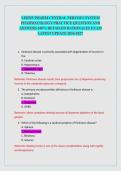
COMSAE Phase 1 Form ASA 108
Foundational Biomedical Sciences Exam
Practice Questions & [Verified Answers],
Plus Explained Rationales|2026 Latest
Update| Instant Download PDF
1. A 4-year-old boy presents with recurrent respiratory infections,
chronic diarrhea, and failure to thrive. Laboratory studies reveal
markedly decreased levels of all immunoglobulin classes. Flow
cytometry demonstrates absent mature B lymphocytes. Which
genetic defect is most likely responsible?
A. CD40 ligand deficiency
B. Bruton's tyrosine kinase mutation
C. Adenosine deaminase deficiency
D. IL-12 receptor mutation
Answer: B. Bruton's tyrosine kinase mutation
Rationale: X-linked agammaglobulinemia results from a mutation in
Bruton's tyrosine kinase, preventing B-cell maturation. Patients
develop recurrent bacterial and enteroviral infections after maternal
antibodies disappear. CD40L deficiency causes hyper-IgM syndrome,
ADA deficiency causes SCID, and IL-12 receptor defects impair Th1
responses.
2. A researcher administers a drug that selectively inhibits
phosphofructokinase-1. Which metabolic consequence is
expected?
,A. Increased glycolytic flux
B. Increased pyruvate production
C. Accumulation of fructose-6-phosphate
D. Increased ATP synthesis
Answer: C. Accumulation of fructose-6-phosphate
Rationale: Phosphofructokinase-1 catalyzes the rate-limiting step of
glycolysis. Inhibition causes upstream accumulation of fructose-6-
phosphate and glucose-6-phosphate while decreasing downstream
glycolytic intermediates and ATP production.
3. A 65-year-old man develops chest pain. Coronary angiography
demonstrates occlusion of the left anterior descending artery.
Which structure is most likely infarcted?
A. Posterior third of interventricular septum
B. Right atrium
C. Anterior wall of left ventricle
D. SA node
Answer: C. Anterior wall of left ventricle
Rationale: The LAD supplies the anterior left ventricle, anterior two-
thirds of the interventricular septum, and apex. Occlusion causes
anterior wall myocardial infarction, often producing severe ventricular
dysfunction.
4. A patient with chronic hypertension develops left ventricular
hypertrophy. Which adaptation primarily accounts for increased
wall thickness?
A. Hyperplasia of cardiomyocytes
B. Hypertrophy through sarcomere addition in parallel
,C. Increased fibroblast proliferation alone
D. Sarcomere addition in series
Answer: B. Hypertrophy through sarcomere addition in parallel
Rationale: Pressure overload stimulates concentric hypertrophy
through parallel sarcomere addition. Hyperplasia does not occur
significantly in adult cardiomyocytes. Sarcomeres added in series are
characteristic of volume overload hypertrophy.
5. A neonate develops vomiting and lethargy after protein feeding.
Laboratory analysis reveals elevated ammonia and increased
orotic acid. Which enzyme deficiency is most likely?
A. Ornithine transcarbamylase
B. Carbamoyl phosphate synthetase I
C. Arginase
D. Argininosuccinate lyase
Answer: A. Ornithine transcarbamylase
Rationale: OTC deficiency is the most common urea cycle disorder.
Excess carbamoyl phosphate enters pyrimidine synthesis, increasing
orotic acid. Hyperammonemia causes neurologic dysfunction and
vomiting.
6. A patient develops nephrotic syndrome due to minimal change
disease. Which cytokine is most strongly implicated in podocyte
injury?
A. IL-2
B. TNF-α
C. IFN-γ
D. T-cell-derived cytokines causing foot process effacement
Answer: D. T-cell-derived cytokines causing foot process effacement
, Rationale: Minimal change disease is associated with T-cell
dysfunction and cytokine-mediated podocyte injury leading to diffuse
foot process effacement and selective albuminuria.
7. A woman develops fever, hypotension, and diffuse rash after
prolonged tampon use. The responsible toxin acts through which
mechanism?
A. Inhibition of EF-2
B. Activation of adenylate cyclase
C. Superantigen-mediated T-cell activation
D. Inhibition of acetylcholine release
Answer: C. Superantigen-mediated T-cell activation
Rationale: Toxic shock syndrome toxin-1 from Staphylococcus aureus
acts as a superantigen, cross-linking MHC II and T-cell receptors,
producing massive cytokine release and shock.
8. A patient receives atropine. Which physiologic effect is expected?
A. Miosis
B. Increased salivation
C. Bronchoconstriction
D. Tachycardia
Answer: D. Tachycardia
Rationale: Atropine is a competitive muscarinic antagonist. It blocks
vagal influence on the heart, increasing heart rate while decreasing
secretions and causing mydriasis.
9. A child has recurrent episodes of painful vaso-occlusive crises.
Polymerization of which molecule initiates the pathogenesis?
A. HbA
B. HbF
Foundational Biomedical Sciences Exam
Practice Questions & [Verified Answers],
Plus Explained Rationales|2026 Latest
Update| Instant Download PDF
1. A 4-year-old boy presents with recurrent respiratory infections,
chronic diarrhea, and failure to thrive. Laboratory studies reveal
markedly decreased levels of all immunoglobulin classes. Flow
cytometry demonstrates absent mature B lymphocytes. Which
genetic defect is most likely responsible?
A. CD40 ligand deficiency
B. Bruton's tyrosine kinase mutation
C. Adenosine deaminase deficiency
D. IL-12 receptor mutation
Answer: B. Bruton's tyrosine kinase mutation
Rationale: X-linked agammaglobulinemia results from a mutation in
Bruton's tyrosine kinase, preventing B-cell maturation. Patients
develop recurrent bacterial and enteroviral infections after maternal
antibodies disappear. CD40L deficiency causes hyper-IgM syndrome,
ADA deficiency causes SCID, and IL-12 receptor defects impair Th1
responses.
2. A researcher administers a drug that selectively inhibits
phosphofructokinase-1. Which metabolic consequence is
expected?
,A. Increased glycolytic flux
B. Increased pyruvate production
C. Accumulation of fructose-6-phosphate
D. Increased ATP synthesis
Answer: C. Accumulation of fructose-6-phosphate
Rationale: Phosphofructokinase-1 catalyzes the rate-limiting step of
glycolysis. Inhibition causes upstream accumulation of fructose-6-
phosphate and glucose-6-phosphate while decreasing downstream
glycolytic intermediates and ATP production.
3. A 65-year-old man develops chest pain. Coronary angiography
demonstrates occlusion of the left anterior descending artery.
Which structure is most likely infarcted?
A. Posterior third of interventricular septum
B. Right atrium
C. Anterior wall of left ventricle
D. SA node
Answer: C. Anterior wall of left ventricle
Rationale: The LAD supplies the anterior left ventricle, anterior two-
thirds of the interventricular septum, and apex. Occlusion causes
anterior wall myocardial infarction, often producing severe ventricular
dysfunction.
4. A patient with chronic hypertension develops left ventricular
hypertrophy. Which adaptation primarily accounts for increased
wall thickness?
A. Hyperplasia of cardiomyocytes
B. Hypertrophy through sarcomere addition in parallel
,C. Increased fibroblast proliferation alone
D. Sarcomere addition in series
Answer: B. Hypertrophy through sarcomere addition in parallel
Rationale: Pressure overload stimulates concentric hypertrophy
through parallel sarcomere addition. Hyperplasia does not occur
significantly in adult cardiomyocytes. Sarcomeres added in series are
characteristic of volume overload hypertrophy.
5. A neonate develops vomiting and lethargy after protein feeding.
Laboratory analysis reveals elevated ammonia and increased
orotic acid. Which enzyme deficiency is most likely?
A. Ornithine transcarbamylase
B. Carbamoyl phosphate synthetase I
C. Arginase
D. Argininosuccinate lyase
Answer: A. Ornithine transcarbamylase
Rationale: OTC deficiency is the most common urea cycle disorder.
Excess carbamoyl phosphate enters pyrimidine synthesis, increasing
orotic acid. Hyperammonemia causes neurologic dysfunction and
vomiting.
6. A patient develops nephrotic syndrome due to minimal change
disease. Which cytokine is most strongly implicated in podocyte
injury?
A. IL-2
B. TNF-α
C. IFN-γ
D. T-cell-derived cytokines causing foot process effacement
Answer: D. T-cell-derived cytokines causing foot process effacement
, Rationale: Minimal change disease is associated with T-cell
dysfunction and cytokine-mediated podocyte injury leading to diffuse
foot process effacement and selective albuminuria.
7. A woman develops fever, hypotension, and diffuse rash after
prolonged tampon use. The responsible toxin acts through which
mechanism?
A. Inhibition of EF-2
B. Activation of adenylate cyclase
C. Superantigen-mediated T-cell activation
D. Inhibition of acetylcholine release
Answer: C. Superantigen-mediated T-cell activation
Rationale: Toxic shock syndrome toxin-1 from Staphylococcus aureus
acts as a superantigen, cross-linking MHC II and T-cell receptors,
producing massive cytokine release and shock.
8. A patient receives atropine. Which physiologic effect is expected?
A. Miosis
B. Increased salivation
C. Bronchoconstriction
D. Tachycardia
Answer: D. Tachycardia
Rationale: Atropine is a competitive muscarinic antagonist. It blocks
vagal influence on the heart, increasing heart rate while decreasing
secretions and causing mydriasis.
9. A child has recurrent episodes of painful vaso-occlusive crises.
Polymerization of which molecule initiates the pathogenesis?
A. HbA
B. HbF