Introduction
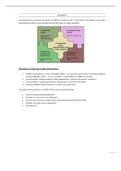
Comparing means to examine or look for the difference between two or more things. The problem is that public
administration itself is a multi-disciplinary field that draws on other disciplines:
Difficulties for comparing in public administration:
1. Problem of equivalence, or the ‘travelling problem”: can concepts and terms be transferred to difficult
context (language, culture, …)? E.g. ‘corruption’ may be different in different countries.
2. Level of analysis: National systems? Public organizations? Policies? Civil servant’s behavior?
3. Units of analysis: Comparing ministries? Ombudsmen? Structures? Processes?
4. Limited availability of data with which to make real comparisons.
E.g. government spending as % of GDP? What is government spending?
Cost for the governmental apparatus?
Transfers in social security to individuals?
Transfer of tax-money to private sector organizations performing public tasks?
Subsidies to private sector organization?
Tax deduction?
1
, Theories and analytical approaches
There are 2 important analytical dimensions that we need to be able to understand, in order to be able to
compare countries:
1. ADMINISTRATIVE TRADITIONS AND CULTURES
The legal tradition of a country has an influence on the dominant values in administrative action and the relation
between politics, citizens and administration. There are 2 clusters: Continental European rule-of-law and the
Anglo-Saxon public interest culture. The affiliation with these groups is shaped by the legal tradition and legal
systems that are largely path dependent. The tradition of a country influences the dominant values in
administrative action and the way in which policies are implemented, as well as relationships between politics,
administration, and citizens (also vice versa: the administrative practices shape a country’s law system).
Anglo-Saxon culture: no law books that drive administrative action. There is no comprehensive
codification of legal rules, but they use political programs that fit the ideology of the government
flexible.
Common law
Continental European culture: have law books, constitution, ministerial acts, etc. that form the basis of
administrative action. These explain what legal servants should do and how derived from the Roman
tradition to organize government through the rule of law.
Civil law.
There are 4 families: common law, Roman-French, Roman-German and Roman-Scandinavian.
2
, 2. POLITICAL INSTITUTIONAL FEATURES
Vertical dispersion of power: sharing authority between levels of government centralized versus
decentralized: is the authority concentrated on the central level or dispersed through different levels of
government. It is based on the structure of state and administration and the degree of centralization or
decentralization of public administration and the relationship between central(ized) and subnational-
decentralized local government.
1. Unitary state and centralized (France).
2. Unitary states and decentralized (UK).
3. Federal states (Belgium, USA).
Be: federal, provinces, regions and municipalities that have their own responsibilities that are
constitutionally organized.
Type of government: how are governments organized via democratically elections? This depends partly on the
electoral system. The more you move down the list, the more consultative and consensus oriented the system.
1. Single party, minimal-winning system (1 party more than 50%).
UK: when one party wins more than 50% of the votes, they become the government.
2. Minimal-winning coalition (2 or more parties more than 50%).
Belgium: coalitions.
3. Minority cabinets (govt less than 50%)
4. Oversized executives (‘grand coalitions’)
The type of government a country has, influences the way they govern: in Belgium they have to negotiated all
the time and find consensus to issue policies, while in the UK they have the power to do what they want.
Combining the type of government and the vertical dispersion (Lijphart): this is an intermediate between the
type of government and the vertical dispersion of power.
In comparative administrative reform research, the standard classification of countries as either majority or
consensual democracies, is granted special explanatory power with
regard to public management reforms. This has proven to be an
important starting condition for NPM reforms in the different
countries.
It is easier to reach a public sector reform in the UK, because the
one ruling party doesn’t have to take into account other parties and
they don't have to bother about other levels of government,
because the power is centralized.
3
, Idealtypical models of Public Administration in Europe:
There are five models based on the administrative structure and organization of a country and the administrative
tradition and culture.
SCANDINAVIAN MODEL – norway, denmark, finland, sweden
These Nordic countries display significant overlap with continental European Federal countries as they have a
Roman-Scandinavian legal tradition (importance of statutory law), a decentralized government and bureaucracy
(Napoleonic tradition) and and a strong and autonomous local government (responsibilities are allocated to the
central and local administrative level).
However, there is a crucial difference in the Nordic administrative profile: the openness in the public service
career system and easy access for citizens to administrative system (user democracy, freedom of info,
participation, …) e.g. online consultations or online voting is popular in countries with the Scandinavian model,
the administration also interacts with citizens by means of the internet.
CENTRAL AND SOUTH-EASTERN EUROPEAN MODEL – poland, hungary, bulgaria, romania
Heritage of Soviet Union: centralized party rule, no separation of powers. Subnational administration acted as
local offices of the state. Partisanship of members of administration. After 1990 these countries transformed into
democracies, but they are still different (re: pre-communist traditions):
Eastern countries like Hungary and Poland were traditionally shaped by the German (Prussia, Austria) tradition.
South-East countries (Bulgaria, Romania) were traditionally under Ottoman or Tsarist rule. After 1990 their
transformation was determined by post-communist elites.
The system transformation was affected by the abolishment of the socialist state organization and the re-
introduction of the continental European constitutional, state and administrative model. But the legacy of the
Soviet tradition in the individual countries developed quite differently.
CONTINENTAL EUROPEAN NAPOLEONIC MODEL - France
4
Comparing means to examine or look for the difference between two or more things. The problem is that public
administration itself is a multi-disciplinary field that draws on other disciplines:
Difficulties for comparing in public administration:
1. Problem of equivalence, or the ‘travelling problem”: can concepts and terms be transferred to difficult
context (language, culture, …)? E.g. ‘corruption’ may be different in different countries.
2. Level of analysis: National systems? Public organizations? Policies? Civil servant’s behavior?
3. Units of analysis: Comparing ministries? Ombudsmen? Structures? Processes?
4. Limited availability of data with which to make real comparisons.
E.g. government spending as % of GDP? What is government spending?
Cost for the governmental apparatus?
Transfers in social security to individuals?
Transfer of tax-money to private sector organizations performing public tasks?
Subsidies to private sector organization?
Tax deduction?
1
, Theories and analytical approaches
There are 2 important analytical dimensions that we need to be able to understand, in order to be able to
compare countries:
1. ADMINISTRATIVE TRADITIONS AND CULTURES
The legal tradition of a country has an influence on the dominant values in administrative action and the relation
between politics, citizens and administration. There are 2 clusters: Continental European rule-of-law and the
Anglo-Saxon public interest culture. The affiliation with these groups is shaped by the legal tradition and legal
systems that are largely path dependent. The tradition of a country influences the dominant values in
administrative action and the way in which policies are implemented, as well as relationships between politics,
administration, and citizens (also vice versa: the administrative practices shape a country’s law system).
Anglo-Saxon culture: no law books that drive administrative action. There is no comprehensive
codification of legal rules, but they use political programs that fit the ideology of the government
flexible.
Common law
Continental European culture: have law books, constitution, ministerial acts, etc. that form the basis of
administrative action. These explain what legal servants should do and how derived from the Roman
tradition to organize government through the rule of law.
Civil law.
There are 4 families: common law, Roman-French, Roman-German and Roman-Scandinavian.
2
, 2. POLITICAL INSTITUTIONAL FEATURES
Vertical dispersion of power: sharing authority between levels of government centralized versus
decentralized: is the authority concentrated on the central level or dispersed through different levels of
government. It is based on the structure of state and administration and the degree of centralization or
decentralization of public administration and the relationship between central(ized) and subnational-
decentralized local government.
1. Unitary state and centralized (France).
2. Unitary states and decentralized (UK).
3. Federal states (Belgium, USA).
Be: federal, provinces, regions and municipalities that have their own responsibilities that are
constitutionally organized.
Type of government: how are governments organized via democratically elections? This depends partly on the
electoral system. The more you move down the list, the more consultative and consensus oriented the system.
1. Single party, minimal-winning system (1 party more than 50%).
UK: when one party wins more than 50% of the votes, they become the government.
2. Minimal-winning coalition (2 or more parties more than 50%).
Belgium: coalitions.
3. Minority cabinets (govt less than 50%)
4. Oversized executives (‘grand coalitions’)
The type of government a country has, influences the way they govern: in Belgium they have to negotiated all
the time and find consensus to issue policies, while in the UK they have the power to do what they want.
Combining the type of government and the vertical dispersion (Lijphart): this is an intermediate between the
type of government and the vertical dispersion of power.
In comparative administrative reform research, the standard classification of countries as either majority or
consensual democracies, is granted special explanatory power with
regard to public management reforms. This has proven to be an
important starting condition for NPM reforms in the different
countries.
It is easier to reach a public sector reform in the UK, because the
one ruling party doesn’t have to take into account other parties and
they don't have to bother about other levels of government,
because the power is centralized.
3
, Idealtypical models of Public Administration in Europe:
There are five models based on the administrative structure and organization of a country and the administrative
tradition and culture.
SCANDINAVIAN MODEL – norway, denmark, finland, sweden
These Nordic countries display significant overlap with continental European Federal countries as they have a
Roman-Scandinavian legal tradition (importance of statutory law), a decentralized government and bureaucracy
(Napoleonic tradition) and and a strong and autonomous local government (responsibilities are allocated to the
central and local administrative level).
However, there is a crucial difference in the Nordic administrative profile: the openness in the public service
career system and easy access for citizens to administrative system (user democracy, freedom of info,
participation, …) e.g. online consultations or online voting is popular in countries with the Scandinavian model,
the administration also interacts with citizens by means of the internet.
CENTRAL AND SOUTH-EASTERN EUROPEAN MODEL – poland, hungary, bulgaria, romania
Heritage of Soviet Union: centralized party rule, no separation of powers. Subnational administration acted as
local offices of the state. Partisanship of members of administration. After 1990 these countries transformed into
democracies, but they are still different (re: pre-communist traditions):
Eastern countries like Hungary and Poland were traditionally shaped by the German (Prussia, Austria) tradition.
South-East countries (Bulgaria, Romania) were traditionally under Ottoman or Tsarist rule. After 1990 their
transformation was determined by post-communist elites.
The system transformation was affected by the abolishment of the socialist state organization and the re-
introduction of the continental European constitutional, state and administrative model. But the legacy of the
Soviet tradition in the individual countries developed quite differently.
CONTINENTAL EUROPEAN NAPOLEONIC MODEL - France
4