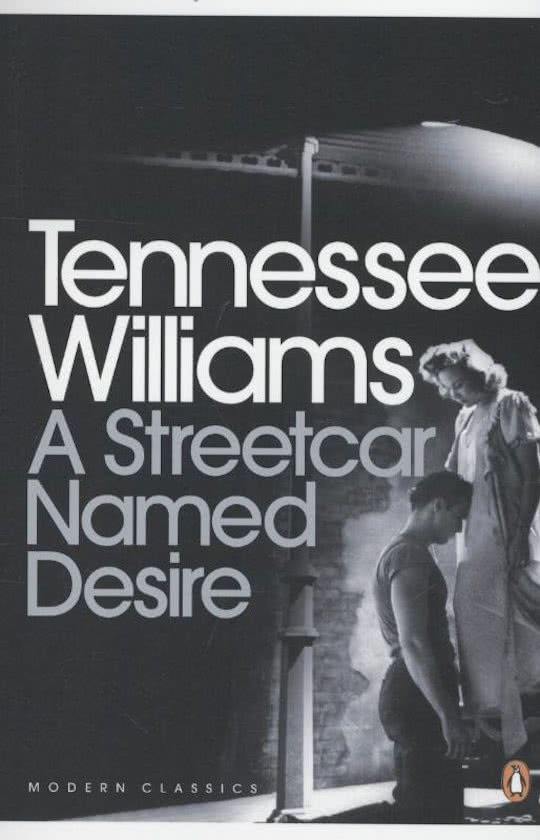
Streetcar lit crit
Critic McDonough
- ‘Streetcar offers perhaps the best example of the complex male positions that
Williams creates’
- ‘The sensual brute Stanley, Blanche’s young husband Allan and the naïve Mitch
together epitomises the conflicting masculine identities available in Williams’ stage
world’
- ‘Stanley’s assertiveness is clearly dependent on his relationships with Stella and his
ability to crush opposition’
Critic McGlinn
- ‘Her (Stella) refusal to accept Blanche’s story of the rape is a commitment to self-
preservation rather than love…’
- ‘Stanley wishes to destroy Blanche’s composure to make her recognise that she is
the same as he is, a sexual animal’
- ‘The conflict between Blanche and Stanley allegorises the struggle between
effeminate culture and masculine libido’
Critic Koprice
- ‘Eunice and Steve are the facsimile of a dysfunctional relationship which normalises
Stanley’s abuse’
- ‘The small part of Eunice signals complex feminist issues and draws attention to the
plight of battered women’
- ‘Stella is a refined girl who has found a kind salvation or realisation but at a terrific
price’
Critic Shepherd
- ‘Stanley gets away with domestic abuse every time’
- ‘The multicultural characters never go beyond their stereotype’
- ‘Blanche is reputedly just as promiscuous as Stanley, in fact, they are not so different
as they are initially seen’
Critic Coult
- ‘Williams’ phrases create an atmosphere and a sensual grounding for the complex
interactions of the characters’
- ‘[Blanche] is a relic of a time before civil war divided America’
- ‘Like the summer atmosphere above Louisiana where it is set, the culture was full of
crackling, unresolved energies’
Critic Tapp
- ‘Blanche DuBois is a victim of the mythology of the Southern Belle’
- ‘Blanche is a delicate and sensitive woman, pushed into insanity by brutish
environment presided over by chief ape-man Stanley’
- ‘Williams’ whole career can be seen as an attack on a society that elevates crude
energy and masculine materialism above delicacy of feeling’
Critic McDonough
- ‘Streetcar offers perhaps the best example of the complex male positions that
Williams creates’
- ‘The sensual brute Stanley, Blanche’s young husband Allan and the naïve Mitch
together epitomises the conflicting masculine identities available in Williams’ stage
world’
- ‘Stanley’s assertiveness is clearly dependent on his relationships with Stella and his
ability to crush opposition’
Critic McGlinn
- ‘Her (Stella) refusal to accept Blanche’s story of the rape is a commitment to self-
preservation rather than love…’
- ‘Stanley wishes to destroy Blanche’s composure to make her recognise that she is
the same as he is, a sexual animal’
- ‘The conflict between Blanche and Stanley allegorises the struggle between
effeminate culture and masculine libido’
Critic Koprice
- ‘Eunice and Steve are the facsimile of a dysfunctional relationship which normalises
Stanley’s abuse’
- ‘The small part of Eunice signals complex feminist issues and draws attention to the
plight of battered women’
- ‘Stella is a refined girl who has found a kind salvation or realisation but at a terrific
price’
Critic Shepherd
- ‘Stanley gets away with domestic abuse every time’
- ‘The multicultural characters never go beyond their stereotype’
- ‘Blanche is reputedly just as promiscuous as Stanley, in fact, they are not so different
as they are initially seen’
Critic Coult
- ‘Williams’ phrases create an atmosphere and a sensual grounding for the complex
interactions of the characters’
- ‘[Blanche] is a relic of a time before civil war divided America’
- ‘Like the summer atmosphere above Louisiana where it is set, the culture was full of
crackling, unresolved energies’
Critic Tapp
- ‘Blanche DuBois is a victim of the mythology of the Southern Belle’
- ‘Blanche is a delicate and sensitive woman, pushed into insanity by brutish
environment presided over by chief ape-man Stanley’
- ‘Williams’ whole career can be seen as an attack on a society that elevates crude
energy and masculine materialism above delicacy of feeling’