1
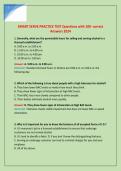
SMART SERVE PRACTICE TEST Questions with 100- correct
Answers 2024
1. Generally, what are the permissible hours for selling and serving alcohol in a
licensed establishment?
A. 9:00 a.m. to 2:00 a.m.
B. 11:00 a.m. to 6:00 a.m.
C. 10:00 a.m. to 4:00 pm
D. 10:00 am to 1:00 am
Answer: A. 9:00 a.m. to 2:00 a.m.
Rationale: Standard licensed hours in Ontario are 9:00 a.m. to 2:00 a.m. the
following day.
2. Which of the following is true about people with a high tolerance for alcohol?
A. They have lower BAC levels no matter how much they drink.
B. They show fewer signs of intoxication at high BAC levels.
C. Their BAC rises more slowly compared to other people.
D. Their bodies eliminate alcohol more quickly.
Answer: B. They show fewer signs of intoxication at high BAC levels.
Rationale: Tolerance masks visible impairment but does not lower BAC or speed
elimination.
3. Why is it important for you to know the features of all accepted forms of I.D.?
A. It's everyone's job in a licensed establishment to ensure that underage
customers are not served alcohol.
B. It's hard to identify a fake I.D. if you don't know the distinguishing features.
C. Serving an underage customer can lead to criminal charges for you and your
employer.
D. All of the above.
,Answer: D. All of the above.
Rationale: Knowing ID features supports shared responsibility, fake detection, and
legal compliance.
4. Which of the following statements is true in regards to BAC?
A. A BAC chart is the only way to find out how much a person can safely drink.
B. If the alcohol content is higher than a Standard Drink, BAC calculations will
need to be adjusted.
C. Body type and sex do not make a difference when determining a customer’s
BAC level.
D. Intoxication begins with the fourth drink.
Answer: B. If the alcohol content is higher than a Standard Drink, BAC
calculations will need to be adjusted.
Rationale: Stronger drinks contain more standard drinks and must be calculated
accordingly.
5. Failure to comply with the Liquor Licence Act could result in which of the
following? (Select all that apply.)
A. Suspension of a liquor licence by the AGCO.
B. Disciplinary actions by the AGCO.
C. Charges by the LCBO.
D. Monetary penalties imposed by the AGCO.
Answer: A, B, and D.
Rationale: AGCO enforces the Act; LCBO is a retailer, not an enforcement body.
6. Which of the following are permissible hours for the sale of alcohol in a
grocery store?
A. Sunday, 11:00 am to 6:00 pm.
B. As long as the grocery store is open.
C. Monday to Sunday, 9:00 am to 9:00 pm.
D. Monday to Sunday, 9:00 am to 11:00 pm.
, Answer: C. Monday to Sunday, 9:00 am to 9:00 pm.
Rationale: Standard grocery store hours in Ontario are 9 a.m. to 9 p.m. daily.
7. To be acceptable, identification must meet which of the following criteria?
A. Be issued by the government.
B. Include the person's photo.
C. Show the person's date of birth.
D. Be current (not expired).
Answer: A, B, C, and D (all of the above).
Rationale: Valid ID must be government-issued, have a photo, show DOB, and be
unexpired.
Questions 8–100 (New Questions)
8. What is the legal drinking age in Ontario?
A. 18 years
B. 19 years
C. 21 years
D. 20 years
Answer: B. 19 years.
Rationale: The legal drinking age in Ontario is 19. Anyone under 19 cannot
purchase, consume, or possess alcohol.
9. Which of the following is NOT a valid form of ID for alcohol purchase in
Ontario?
A. Ontario Driver’s Licence
B. Canadian Passport
C. Student ID card
D. Canadian Armed Forces ID
SMART SERVE PRACTICE TEST Questions with 100- correct
Answers 2024
1. Generally, what are the permissible hours for selling and serving alcohol in a
licensed establishment?
A. 9:00 a.m. to 2:00 a.m.
B. 11:00 a.m. to 6:00 a.m.
C. 10:00 a.m. to 4:00 pm
D. 10:00 am to 1:00 am
Answer: A. 9:00 a.m. to 2:00 a.m.
Rationale: Standard licensed hours in Ontario are 9:00 a.m. to 2:00 a.m. the
following day.
2. Which of the following is true about people with a high tolerance for alcohol?
A. They have lower BAC levels no matter how much they drink.
B. They show fewer signs of intoxication at high BAC levels.
C. Their BAC rises more slowly compared to other people.
D. Their bodies eliminate alcohol more quickly.
Answer: B. They show fewer signs of intoxication at high BAC levels.
Rationale: Tolerance masks visible impairment but does not lower BAC or speed
elimination.
3. Why is it important for you to know the features of all accepted forms of I.D.?
A. It's everyone's job in a licensed establishment to ensure that underage
customers are not served alcohol.
B. It's hard to identify a fake I.D. if you don't know the distinguishing features.
C. Serving an underage customer can lead to criminal charges for you and your
employer.
D. All of the above.
,Answer: D. All of the above.
Rationale: Knowing ID features supports shared responsibility, fake detection, and
legal compliance.
4. Which of the following statements is true in regards to BAC?
A. A BAC chart is the only way to find out how much a person can safely drink.
B. If the alcohol content is higher than a Standard Drink, BAC calculations will
need to be adjusted.
C. Body type and sex do not make a difference when determining a customer’s
BAC level.
D. Intoxication begins with the fourth drink.
Answer: B. If the alcohol content is higher than a Standard Drink, BAC
calculations will need to be adjusted.
Rationale: Stronger drinks contain more standard drinks and must be calculated
accordingly.
5. Failure to comply with the Liquor Licence Act could result in which of the
following? (Select all that apply.)
A. Suspension of a liquor licence by the AGCO.
B. Disciplinary actions by the AGCO.
C. Charges by the LCBO.
D. Monetary penalties imposed by the AGCO.
Answer: A, B, and D.
Rationale: AGCO enforces the Act; LCBO is a retailer, not an enforcement body.
6. Which of the following are permissible hours for the sale of alcohol in a
grocery store?
A. Sunday, 11:00 am to 6:00 pm.
B. As long as the grocery store is open.
C. Monday to Sunday, 9:00 am to 9:00 pm.
D. Monday to Sunday, 9:00 am to 11:00 pm.
, Answer: C. Monday to Sunday, 9:00 am to 9:00 pm.
Rationale: Standard grocery store hours in Ontario are 9 a.m. to 9 p.m. daily.
7. To be acceptable, identification must meet which of the following criteria?
A. Be issued by the government.
B. Include the person's photo.
C. Show the person's date of birth.
D. Be current (not expired).
Answer: A, B, C, and D (all of the above).
Rationale: Valid ID must be government-issued, have a photo, show DOB, and be
unexpired.
Questions 8–100 (New Questions)
8. What is the legal drinking age in Ontario?
A. 18 years
B. 19 years
C. 21 years
D. 20 years
Answer: B. 19 years.
Rationale: The legal drinking age in Ontario is 19. Anyone under 19 cannot
purchase, consume, or possess alcohol.
9. Which of the following is NOT a valid form of ID for alcohol purchase in
Ontario?
A. Ontario Driver’s Licence
B. Canadian Passport
C. Student ID card
D. Canadian Armed Forces ID