

Escrito por estudiantes que aprobaron Inmediatamente disponible después del pago Leer en línea o como PDF ¿Documento equivocado? Cámbialo gratis 4,6 TrustPilot
logo-home
Document preview thumbnail
Vista previa 3 fuera de 25 páginas
Examen

NR 341 Pharmacology CJE Exam 2026 | 250+ Questions & Answers | Cardiovascular Drugs, GI Medications, Antidotes, Beta Blockers, ACE Inhibitors & NCLEX Pharmacology Review

Document preview thumbnail
Vista previa 3 fuera de 25 páginas

Master NR 341 Pharmacology with this comprehensive collection of more than 250 exam-focused questions and answers covering the most frequently tested medication classifications, mechanisms of action, therapeutic uses, adverse effects, contraindications, nursing interventions, patient teaching, antidotes, and NCLEX-style pharmacology concepts. This study guide is specifically designed to help nursing students develop a strong understanding of safe medication administration, clinical judgment, and pharmacotherapeutic principles essential for success in pharmacology courses and nursing examinations. The material provides extensive coverage of cardiovascular pharmacology, including antihypertensive agents, ACE inhibitors, angiotensin receptor blockers (ARBs), beta blockers, alpha-2 adrenergic agonists, nitrates, anticoagulants, and lipid-lowering medications. Students will review medication suffixes, drug classifications, mechanisms of action, therapeutic indications, adverse reactions, contraindications, patient education requirements, and important nursing assessments associated with cardiovascular drug therapy. A major focus of the guide is antihypertensive therapy, including ACE inhibitors such as lisinopril and enalapril, ARBs such as losartan and valsartan, beta blockers including metoprolol and propranolol, and alpha-2 agonists such as clonidine and methyldopa. High-yield concepts include orthostatic hypotension, rebound hypertension, angioedema, hyperkalemia, bradycardia, bronchospasm, medication tapering, patient safety precautions, and medication-specific nursing considerations frequently tested in nursing school and NCLEX examinations. The document also includes detailed review of gastrointestinal pharmacology, including proton pump inhibitors (PPIs), H2 receptor antagonists, antacids, and prokinetic agents such as metoclopramide. Students will strengthen their understanding of acid suppression therapy, GERD management, peptic ulcer disease, H. pylori treatment, gastroparesis, nausea and vomiting management, extrapyramidal symptoms, tardive dyskinesia, neuroleptic malignant syndrome, and long-term complications associated with commonly prescribed gastrointestinal medications. Extensive pharmacology memorization aids are included throughout the document, covering medication suffixes and naming patterns for dozens of drug classes including statins, anticoagulants, thrombolytics, corticosteroids, benzodiazepines, SSRIs, TCAs, antifungals, antivirals, beta-2 agonists, PDE-5 inhibitors, antiarrhythmics, bisphosphonates, and antidiabetic medications. These pattern-recognition strategies help students quickly identify medication classes and predict pharmacologic actions on nursing examinations. The guide further reviews essential antidotes and toxicology concepts, including emergency reversal agents for opioid overdose, warfarin toxicity, heparin toxicity, digoxin toxicity, acetaminophen poisoning, benzodiazepine overdose, beta blocker overdose, calcium channel blocker toxicity, insulin reactions, aspirin toxicity, iron poisoning, and cholinergic crises. These high-priority safety topics are fundamental for medication administration, emergency nursing, and NCLEX preparation. This resource is especially valuable for: NR 341 Pharmacology students Associate Degree Nursing (ADN) students Bachelor of Science in Nursing (BSN) students Accelerated BSN (ABSN) students Practical Nursing (PN/LPN) students Registered Nursing (RN) students NCLEX-RN candidates NCLEX-PN candidates HESI Pharmacology Exam candidates ATI Pharmacology Review students Nursing remediation students Health Sciences and Allied Health students The content aligns with leading pharmacology and nursing education references, including: Lilley, L. L., Collins, S. R., & Snyder, J. S. Pharmacology and the Nursing Process. Vallerand, A. H., Sanoski, C. A., & Quiring, C. Davis's Drug Guide for Nurses. Lehne, R. A. Lehne's Pharmacology for Nursing Care. ATI Nursing Education. Pharmacology Review Module. Elsevier. HESI Comprehensive Review for the NCLEX-RN® Examination. National Council of State Boards of Nursing (NCSBN). NCLEX-RN Test Plan. Katzung, B. G. Basic and Clinical Pharmacology. By reviewing these high-yield pharmacology questions, medication classifications, antidotes, nursing interventions, and patient teaching points, students can improve medication safety knowledge, strengthen clinical decision-making skills, enhance NCLEX readiness, and build confidence for pharmacology examinations, nursing school assessments, HESI testing, ATI evaluations, and professional nursing practice. Keywords NR 341 Pharmacology, Pharmacology CJE Exam 2026, Pharmacology Questions and Answers, Nursing Pharmacology Study Guide, NCLEX Pharmacology Review, HESI Pharmacology Exam, ATI Pharmacology, Antihypertensive Medications, Beta Blockers, Metoprolol, Propranolol, ACE Inhibitors, Lisinopril, Enalapril, ARBs, Losartan, Valsartan, Alpha 2 Agonists, Clonidine, Methyldopa, Cardiovascular Pharmacology, Orthostatic Hypotension, Rebound Hypertension, Angioedema, Hyperkalemia, Antidotes Nursing, Naloxone, Vitamin K, Protamine Sulfate, Digifab, Flumazenil, Pharmacology Drug Suffixes, Medication Classifications, Gastrointestinal Pharmacology, Proton Pump Inhibitors, Omeprazole, Pantoprazole, H2 Blockers, Famotidine, Cimetidine, Metoclopramide, Reglan, Tardive Dyskinesia, Neuroleptic Malignant Syndrome, Antacids, GERD Medications, Peptic Ulcer Treatment, Statins, Hyperlipidemia, Rhabdomyolysis, Medication Safety, Nursing Drug Calculations, Nursing Pharmacology Notes

Vista previa del contenido

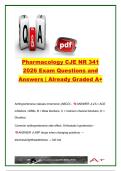
Pharmacology CJE NR 341
2026 Exam Questions and
Answers | Already Graded A+


Antihypertensive classes mnemonic (ABCD) - ANSWER ✔✔A = ACE

inhibitors / ARBs, B = Beta blockers, C = Calcium channel blockers, D =

Diuretics

Common antihypertensive side effect: Orthostatic hypotension -

ANSWER ✔✔BP drops when changing positions →

dizziness/lightheadedness → fall risk

,Prevent orthostatic hypotension teaching - ANSWER ✔✔Change

positions slowly; sit at edge of bed & dangle feet 30-60 sec before

standing

Common antihypertensive side effect: Rebound hypertension -

ANSWER ✔✔Sudden stopping causes BP to "bounce back" to

dangerously high levels


Teaching: stopping antihypertensives - ANSWER ✔✔NEVER stop

abruptly → must be tapered/weaned down slowly


Beta blockers suffix - ANSWER ✔✔-olol


Beta blocker classification - ANSWER ✔✔Antihypertensive / cardiac

med


Common beta blocker examples - ANSWER ✔✔metoprolol,

propranolol, nadolol, atenolol, carvedilol, acebutolol


Metoprolol trade names - ANSWER ✔✔Lopressor, Toprol XL


Propranolol trade name - ANSWER ✔✔Inderal


Nadolol trade name - ANSWER ✔✔Corgard


Atenolol trade name - ANSWER ✔✔Tenormin


Carvedilol trade name - ANSWER ✔✔Coreg

, Acebutolol trade name - ANSWER ✔✔Sectral


Beta blocker use: hypertension - ANSWER ✔✔Lowers BP by

reducing cardiac workload


Beta blocker use: tachycardia/SVT - ANSWER ✔✔Slows HR and

reduces conduction


Beta blocker use: stable angina - ANSWER ✔✔Decreases

myocardial oxygen demand


Beta blocker use: chronic compensated heart failure - ANSWER

✔✔Improves outcomes when stable (NOT for acute HF)


Beta blocker use: dysrhythmias - ANSWER ✔✔Used in rhythm

control like A-fib


Beta blocker use: anxiety - ANSWER ✔✔Controls physical symptoms

(tremor, HR)


Beta blockers mechanism - ANSWER ✔✔Blocks beta receptors →

blocks epinephrine/adrenaline effects


Beta blocker cardiac effect - ANSWER ✔✔Slows HR and makes

beats more efficient


COPYRIGHT©PROFFKERRYMARTIN 2025/2026. YEAR PUBLISHED 2026. COMPANY REGISTRATION NUMBER: 619652435. TERMS OF USE.
PRIVACY STATEMENT. ALL RIGHTS RESERVED


Información del documento

Subido en
18 de junio de 2026
Número de páginas
25
Escrito en
2025/2026
Tipo
Examen
Contiene
Preguntas y respuestas
$18.99

¿Documento equivocado? Cámbialo gratis Dentro de los 14 días posteriores a la compra y antes de descargarlo, puedes elegir otro documento. Puedes gastar el importe de nuevo.
Escrito por estudiantes que aprobaron
Inmediatamente disponible después del pago
Leer en línea o como PDF

Seller avatar
Los indicadores de reputación están sujetos a la cantidad de artículos vendidos por una tarifa y las reseñas que ha recibido por esos documentos. Hay tres niveles: Bronce, Plata y Oro. Cuanto mayor reputación, más podrás confiar en la calidad del trabajo del vendedor.
PROFFKERRYMARTIN
3.4
(53)
Vendido
267
Seguidores
9
Artículos
10856
Última venta
1 día hace


Por qué los estudiantes eligen Stuvia

Creado por compañeros estudiantes, verificado por reseñas

Calidad en la que puedes confiar: escrito por estudiantes que aprobaron y evaluado por otros que han usado estos resúmenes.

¿No estás satisfecho? Elige otro documento

¡No te preocupes! Puedes elegir directamente otro documento que se ajuste mejor a lo que buscas.

Paga como quieras, empieza a estudiar al instante

Sin suscripción, sin compromisos. Paga como estés acostumbrado con tarjeta de crédito y descarga tu documento PDF inmediatamente.

Student with book image

“Comprado, descargado y aprobado. Así de fácil puede ser.”

Alisha Student

Preguntas frecuentes