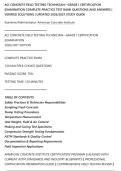
DOT ASPHALT INSPECTOR CERTIFICATION EXAMINATION COMPLETE PRACTICE
TEST BANK QUESTIONS AND ANSWERS | VERIFIED SOLUTIONS | UPDATED
2026/2027 STUDY GUIDE
Examiner/Administrator: Department of Transportation (DOT)
━━━━━━━━━━━━━━━━━━━━━━━━━━━━
DOT ASPHALT INSPECTOR CERTIFICATION EXAMINATION
2026/2027 EDITION
━━━━━━━━━━━━━━━━━━━━━━━━━━━━
COMPLETE PRACTICE EXAM
120 MULTIPLE-CHOICE QUESTIONS
PASSING SCORE: 70%
TESTING TIME: 180 MINUTES
━━━━━━━━━━━━━━━━━━━━━━━━━━━━
TABLE OF CONTENTS
1. Safety Requirements and Regulatory Compliance
2. Asphalt Materials and Mix Design
3. Aggregate Properties and Testing
4. Plant Operations and Quality Control
5. Asphalt Paving Equipment
6. Field Inspection Procedures
7. Compaction and Density Verification
8. Sampling and Laboratory Testing
9. Pavement Defects and Troubleshooting
10. Documentation, Reporting, and Quality Assurance
DEPARTMENT OF TRANSPORTATION CERTIFICATION PROGRAM || ALIGNED WITH
CURRENT HIGHWAY CONSTRUCTION QUALITY STANDARDS || ASPHALT PAVEMENT
INSPECTION PRACTICES || PROFESSIONAL STUDY GUIDE || 100% VERIFIED | GRADED
,A+ || COMPREHENSIVE EXAM PREPARATION || PREPARED FOR CERTIFICATION &
LICENSING PURPOSES || PROFESSIONAL EXAMINATION USE
Safety Requirements and Regulatory Compliance
Q1. During a resurfacing project on a high-speed interstate, an inspector observes
workers entering a lane closure area without proper high-visibility garments. What is
the inspector's most appropriate immediate action?
A. Allow work to continue and document the violation later
B. Stop the affected activity and require compliance with safety requirements
C. Notify the contractor at the end of the shift
D. Ignore the issue because safety enforcement is the contractor's responsibility
Correct Answer: 🔴 B. Stop the affected activity and require compliance with
safety requirements
Explanation: 🔹 Worker visibility is critical in highway work zones. The inspector
must act immediately when an unsafe condition exists. Allowing work to continue
exposes workers and motorists to unnecessary risk. Documentation is important,
but correcting the hazard takes priority. Options A, C, and D fail to address the
immediate safety concern.
Q2. An asphalt inspector reviewing a traffic control setup notices that advance
warning signs are positioned significantly closer to the work zone than specified in
the approved traffic control plan. What should the inspector do first?
A. Verify the discrepancy and require correction
B. Remove the signs personally
C. Close the project permanently
D. Ignore the issue if traffic is flowing normally
Correct Answer: 🔴 A. Verify the discrepancy and require correction
,Explanation: 🔹 Inspectors must compare field conditions with approved plans.
Improper sign placement can reduce driver reaction time and increase crash risk.
The inspector's role is to verify noncompliance and require corrective action.
Personally moving signs or shutting down the project without following procedures
exceeds normal authority.
Q3. Which document typically establishes the minimum safety requirements that
contractors must follow during highway paving operations?
A. Employee handbook only
B. Weather forecast reports
C. Contract specifications and applicable safety regulations
D. Equipment rental agreement
Correct Answer: 🔴 C. Contract specifications and applicable safety regulations
Explanation: 🔹 Highway construction projects are governed by contract
specifications, agency requirements, and applicable safety regulations. These
collectively define required safety measures. The other documents may provide
information but do not establish enforceable project safety requirements.
Q4. A dump truck repeatedly backs into the paving operation without a functioning
reverse alarm. What is the inspector's best response?
A. Permit operation if a spotter is present
B. Require the vehicle to be removed from service until repaired
C. Issue a verbal warning only
D. Document the issue after project completion
Correct Answer: 🔴 B. Require the vehicle to be removed from service until
repaired
Explanation: 🔹 Reverse alarms are essential safety devices. Equipment operating
without required safety features presents a serious hazard. Immediate correction is
, necessary. Although spotters improve safety, they do not eliminate the requirement
for functional warning devices.
Q5. Why is maintaining a proper buffer zone between traffic and paving operations
important?
A. To reduce material costs
B. To improve asphalt temperature
C. To protect workers and motorists from conflicts
D. To increase production rates
Correct Answer: 🔴 C. To protect workers and motorists from conflicts
Explanation: 🔹 Buffer zones provide recovery space and reduce the likelihood of
vehicle intrusion into work areas. Their primary purpose is safety. Material costs,
temperature control, and production rates are secondary considerations unrelated
to the function of a buffer zone.
Q6. During an inspection, a contractor proposes bypassing a specified safety
procedure to save time. How should the inspector respond?
A. Approve if production increases
B. Approve if workers agree
C. Reject the proposal unless formally approved through authorized procedures
D. Ignore the request
Correct Answer: 🔴 C. Reject the proposal unless formally approved through
authorized procedures
Explanation: 🔹 Contract safety requirements cannot be modified informally. Any
deviation must follow established approval processes. Production efficiency never
justifies compromising safety requirements.
TEST BANK QUESTIONS AND ANSWERS | VERIFIED SOLUTIONS | UPDATED
2026/2027 STUDY GUIDE
Examiner/Administrator: Department of Transportation (DOT)
━━━━━━━━━━━━━━━━━━━━━━━━━━━━
DOT ASPHALT INSPECTOR CERTIFICATION EXAMINATION
2026/2027 EDITION
━━━━━━━━━━━━━━━━━━━━━━━━━━━━
COMPLETE PRACTICE EXAM
120 MULTIPLE-CHOICE QUESTIONS
PASSING SCORE: 70%
TESTING TIME: 180 MINUTES
━━━━━━━━━━━━━━━━━━━━━━━━━━━━
TABLE OF CONTENTS
1. Safety Requirements and Regulatory Compliance
2. Asphalt Materials and Mix Design
3. Aggregate Properties and Testing
4. Plant Operations and Quality Control
5. Asphalt Paving Equipment
6. Field Inspection Procedures
7. Compaction and Density Verification
8. Sampling and Laboratory Testing
9. Pavement Defects and Troubleshooting
10. Documentation, Reporting, and Quality Assurance
DEPARTMENT OF TRANSPORTATION CERTIFICATION PROGRAM || ALIGNED WITH
CURRENT HIGHWAY CONSTRUCTION QUALITY STANDARDS || ASPHALT PAVEMENT
INSPECTION PRACTICES || PROFESSIONAL STUDY GUIDE || 100% VERIFIED | GRADED
,A+ || COMPREHENSIVE EXAM PREPARATION || PREPARED FOR CERTIFICATION &
LICENSING PURPOSES || PROFESSIONAL EXAMINATION USE
Safety Requirements and Regulatory Compliance
Q1. During a resurfacing project on a high-speed interstate, an inspector observes
workers entering a lane closure area without proper high-visibility garments. What is
the inspector's most appropriate immediate action?
A. Allow work to continue and document the violation later
B. Stop the affected activity and require compliance with safety requirements
C. Notify the contractor at the end of the shift
D. Ignore the issue because safety enforcement is the contractor's responsibility
Correct Answer: 🔴 B. Stop the affected activity and require compliance with
safety requirements
Explanation: 🔹 Worker visibility is critical in highway work zones. The inspector
must act immediately when an unsafe condition exists. Allowing work to continue
exposes workers and motorists to unnecessary risk. Documentation is important,
but correcting the hazard takes priority. Options A, C, and D fail to address the
immediate safety concern.
Q2. An asphalt inspector reviewing a traffic control setup notices that advance
warning signs are positioned significantly closer to the work zone than specified in
the approved traffic control plan. What should the inspector do first?
A. Verify the discrepancy and require correction
B. Remove the signs personally
C. Close the project permanently
D. Ignore the issue if traffic is flowing normally
Correct Answer: 🔴 A. Verify the discrepancy and require correction
,Explanation: 🔹 Inspectors must compare field conditions with approved plans.
Improper sign placement can reduce driver reaction time and increase crash risk.
The inspector's role is to verify noncompliance and require corrective action.
Personally moving signs or shutting down the project without following procedures
exceeds normal authority.
Q3. Which document typically establishes the minimum safety requirements that
contractors must follow during highway paving operations?
A. Employee handbook only
B. Weather forecast reports
C. Contract specifications and applicable safety regulations
D. Equipment rental agreement
Correct Answer: 🔴 C. Contract specifications and applicable safety regulations
Explanation: 🔹 Highway construction projects are governed by contract
specifications, agency requirements, and applicable safety regulations. These
collectively define required safety measures. The other documents may provide
information but do not establish enforceable project safety requirements.
Q4. A dump truck repeatedly backs into the paving operation without a functioning
reverse alarm. What is the inspector's best response?
A. Permit operation if a spotter is present
B. Require the vehicle to be removed from service until repaired
C. Issue a verbal warning only
D. Document the issue after project completion
Correct Answer: 🔴 B. Require the vehicle to be removed from service until
repaired
Explanation: 🔹 Reverse alarms are essential safety devices. Equipment operating
without required safety features presents a serious hazard. Immediate correction is
, necessary. Although spotters improve safety, they do not eliminate the requirement
for functional warning devices.
Q5. Why is maintaining a proper buffer zone between traffic and paving operations
important?
A. To reduce material costs
B. To improve asphalt temperature
C. To protect workers and motorists from conflicts
D. To increase production rates
Correct Answer: 🔴 C. To protect workers and motorists from conflicts
Explanation: 🔹 Buffer zones provide recovery space and reduce the likelihood of
vehicle intrusion into work areas. Their primary purpose is safety. Material costs,
temperature control, and production rates are secondary considerations unrelated
to the function of a buffer zone.
Q6. During an inspection, a contractor proposes bypassing a specified safety
procedure to save time. How should the inspector respond?
A. Approve if production increases
B. Approve if workers agree
C. Reject the proposal unless formally approved through authorized procedures
D. Ignore the request
Correct Answer: 🔴 C. Reject the proposal unless formally approved through
authorized procedures
Explanation: 🔹 Contract safety requirements cannot be modified informally. Any
deviation must follow established approval processes. Production efficiency never
justifies compromising safety requirements.