

CHAPTER 38: GOV ERNMENT POLICIES TO ACHIEVE EFFICIENT RESOURCE ALLOCATION AND
MARK ET FAILURE.
38.1: Gover nm ent policies to cor r ect negative and positive exter nalities:
- MSB = MPB + MEB.
- MSC = MPC + MEC.
- Negative production externalities:
+ E.g.: A firm illegally disposes of toxic waste, emitting toxic fumes into the atmosphere/over-use of
pesticides by farmers contaminates water supplies.
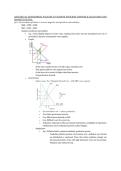
+ Graph:
- Firms only consider private costs like wages, materials, rent.
- They ignore spillover costs imposed on society.
- So the true cost to society is higher than firms perceive.
- Overproduction of goods.
+ Intervention:
- Indirect taxes: Tax = Marginal External Cost → shift MPC curve upward.
+ Pro: Internalises cost → reduces production.
+ Pro: Raises government revenue.
+ Con: Effectiveness depends on PES.
+ Con: Difficult to set the correct tax.
+ Evaluation: Depends on PES, government information, availability of substitutes,
collaboration and coordination (prevent carbon leakage).
- Regulations:
+ E.g.: Pollution limits, emission standards, production quotas.
- Tradeable pollution permits: Government sets a pollution cap. Permits
are distributed or auctioned. Firms that reduce pollution cheaply can
sell unused permits. Firms with high abatement costs can buy permits.
Pollution stays within the cap.
, Supply of permits is S (vertical because the government fixes the
number of permits — perfectly inelastic).
+ Pro: Directly reduce pollution.
+ Pro: More flexible.
+ Con: Permit prices may fluctuate.
+ Con: Large firms may pay to pollute.
+ Pro: Directly reduce the externality → precise and correct → greater certainty.
+ Pro: Fast and quick to be effective.
+ Con: Enforcement and monitoring can be costly (systems, penalties, inspections).
+ Con: Firms may fail to adapt quickly (lack of resources/capital/alternatives).
+ Evaluation: Depends on government enforcement, information, time bound.
- Property rights: Property rights mean clearly assigning legal ownership over a resource
(for example, clean air, a river, or land). Once ownership is defined, affected parties can
negotiate to reduce the externality.
+ Pro: If parties bargain, external costs may be taken into account. Polluters may
compensate victims. Victims may negotiate pollution reduction.
+ Pro: Flexibility - parties can design solutions suited to their situation.
+ Con: Difficult to define and enforce rights.
+ Con: May not work for global externalities.
+ Evaluation: Depends on the number of parties involved, clarity, etc.
- Negative consumption externalities:
+ E.g.: Smoking, alcohol abuse, congestion.
+ Graph:
+ Intervention:
- Indirect taxes:
MARK ET FAILURE.
38.1: Gover nm ent policies to cor r ect negative and positive exter nalities:
- MSB = MPB + MEB.
- MSC = MPC + MEC.
- Negative production externalities:
+ E.g.: A firm illegally disposes of toxic waste, emitting toxic fumes into the atmosphere/over-use of
pesticides by farmers contaminates water supplies.
+ Graph:
- Firms only consider private costs like wages, materials, rent.
- They ignore spillover costs imposed on society.
- So the true cost to society is higher than firms perceive.
- Overproduction of goods.
+ Intervention:
- Indirect taxes: Tax = Marginal External Cost → shift MPC curve upward.
+ Pro: Internalises cost → reduces production.
+ Pro: Raises government revenue.
+ Con: Effectiveness depends on PES.
+ Con: Difficult to set the correct tax.
+ Evaluation: Depends on PES, government information, availability of substitutes,
collaboration and coordination (prevent carbon leakage).
- Regulations:
+ E.g.: Pollution limits, emission standards, production quotas.
- Tradeable pollution permits: Government sets a pollution cap. Permits
are distributed or auctioned. Firms that reduce pollution cheaply can
sell unused permits. Firms with high abatement costs can buy permits.
Pollution stays within the cap.
, Supply of permits is S (vertical because the government fixes the
number of permits — perfectly inelastic).
+ Pro: Directly reduce pollution.
+ Pro: More flexible.
+ Con: Permit prices may fluctuate.
+ Con: Large firms may pay to pollute.
+ Pro: Directly reduce the externality → precise and correct → greater certainty.
+ Pro: Fast and quick to be effective.
+ Con: Enforcement and monitoring can be costly (systems, penalties, inspections).
+ Con: Firms may fail to adapt quickly (lack of resources/capital/alternatives).
+ Evaluation: Depends on government enforcement, information, time bound.
- Property rights: Property rights mean clearly assigning legal ownership over a resource
(for example, clean air, a river, or land). Once ownership is defined, affected parties can
negotiate to reduce the externality.
+ Pro: If parties bargain, external costs may be taken into account. Polluters may
compensate victims. Victims may negotiate pollution reduction.
+ Pro: Flexibility - parties can design solutions suited to their situation.
+ Con: Difficult to define and enforce rights.
+ Con: May not work for global externalities.
+ Evaluation: Depends on the number of parties involved, clarity, etc.
- Negative consumption externalities:
+ E.g.: Smoking, alcohol abuse, congestion.
+ Graph:
+ Intervention:
- Indirect taxes:

