Summary Translational Neuroscience
Prof. Christian Vanhove and Prof. Robrecht Raedt
Jay Vancaster 2026
[Note that all images come from the slides provided by prof. Christian Vanhove and Prof. Robrecht Raedt]
Table of Contents
Prof. Robrecht Raedt ............................................................................................. 2
1. Monitoring of brain activity ................................................................................... 2
1.1 Behavioral testing ........................................................................................................... 2
1.2 Electrophysiology ........................................................................................................... 4
1.3 Optical Imaging............................................................................................................... 6
1.4 Microdialysis .................................................................................................................. 7
2. Manipulation and Measuring Brain-Behavior Interactions ........................................ 8
2.1 Brain Lesion (Permanent lesions) ..................................................................................... 8
2.1.1 Ablation: removal or destruction of tissue .................................................................... 8
2.2 Neuromodulation............................................................................................................ 9
2.2.1 Electrical Stimulation .................................................................................................. 9
2.2.2 Optogenetic Modulation (Exam) ................................................................................ 10
2.2.3 Chemogenetic Modulation ........................................................................................ 11
2.2.4 Photopharmacology.................................................................................................. 12
2.2.5 Focused Ultrasound Modulation ................................................................................ 12
Prof. Christian Vanhove ....................................................................................... 13
1. Importance of Translational Neuroscience/imaging ................................................. 13
2. What’s important when setting up a small animal imaging experiment ..................... 14
2.1 Pros and cons of the most important neuroimaging techniques .................................. 14
2.2 A short introduction to animal models ....................................................................... 15
2.3 Animal handling ........................................................................................................ 16
2.4 ESect of animal handling on imaging (Research example) ........................................... 18
3. An application in research to reduce variability in brain research ............................ 19
3.1 Variability and selecting a correct sample size ............................................................ 19
3.2 A neuroimaging application in research to further reduce variability ............................ 20
4. Some applications in research to better understand DBS in epilepsy ......................... 22
4.1 ESect of DBS on brain perfusion using SPECT (perfusion) ............................................ 22
4.2 ESect of DBS on brain glucose metabolism using PE (metabolism).............................. 23
Hippocampal DBS reduces glucose utilization in the healthy rat brain ................................ 23
4.3 ESect of DBS on brain neural activity using fMRI (connectivity) .................................... 24
5. An application in research to better understand how a healthy brain becomes an
epileptic brain ........................................................................................................... 25
Dynamic functional connectivity and graph theory metrics in a rat model of temporal lobe
epilepsy reveal a preference for brain states with a lower functional connectivity, segregation
and integration ........................................................................................................... 26
6. Some applications in research to better understand depression ................................ 27
6.1 Finding a good animal model for depression............................................................... 27
6.2 Better understanding the serotonergic system............................................................ 28
Jay Vancaster 2026 – VUB/UGent 1
,Prof. Robrecht Raedt
1. Monitoring of brain activity
1.1 Behavioral testing
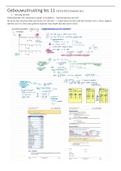
Spatial memory
Morris (1980) swimming task:
• Place learning à Rat must find platform using external cues (windows, plants,)
• Matching-to-place learning à Platform is in the same location each trial, but a
different location each day.
• Landmark version à Platform is identified by a cue on the wall of the pool.
Radial Arm Maze (Radial platform with walls, arms and doors):
• Testing Working Memory
o In each arm there is a bait and the mouse waits for the doors to open to get in.
o If a mouse goes back in the one it came from à he commits a working memory
error, and laments his damaged hippocampus.
• Testing Reference Memory
o 50 times the 4 same arms got bait.
o If mouse chooses an arm that has never been baited à he commits a reference
memory error.
Y-Maze (3 arm maze):
• Spontaneus Alteration: Spatial Working Memory
o High percentage alternation: a high
proportion of entries into consecutive arms
o Low percentage alternation: a higher
proportion of repeated entries into the same
arm (Problem with working memory).
• Visit new arm: Spatial Reference Memory
o One arm of the Y-Maze is blocked. During a
testing session, a mouse with good spatial
memory will enter the unexplored (novel)
arm more frequently than the other arms.
o A mouse with a poor spatial memory will
show no preference.
Jay Vancaster 2026 – VUB/UGent 2
, VisuoSpatial Memory
Object Recognition Tests
• Different types:
Anxiety and depression
• Anxiety
o Open-Field test
§ Experiment:
• Food deprivation has anxiolytic effect:
o You see an increase center time in starving mice.
Showing that the anxiety of being in open space is
reduced.
o Light-Dark test
o Elevated Plus Maze
§ 4 arms where you have two that are open and two that are closed, healthy
mice go to closed arm (more safe feeling)
§ Experiment:
• Food deprivation has anxiolytic effects:
o Mouse that is starving goes to both and loses that anxiety
of being in the open.
• Depression
o Forced Swim test (behavioral despair)
§ Immobile time spent increases with stress exposure
o Saccharose Preference test (anhedonia)
§ Sucrose consumption goes down with stress exposure
• Chronic stress induces depressive-like behavior
o Techniques: Cage swap, cage tilt, confinement, water bath, predator odour,
predator sound, wet nesting material, empty cage, remove nesting material, new
sawdust, new nesting material, no house, nest disruption, return to home cage
with intruder odour, light pulses.
Motor function
• Cylinder test,
• Rotation,
• Rotarod,
• Staircase,
• Elevated beam
Emotional memory
• Fear conditioning
Jay Vancaster 2026 – VUB/UGent 3
Prof. Christian Vanhove and Prof. Robrecht Raedt
Jay Vancaster 2026
[Note that all images come from the slides provided by prof. Christian Vanhove and Prof. Robrecht Raedt]
Table of Contents
Prof. Robrecht Raedt ............................................................................................. 2
1. Monitoring of brain activity ................................................................................... 2
1.1 Behavioral testing ........................................................................................................... 2
1.2 Electrophysiology ........................................................................................................... 4
1.3 Optical Imaging............................................................................................................... 6
1.4 Microdialysis .................................................................................................................. 7
2. Manipulation and Measuring Brain-Behavior Interactions ........................................ 8
2.1 Brain Lesion (Permanent lesions) ..................................................................................... 8
2.1.1 Ablation: removal or destruction of tissue .................................................................... 8
2.2 Neuromodulation............................................................................................................ 9
2.2.1 Electrical Stimulation .................................................................................................. 9
2.2.2 Optogenetic Modulation (Exam) ................................................................................ 10
2.2.3 Chemogenetic Modulation ........................................................................................ 11
2.2.4 Photopharmacology.................................................................................................. 12
2.2.5 Focused Ultrasound Modulation ................................................................................ 12
Prof. Christian Vanhove ....................................................................................... 13
1. Importance of Translational Neuroscience/imaging ................................................. 13
2. What’s important when setting up a small animal imaging experiment ..................... 14
2.1 Pros and cons of the most important neuroimaging techniques .................................. 14
2.2 A short introduction to animal models ....................................................................... 15
2.3 Animal handling ........................................................................................................ 16
2.4 ESect of animal handling on imaging (Research example) ........................................... 18
3. An application in research to reduce variability in brain research ............................ 19
3.1 Variability and selecting a correct sample size ............................................................ 19
3.2 A neuroimaging application in research to further reduce variability ............................ 20
4. Some applications in research to better understand DBS in epilepsy ......................... 22
4.1 ESect of DBS on brain perfusion using SPECT (perfusion) ............................................ 22
4.2 ESect of DBS on brain glucose metabolism using PE (metabolism).............................. 23
Hippocampal DBS reduces glucose utilization in the healthy rat brain ................................ 23
4.3 ESect of DBS on brain neural activity using fMRI (connectivity) .................................... 24
5. An application in research to better understand how a healthy brain becomes an
epileptic brain ........................................................................................................... 25
Dynamic functional connectivity and graph theory metrics in a rat model of temporal lobe
epilepsy reveal a preference for brain states with a lower functional connectivity, segregation
and integration ........................................................................................................... 26
6. Some applications in research to better understand depression ................................ 27
6.1 Finding a good animal model for depression............................................................... 27
6.2 Better understanding the serotonergic system............................................................ 28
Jay Vancaster 2026 – VUB/UGent 1
,Prof. Robrecht Raedt
1. Monitoring of brain activity
1.1 Behavioral testing
Spatial memory
Morris (1980) swimming task:
• Place learning à Rat must find platform using external cues (windows, plants,)
• Matching-to-place learning à Platform is in the same location each trial, but a
different location each day.
• Landmark version à Platform is identified by a cue on the wall of the pool.
Radial Arm Maze (Radial platform with walls, arms and doors):
• Testing Working Memory
o In each arm there is a bait and the mouse waits for the doors to open to get in.
o If a mouse goes back in the one it came from à he commits a working memory
error, and laments his damaged hippocampus.
• Testing Reference Memory
o 50 times the 4 same arms got bait.
o If mouse chooses an arm that has never been baited à he commits a reference
memory error.
Y-Maze (3 arm maze):
• Spontaneus Alteration: Spatial Working Memory
o High percentage alternation: a high
proportion of entries into consecutive arms
o Low percentage alternation: a higher
proportion of repeated entries into the same
arm (Problem with working memory).
• Visit new arm: Spatial Reference Memory
o One arm of the Y-Maze is blocked. During a
testing session, a mouse with good spatial
memory will enter the unexplored (novel)
arm more frequently than the other arms.
o A mouse with a poor spatial memory will
show no preference.
Jay Vancaster 2026 – VUB/UGent 2
, VisuoSpatial Memory
Object Recognition Tests
• Different types:
Anxiety and depression
• Anxiety
o Open-Field test
§ Experiment:
• Food deprivation has anxiolytic effect:
o You see an increase center time in starving mice.
Showing that the anxiety of being in open space is
reduced.
o Light-Dark test
o Elevated Plus Maze
§ 4 arms where you have two that are open and two that are closed, healthy
mice go to closed arm (more safe feeling)
§ Experiment:
• Food deprivation has anxiolytic effects:
o Mouse that is starving goes to both and loses that anxiety
of being in the open.
• Depression
o Forced Swim test (behavioral despair)
§ Immobile time spent increases with stress exposure
o Saccharose Preference test (anhedonia)
§ Sucrose consumption goes down with stress exposure
• Chronic stress induces depressive-like behavior
o Techniques: Cage swap, cage tilt, confinement, water bath, predator odour,
predator sound, wet nesting material, empty cage, remove nesting material, new
sawdust, new nesting material, no house, nest disruption, return to home cage
with intruder odour, light pulses.
Motor function
• Cylinder test,
• Rotation,
• Rotarod,
• Staircase,
• Elevated beam
Emotional memory
• Fear conditioning
Jay Vancaster 2026 – VUB/UGent 3