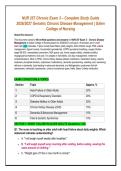
NUR 257 Chronic Exam 3 – Complete Study Guide
2026/2027 Geriatric Chronic Disease Management | Galen
College of Nursing
About this resource:
This document contains 100 verified questions and answers for NUR 257 Exam 3 – Chronic Disease
Management at Galen College of Nursing based on 2026/2027 curriculum. All answers are in bold
italic with italic rationales. Topics include heart failure (daily weights, ACE inhibitor cough, PND, edema
management, digoxin toxicity, furosemide hypokalemia), COPD (pursed-lip breathing, oxygen titration
target 88-92%, exacerbation prevention, MDI spacer use, home oxygen safety), diabetes mellitus
(hypoglycemia treatment, foot care, A1c targets in frail elderly, sick day management, metformin
contraindications, DKA vs HHS), chronic kidney disease (dietary restrictions, medication dosing, anemia
treatment, phosphate binders, nephrotoxic medications), dementia (sundowning, resisting care, wandering,
delirium vs dementia, tube feeding in advanced dementia), and falls/geriatric syndromes (fall risk
assessment, orthostatic hypotension, urinary incontinence types, frailty, Beers Criteria medication
EXAM 3 STRUCTURE & TOPICS
Section Topic Approx. %
1 Heart Failure in Older Adults 20%
2 COPD & Respiratory Disorders 20%
3 Diabetes Mellitus in Older Adults 20%
4 Chronic Kidney Disease (CKD) 15%
5 Dementia & Behavioral Management 15%
6 Falls & Geriatric Syndromes 10%
SECTION 1: HEART FAILURE IN OLDER ADULTS (Questions 1-20)
Q1. The nurse is teaching an older adult with heart failure about daily weights. Which
statement indicates understanding?
A. "I will weigh myself weekly after breakfast."
B. "I will weigh myself every morning after voiding, before eating, wearing the
same amount of clothing."
C. "Weight gain of 5 lbs in one month is normal."
, D. "Only weigh yourself if you feel short of breath."
* Daily morning weights at the same time (after voiding, before meals, same clothing)
provide accurate trends to detect fluid retention early. Weight gain of 2-3 lbs in 24 hours or 5
lbs in 1 week indicates worsening heart failure .*
Q2. An older adult with heart failure reports a persistent, dry cough. The patient takes
lisinopril. The nurse suspects which cause?
A. Worsening heart failure
B. ACE inhibitor-induced cough
C. Pneumonia
D. Allergic reaction
ACE inhibitors cause a dry, persistent cough in up to 20% of patients due to bradykinin
accumulation. Switching to an ARB may resolve the cough without sacrificing efficacy .
Q3. The nurse is caring for an older adult with heart failure who has 3+ pitting edema
in both lower extremities. Which intervention should the nurse implement?
A. Elevate the legs above heart level
B. Elevate legs when sitting and encourage walking as tolerated; monitor daily
weights
C. Limit all mobility to prevent falls
D. Apply compression stockings only
Leg elevation reduces edema; mobility promotes venous return. Daily weights monitor fluid
status. Compression stockings may be used if no arterial insufficiency .
Q4. An older adult with heart failure reports waking up at night short of breath and
needing to sleep on three pillows. This symptom is known as:
A. Orthopnea
B. Paroxysmal nocturnal dyspnea (PND)
C. Dyspnea on exertion
D. Platypnea
, PND is sudden shortness of breath that awakens the patient from sleep, often requiring
sitting upright. Orthopnea is difficulty breathing when lying flat .
Q5. The nurse is teaching an older adult with heart failure about recognizing
worsening symptoms. Which symptom should the patient report immediately?
A. Weight loss of 1 lb in 1 week
B. Weight gain of 3 lbs in 2 days or increased shortness of breath
C. Occasional palpitations
D. Mild ankle swelling at end of day
* Rapid weight gain (2-3 lbs in 24 hours or 5 lbs in 1 week) indicates fluid retention and
worsening heart failure, requiring prompt evaluation .*
Q6. The nurse is caring for an older adult with heart failure who has new-onset atrial
fibrillation. Which medication is most commonly used for rate control in this
population?
A. Metoprolol (beta blocker)
B. Amiodarone
C. Digoxin alone
D. Aspirin
Beta blockers (metoprolol, bisoprolol) are first-line for rate control in atrial fibrillation with
heart failure. Digoxin may be added if needed .
Q7. The nurse is teaching an older adult with heart failure about fluid restriction.
Which statement indicates understanding?
A. "I will drink as much water as I want to stay hydrated."
B. "I will track my daily fluid intake and weigh myself every morning."
C. "I will only drink caffeinated beverages."
D. "Fluid restriction does not affect my heart failure."
* Daily weight monitoring and fluid tracking help manage fluid balance in heart failure. Most
patients require fluid restriction of 1.5-2 L/day .*
, Q8. An older adult with heart failure is prescribed lisinopril. The nurse should monitor
for which adverse effect?
A. Hyperkalemia
B. Angioedema (swelling of lips, tongue, oropharynx)
C. Bradycardia
D. Hyperglycemia
ACE inhibitors (lisinopril) can cause angioedema, a life-threatening emergency.
Hyperkalemia is also possible but angioedema requires immediate intervention .
Q9. The nurse is caring for an older adult with heart failure who reports increased
shortness of breath and 4-lb weight gain in 2 days. Which action should the nurse
take first?
A. Administer a PRN diuretic
B. Assess lung sounds and notify the provider
C. Increase the IV fluid rate
D. Place the patient in Trendelenburg position
These signs indicate worsening heart failure. Assessment and provider notification are
needed; diuretics may be prescribed .
Q10. The nurse is teaching an older adult with heart failure about sodium restriction.
Which statement indicates understanding?
A. "I can eat as much canned soup as I want."
B. "I will check food labels for sodium content and avoid processed foods."
C. "Salt tablets will help me retain fluid."
D. "I don't need to limit salt if I take my diuretic."
Sodium restriction reduces fluid retention. Processed and canned foods are high in sodium.
Patients should read labels .
Q11. An older adult with heart failure is prescribed furosemide (Lasix). The nurse
should monitor for which electrolyte imbalance?
A. Hypokalemia
2026/2027 Geriatric Chronic Disease Management | Galen
College of Nursing
About this resource:
This document contains 100 verified questions and answers for NUR 257 Exam 3 – Chronic Disease
Management at Galen College of Nursing based on 2026/2027 curriculum. All answers are in bold
italic with italic rationales. Topics include heart failure (daily weights, ACE inhibitor cough, PND, edema
management, digoxin toxicity, furosemide hypokalemia), COPD (pursed-lip breathing, oxygen titration
target 88-92%, exacerbation prevention, MDI spacer use, home oxygen safety), diabetes mellitus
(hypoglycemia treatment, foot care, A1c targets in frail elderly, sick day management, metformin
contraindications, DKA vs HHS), chronic kidney disease (dietary restrictions, medication dosing, anemia
treatment, phosphate binders, nephrotoxic medications), dementia (sundowning, resisting care, wandering,
delirium vs dementia, tube feeding in advanced dementia), and falls/geriatric syndromes (fall risk
assessment, orthostatic hypotension, urinary incontinence types, frailty, Beers Criteria medication
EXAM 3 STRUCTURE & TOPICS
Section Topic Approx. %
1 Heart Failure in Older Adults 20%
2 COPD & Respiratory Disorders 20%
3 Diabetes Mellitus in Older Adults 20%
4 Chronic Kidney Disease (CKD) 15%
5 Dementia & Behavioral Management 15%
6 Falls & Geriatric Syndromes 10%
SECTION 1: HEART FAILURE IN OLDER ADULTS (Questions 1-20)
Q1. The nurse is teaching an older adult with heart failure about daily weights. Which
statement indicates understanding?
A. "I will weigh myself weekly after breakfast."
B. "I will weigh myself every morning after voiding, before eating, wearing the
same amount of clothing."
C. "Weight gain of 5 lbs in one month is normal."
, D. "Only weigh yourself if you feel short of breath."
* Daily morning weights at the same time (after voiding, before meals, same clothing)
provide accurate trends to detect fluid retention early. Weight gain of 2-3 lbs in 24 hours or 5
lbs in 1 week indicates worsening heart failure .*
Q2. An older adult with heart failure reports a persistent, dry cough. The patient takes
lisinopril. The nurse suspects which cause?
A. Worsening heart failure
B. ACE inhibitor-induced cough
C. Pneumonia
D. Allergic reaction
ACE inhibitors cause a dry, persistent cough in up to 20% of patients due to bradykinin
accumulation. Switching to an ARB may resolve the cough without sacrificing efficacy .
Q3. The nurse is caring for an older adult with heart failure who has 3+ pitting edema
in both lower extremities. Which intervention should the nurse implement?
A. Elevate the legs above heart level
B. Elevate legs when sitting and encourage walking as tolerated; monitor daily
weights
C. Limit all mobility to prevent falls
D. Apply compression stockings only
Leg elevation reduces edema; mobility promotes venous return. Daily weights monitor fluid
status. Compression stockings may be used if no arterial insufficiency .
Q4. An older adult with heart failure reports waking up at night short of breath and
needing to sleep on three pillows. This symptom is known as:
A. Orthopnea
B. Paroxysmal nocturnal dyspnea (PND)
C. Dyspnea on exertion
D. Platypnea
, PND is sudden shortness of breath that awakens the patient from sleep, often requiring
sitting upright. Orthopnea is difficulty breathing when lying flat .
Q5. The nurse is teaching an older adult with heart failure about recognizing
worsening symptoms. Which symptom should the patient report immediately?
A. Weight loss of 1 lb in 1 week
B. Weight gain of 3 lbs in 2 days or increased shortness of breath
C. Occasional palpitations
D. Mild ankle swelling at end of day
* Rapid weight gain (2-3 lbs in 24 hours or 5 lbs in 1 week) indicates fluid retention and
worsening heart failure, requiring prompt evaluation .*
Q6. The nurse is caring for an older adult with heart failure who has new-onset atrial
fibrillation. Which medication is most commonly used for rate control in this
population?
A. Metoprolol (beta blocker)
B. Amiodarone
C. Digoxin alone
D. Aspirin
Beta blockers (metoprolol, bisoprolol) are first-line for rate control in atrial fibrillation with
heart failure. Digoxin may be added if needed .
Q7. The nurse is teaching an older adult with heart failure about fluid restriction.
Which statement indicates understanding?
A. "I will drink as much water as I want to stay hydrated."
B. "I will track my daily fluid intake and weigh myself every morning."
C. "I will only drink caffeinated beverages."
D. "Fluid restriction does not affect my heart failure."
* Daily weight monitoring and fluid tracking help manage fluid balance in heart failure. Most
patients require fluid restriction of 1.5-2 L/day .*
, Q8. An older adult with heart failure is prescribed lisinopril. The nurse should monitor
for which adverse effect?
A. Hyperkalemia
B. Angioedema (swelling of lips, tongue, oropharynx)
C. Bradycardia
D. Hyperglycemia
ACE inhibitors (lisinopril) can cause angioedema, a life-threatening emergency.
Hyperkalemia is also possible but angioedema requires immediate intervention .
Q9. The nurse is caring for an older adult with heart failure who reports increased
shortness of breath and 4-lb weight gain in 2 days. Which action should the nurse
take first?
A. Administer a PRN diuretic
B. Assess lung sounds and notify the provider
C. Increase the IV fluid rate
D. Place the patient in Trendelenburg position
These signs indicate worsening heart failure. Assessment and provider notification are
needed; diuretics may be prescribed .
Q10. The nurse is teaching an older adult with heart failure about sodium restriction.
Which statement indicates understanding?
A. "I can eat as much canned soup as I want."
B. "I will check food labels for sodium content and avoid processed foods."
C. "Salt tablets will help me retain fluid."
D. "I don't need to limit salt if I take my diuretic."
Sodium restriction reduces fluid retention. Processed and canned foods are high in sodium.
Patients should read labels .
Q11. An older adult with heart failure is prescribed furosemide (Lasix). The nurse
should monitor for which electrolyte imbalance?
A. Hypokalemia