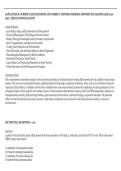
KAPLAN RENAL NURSING EXAM QUESTIONS AND CORRECT ANSWERS (VERIFIED ANSWERS) PLUS RATIONALES 2026
Q&A | INSTANT DOWNLOAD PDF
CORE DOMAINS
- Acute Kidney Injury (AKI) Assessment and Management
- Chronic Kidney Disease (CKD) Stages and Interventions
- Dialysis Therapy (Hemodialysis and Peritoneal) Complications
- Renal Transplantation and Rejection Prevention
- Urinary Tract Infections and Pyelonephritis
- Fluid, Electrolyte, and Acid-Base Balance in Renal Dysfunction
- Pharmacological Management of Renal Conditions
- Nutritional Therapy for Renal Patients
- Legal, Ethical, and Professional Standards in Renal Nursing
- Patient Education and Self-Management Strategies
INTRODUCTION
This comprehensive assessment evaluates critical nursing knowledge and clinical decision-making skills essential for safe, effective renal nursing
practice. The exam covers foundational theory, applied professional knowledge, regulatory compliance, ethics, and real-world clinical scenarios
requiring critical thinking. Candidates will encounter multiple-choice and scenario-based questions that emphasize practical application of renal
nursing principles in diverse patient care settings. Success on this assessment demonstrates mastery of AKI and CKD management, dialysis care,
transplantation protocols, fluid/electrolyte balance, pharmacological interventions, nutritional therapy, and patient education. The questions
reflect current best practices and prepare nurses for high-stakes certification exams and real-world clinical decision-making in renal care
environments.
SECTION ONE: QUESTIONS 1–100
Question 1
A patient with acute kidney injury (AKI) presents with serum potassium of 6.8 mEq/L, weak pulse, and delayed ECG T-waves. What is the nurse's
FIRST priority intervention?
A. Administer oral potassium binders
B. Prepare for emergent hemodialysis
C. Administer IV insulin with glucose
D. Restrict dietary potassium intake
,🟢 Correct answer: C
🔴 RATIONALE: Hyperkalemia >6.5 mEq/L with cardiac manifestations is life-threatening. IV insulin with glucose rapidly shifts potassium into
cells within 15-30 minutes, providing immediate stabilization before dialysis or binders work. This is the priority intervention per KDIGO guidelines
for severe hyperkalemia with ECG changes.
Question 2
Which laboratory finding BEST indicates the progression from Stage 3 to Stage 4 chronic kidney disease?
A. BUN 45 mg/dL
B. Serum creatinine 3.2 mg/dL
C. GFR 22 mL/min/1.73m²
D. Urine protein 1.8 g/day
🟢 Correct answer: C
🔴 RATIONALE: CKD staging is based on GFR. Stage 3 = GFR 30-44 mL/min; Stage 4 = GFR 15-29 mL/min. A GFR of 22 mL/min/1.73m²
definitively indicates Stage 4 CKD. BUN and creatinine vary with age, muscle mass, and hydration, making them less reliable for staging.
Question 3
A hemodialysis patient develops headache, nausea, confusion, and tachycardia 2 hours into treatment. The nurse suspects dialysis disequilibrium
syndrome. What is the MOST appropriate immediate action?
A. Increase dialysis flow rate
B. Administer IV normal saline bolus
C. Slow or terminate dialysis treatment
D. Give oral antiemetic medication
🟢 Correct answer: C
,🔴 RATIONALE: Dialysis disequilibrium syndrome (DDS) occurs when solutes are eliminated too rapidly, causing cerebral edema and increased
intracranial pressure. Slowing or terminating dialysis prevents progression to coma or death. Increasing flow rate worsens DDS; saline bolus treats
hypotension, not DDS.
Question 4
Which patient statement indicates effective teaching about chronic kidney disease dietary management?
A. "I will eat more bananas and oranges for vitamin C."
B. "I can drink 3 liters of water daily to flush my kidneys."
C. "I need to limit cheese and yogurt because they're high in phosphorus."
D. "I'll use salt substitutes instead of table salt for flavoring."
🟢 Correct answer: C
🔴 RATIONALE: CKD patients must restrict phosphorus (found in dairy) to prevent hyperphosphatemia, hypocalcemia, and bone disease.
Bananas/oranges are high in potassium (dangerous in CKD); 3L water causes fluid overload; salt substitutes contain potassium chloride, worsening
hyperkalemia.
Question 5
A post-renal transplant patient reports fever, flank pain, and decreased urine output 5 days after surgery. The nurse should FIRST assess for:
A. Acute graft rejection
B. Cyclosporine toxicity
C. Urinary tract infection
D. Hemorrhage at surgical site
🟢 Correct answer: A
, 🔴 RATIONALE: Fever, flank pain, and decreased urine output within 1-2 weeks post-transplant are classic signs of acute rejection. Early detection
improves outcomes. Cyclosporine toxicity causes hypertension and tremors; UTI presents with dysuria; hemorrhage shows hypotension and
tachycardia.
Question 6
Which nursing action is a priority for a patient with hemodialysis access in the right arm?
A. Measure blood pressure on the right arm
B. Use the right arm for IV insertion
C. Avoid taking blood pressure on the right arm
D. Apply warm compresses to the access site
🟢 Correct answer: C
🔴 RATIONALE: Blood pressure measurement on the arm with hemodialysis access can compromise flow and damage the vessel. IV insertion is also
avoided to prevent infection and thrombosis. Warm compresses aren't routinely indicated; cold may be used for bleeding.
Question 7
A patient with CKD Stage 4 has serum calcium 7.8 mg/dL and phosphorus 6.2 mg/dL. Which medication should the nurse anticipate administering?
A. Calcium carbonate
B. Furosemide
C. Potassium chloride
D. Sodium bicarbonate
🟢 Correct answer: A
🔴 RATIONALE: CKD patients develop hyperphosphatemia and hypocalcemia due to impaired phosphorus excretion and decreased vitamin D
activation. Calcium carbonate acts as a phosphate binder, reducing phosphorus while supplementing calcium. Furosemide worsens electrolyte
imbalances; potassium chloride is contraindicated with hyperkalemia risk.
Q&A | INSTANT DOWNLOAD PDF
CORE DOMAINS
- Acute Kidney Injury (AKI) Assessment and Management
- Chronic Kidney Disease (CKD) Stages and Interventions
- Dialysis Therapy (Hemodialysis and Peritoneal) Complications
- Renal Transplantation and Rejection Prevention
- Urinary Tract Infections and Pyelonephritis
- Fluid, Electrolyte, and Acid-Base Balance in Renal Dysfunction
- Pharmacological Management of Renal Conditions
- Nutritional Therapy for Renal Patients
- Legal, Ethical, and Professional Standards in Renal Nursing
- Patient Education and Self-Management Strategies
INTRODUCTION
This comprehensive assessment evaluates critical nursing knowledge and clinical decision-making skills essential for safe, effective renal nursing
practice. The exam covers foundational theory, applied professional knowledge, regulatory compliance, ethics, and real-world clinical scenarios
requiring critical thinking. Candidates will encounter multiple-choice and scenario-based questions that emphasize practical application of renal
nursing principles in diverse patient care settings. Success on this assessment demonstrates mastery of AKI and CKD management, dialysis care,
transplantation protocols, fluid/electrolyte balance, pharmacological interventions, nutritional therapy, and patient education. The questions
reflect current best practices and prepare nurses for high-stakes certification exams and real-world clinical decision-making in renal care
environments.
SECTION ONE: QUESTIONS 1–100
Question 1
A patient with acute kidney injury (AKI) presents with serum potassium of 6.8 mEq/L, weak pulse, and delayed ECG T-waves. What is the nurse's
FIRST priority intervention?
A. Administer oral potassium binders
B. Prepare for emergent hemodialysis
C. Administer IV insulin with glucose
D. Restrict dietary potassium intake
,🟢 Correct answer: C
🔴 RATIONALE: Hyperkalemia >6.5 mEq/L with cardiac manifestations is life-threatening. IV insulin with glucose rapidly shifts potassium into
cells within 15-30 minutes, providing immediate stabilization before dialysis or binders work. This is the priority intervention per KDIGO guidelines
for severe hyperkalemia with ECG changes.
Question 2
Which laboratory finding BEST indicates the progression from Stage 3 to Stage 4 chronic kidney disease?
A. BUN 45 mg/dL
B. Serum creatinine 3.2 mg/dL
C. GFR 22 mL/min/1.73m²
D. Urine protein 1.8 g/day
🟢 Correct answer: C
🔴 RATIONALE: CKD staging is based on GFR. Stage 3 = GFR 30-44 mL/min; Stage 4 = GFR 15-29 mL/min. A GFR of 22 mL/min/1.73m²
definitively indicates Stage 4 CKD. BUN and creatinine vary with age, muscle mass, and hydration, making them less reliable for staging.
Question 3
A hemodialysis patient develops headache, nausea, confusion, and tachycardia 2 hours into treatment. The nurse suspects dialysis disequilibrium
syndrome. What is the MOST appropriate immediate action?
A. Increase dialysis flow rate
B. Administer IV normal saline bolus
C. Slow or terminate dialysis treatment
D. Give oral antiemetic medication
🟢 Correct answer: C
,🔴 RATIONALE: Dialysis disequilibrium syndrome (DDS) occurs when solutes are eliminated too rapidly, causing cerebral edema and increased
intracranial pressure. Slowing or terminating dialysis prevents progression to coma or death. Increasing flow rate worsens DDS; saline bolus treats
hypotension, not DDS.
Question 4
Which patient statement indicates effective teaching about chronic kidney disease dietary management?
A. "I will eat more bananas and oranges for vitamin C."
B. "I can drink 3 liters of water daily to flush my kidneys."
C. "I need to limit cheese and yogurt because they're high in phosphorus."
D. "I'll use salt substitutes instead of table salt for flavoring."
🟢 Correct answer: C
🔴 RATIONALE: CKD patients must restrict phosphorus (found in dairy) to prevent hyperphosphatemia, hypocalcemia, and bone disease.
Bananas/oranges are high in potassium (dangerous in CKD); 3L water causes fluid overload; salt substitutes contain potassium chloride, worsening
hyperkalemia.
Question 5
A post-renal transplant patient reports fever, flank pain, and decreased urine output 5 days after surgery. The nurse should FIRST assess for:
A. Acute graft rejection
B. Cyclosporine toxicity
C. Urinary tract infection
D. Hemorrhage at surgical site
🟢 Correct answer: A
, 🔴 RATIONALE: Fever, flank pain, and decreased urine output within 1-2 weeks post-transplant are classic signs of acute rejection. Early detection
improves outcomes. Cyclosporine toxicity causes hypertension and tremors; UTI presents with dysuria; hemorrhage shows hypotension and
tachycardia.
Question 6
Which nursing action is a priority for a patient with hemodialysis access in the right arm?
A. Measure blood pressure on the right arm
B. Use the right arm for IV insertion
C. Avoid taking blood pressure on the right arm
D. Apply warm compresses to the access site
🟢 Correct answer: C
🔴 RATIONALE: Blood pressure measurement on the arm with hemodialysis access can compromise flow and damage the vessel. IV insertion is also
avoided to prevent infection and thrombosis. Warm compresses aren't routinely indicated; cold may be used for bleeding.
Question 7
A patient with CKD Stage 4 has serum calcium 7.8 mg/dL and phosphorus 6.2 mg/dL. Which medication should the nurse anticipate administering?
A. Calcium carbonate
B. Furosemide
C. Potassium chloride
D. Sodium bicarbonate
🟢 Correct answer: A
🔴 RATIONALE: CKD patients develop hyperphosphatemia and hypocalcemia due to impaired phosphorus excretion and decreased vitamin D
activation. Calcium carbonate acts as a phosphate binder, reducing phosphorus while supplementing calcium. Furosemide worsens electrolyte
imbalances; potassium chloride is contraindicated with hyperkalemia risk.