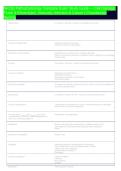
NR283 Pathophysiology Complete Exam Study Guide — Cell Damage,
Fluids & Electrolytes, Immunity, Infection & Cancer | Chamberlain
Nursing
Hypertrophy Increase in cell size - results in enlarged tissue mass
Causes of hypertrophy Additional work by the tissue
Excessive hormonal stimulation
Examples of hypertrophy Enlarged heart resulting from increased demands
Effect of consistent exercise on skeletal muscle, leading to an enlarged
muscle mass
Atrophy Decrease in cell size - results in reduced tissue mass
Causes of atrophy Reduced use of the tissue
Insufficient nutrition
Decreased neurologic or hormonal
stimulation Aging
Example of atrophy Shrinkage of skeletal muscle that occurs when a limb is immobilized in
a cast for several weeks
Hyperplasia Increase in number of cells - results in enlarged tissue mass
Cause of hyperplasia Compensatory mechanism to meet increased demand or pathologic
when there is hormonal imbalance
a
In some cases and can occur Hyperplasia and hypertrophy
simultaneously, as in the uterine enlargement
that occurs during pregnancy
Metaplasia Mature cell type that is replaced by a different mature cell
type Adaptive mechanism that provides more resistance
tissue
Example of metaplasia Smoker cells
Dysplasia Abnormal growth or development of a tissue or
organ Cells vary in size and shape within a tissue
Large nuclei are frequently
present Rate of mitosis is
increased
Causes of dysplasia Chronic irritation
Infection
Precancerous
change
Neoplasia "New growth" or tumor
, Most common cause of cell damage Ischemia
Hypoxia Deficiency in amount of oxygen in the tissues
Causes of cell damage - Ischemia
- Hypoxia
- Physical damage (excessive heat or cold; radiation exposure)
- Mechanical damage (pressure of tearing tissue)
- Chemical toxins
- Microorganisms
- Abnormal metabolites
- Nutritional deficits
- Imbalance of fluids or electrolytes
Stages of cell damage Reversible and irreversible
Reversible cell damage Alteration of metabolic reaction, temporary loss of function
Irreversible cell damage Cell dies
Necrosis Group of cells die
Fluid compartments Intercellular fluid (ICF)
compartment Extracellular fluid
(ECF) compartment
Extracellular fluid compartments Intravascular fluid (IVF) or
blood/plasma Interstital fluid (ISF)
or intercellular fluid
Control of Fluid Balance - the thirst mechanism in the hypothalmus
- Antidiuretic Hormone (ADH)
-Aldosterone
- Atrial Natriuretic Peptide (ANP)
Fluids & Electrolytes, Immunity, Infection & Cancer | Chamberlain
Nursing
Hypertrophy Increase in cell size - results in enlarged tissue mass
Causes of hypertrophy Additional work by the tissue
Excessive hormonal stimulation
Examples of hypertrophy Enlarged heart resulting from increased demands
Effect of consistent exercise on skeletal muscle, leading to an enlarged
muscle mass
Atrophy Decrease in cell size - results in reduced tissue mass
Causes of atrophy Reduced use of the tissue
Insufficient nutrition
Decreased neurologic or hormonal
stimulation Aging
Example of atrophy Shrinkage of skeletal muscle that occurs when a limb is immobilized in
a cast for several weeks
Hyperplasia Increase in number of cells - results in enlarged tissue mass
Cause of hyperplasia Compensatory mechanism to meet increased demand or pathologic
when there is hormonal imbalance
a
In some cases and can occur Hyperplasia and hypertrophy
simultaneously, as in the uterine enlargement
that occurs during pregnancy
Metaplasia Mature cell type that is replaced by a different mature cell
type Adaptive mechanism that provides more resistance
tissue
Example of metaplasia Smoker cells
Dysplasia Abnormal growth or development of a tissue or
organ Cells vary in size and shape within a tissue
Large nuclei are frequently
present Rate of mitosis is
increased
Causes of dysplasia Chronic irritation
Infection
Precancerous
change
Neoplasia "New growth" or tumor
, Most common cause of cell damage Ischemia
Hypoxia Deficiency in amount of oxygen in the tissues
Causes of cell damage - Ischemia
- Hypoxia
- Physical damage (excessive heat or cold; radiation exposure)
- Mechanical damage (pressure of tearing tissue)
- Chemical toxins
- Microorganisms
- Abnormal metabolites
- Nutritional deficits
- Imbalance of fluids or electrolytes
Stages of cell damage Reversible and irreversible
Reversible cell damage Alteration of metabolic reaction, temporary loss of function
Irreversible cell damage Cell dies
Necrosis Group of cells die
Fluid compartments Intercellular fluid (ICF)
compartment Extracellular fluid
(ECF) compartment
Extracellular fluid compartments Intravascular fluid (IVF) or
blood/plasma Interstital fluid (ISF)
or intercellular fluid
Control of Fluid Balance - the thirst mechanism in the hypothalmus
- Antidiuretic Hormone (ADH)
-Aldosterone
- Atrial Natriuretic Peptide (ANP)