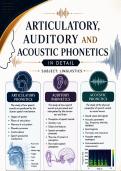
, Articulatory phonetics in detail:
Articulatory Phonetics (Detailed Explanation for BS English Students)
Articulatory phonetics is a branch of Phonetics that studies how speech sounds are
physically produced by the organs of speech. It explains how air from the lungs moves
through the vocal tract and how different speech organs such as the tongue, lips, teeth,
palate, and vocal cords work together to produce different sounds.
When we speak, air comes from the lungs, passes through the larynx (voice box) and moves
into the mouth or nose. The movement and position of speech organs change the airflow
and produce different speech sounds. Articulatory phonetics mainly focuses on air stream
mechanism, place of articulation, and manner of articulation.
1. Air Stream Mechanism
The air stream mechanism refers to the way air moves to produce speech sounds. Air is
necessary for speech production. In most languages, including English, air comes from the
lungs and moves outward through the mouth or nose.
Types of Air Stream Mechanism
1. Pulmonic Air Stream
This is the most common air stream mechanism used in English.
Air moves from the lungs outward through the mouth or nose.
Examples:
/p/, /b/, /t/, /d/, /k/, /g/
Most English consonants and vowels are produced with the pulmonic egressive airflow.
2. Glottalic Air Stream
This type of airflow is produced by the movement of the larynx (glottis). It is used in some
languages to produce special sounds such as ejectives and implosives.
3. Velaric Air Stream
This mechanism involves the back of the tongue and the soft palate (velum). It produces
sounds known as clicks, which are common in some African languages.
2. Places of Articulation
Place of articulation refers to the part of the mouth where speech sounds are produced. It
explains which speech organs come together or come close to create a sound.
Major Places of Articulation
1. Bilabial
These sounds are produced by both lips touching each other.
Examples:
/p/, /b/, /m/
Example words: pen, bat, man
2. Labiodental
These sounds are produced when the lower lip touches the upper teeth.
Examples:
Articulatory Phonetics (Detailed Explanation for BS English Students)
Articulatory phonetics is a branch of Phonetics that studies how speech sounds are
physically produced by the organs of speech. It explains how air from the lungs moves
through the vocal tract and how different speech organs such as the tongue, lips, teeth,
palate, and vocal cords work together to produce different sounds.
When we speak, air comes from the lungs, passes through the larynx (voice box) and moves
into the mouth or nose. The movement and position of speech organs change the airflow
and produce different speech sounds. Articulatory phonetics mainly focuses on air stream
mechanism, place of articulation, and manner of articulation.
1. Air Stream Mechanism
The air stream mechanism refers to the way air moves to produce speech sounds. Air is
necessary for speech production. In most languages, including English, air comes from the
lungs and moves outward through the mouth or nose.
Types of Air Stream Mechanism
1. Pulmonic Air Stream
This is the most common air stream mechanism used in English.
Air moves from the lungs outward through the mouth or nose.
Examples:
/p/, /b/, /t/, /d/, /k/, /g/
Most English consonants and vowels are produced with the pulmonic egressive airflow.
2. Glottalic Air Stream
This type of airflow is produced by the movement of the larynx (glottis). It is used in some
languages to produce special sounds such as ejectives and implosives.
3. Velaric Air Stream
This mechanism involves the back of the tongue and the soft palate (velum). It produces
sounds known as clicks, which are common in some African languages.
2. Places of Articulation
Place of articulation refers to the part of the mouth where speech sounds are produced. It
explains which speech organs come together or come close to create a sound.
Major Places of Articulation
1. Bilabial
These sounds are produced by both lips touching each other.
Examples:
/p/, /b/, /m/
Example words: pen, bat, man
2. Labiodental
These sounds are produced when the lower lip touches the upper teeth.
Examples: