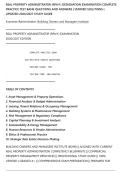
RESIDENTIAL MANAGEMENT PROFESSIONAL (RMP) CERTIFICATION EXAM
COMPLETE PRACTICE TEST BANK QUESTIONS AND ANSWERS | VERIFIED
SOLUTIONS | UPDATED 2026/2027 STUDY GUIDE
Examiner/Administrator: National Center for Housing Management (NCHM)
━━━━━━━━━━━━━━━━━━━━━━━━━━━━━━━━━━━━
RESIDENTIAL MANAGEMENT PROFESSIONAL (RMP) CERTIFICATION EXAM
2026/2027 EDITION
━━━━━━━━━━━━━━━━━━━━━━━━━━━━━━━━━━━━
COMPLETE PRACTICE EXAM
100+ MULTIPLE-CHOICE QUESTIONS
PASSING SCORE: 70%
TESTING TIME: 120 MINUTES
━━━━━━━━━━━━━━━━━━━━━━━━━━━━━━━━━━━━
TABLE OF CONTENT
1. Residential Property Operations
2. Fair Housing & Regulatory Compliance
3. Leasing Administration
4. Resident Relations & Retention
5. Property Financial Management
6. Maintenance & Asset Preservation
7. Risk Management & Safety
8. Marketing & Occupancy Management
9. Human Resources & Vendor Oversight
10. Professional Ethics & Leadership
NATIONAL CENTER FOR HOUSING MANAGEMENT (NCHM) || ALIGNED WITH CURRENT
RESIDENTIAL MANAGEMENT COMPETENCY BLUEPRINTS || PROPERTY OPERATIONS &
HOUSING REGULATIONS || PROFESSIONAL STUDY GUIDE || 100% VERIFIED | GRADED
,A+ || COMPREHENSIVE EXAM PREPARATION || PREPARED FOR CERTIFICATION &
PROFESSIONAL DEVELOPMENT || PROFESSIONAL EXAMINATION USE
━━━━━━━━━━━━━━━━━━━━━━━━━━━━━━━━━━━━
Residential Property Operations (Q1–Q8)
Q1. A property manager discovers that recurring complaints about water pressure in
one building are increasing resident dissatisfaction. What should be the manager's
most effective initial action?
A. Wait until additional complaints are received before investigating
B. Increase rent to fund future repairs
C. Conduct a systematic assessment to identify the root cause and prioritize corrective
action
D. Advise residents to limit water usage during peak hours
Correct Answer: 🔴 BOLD C. Conduct a systematic assessment to identify the root
cause and prioritize corrective action
Explanation: 🔹 Effective residential management requires identifying underlying
operational issues before implementing solutions. A systematic assessment helps
determine whether the problem stems from infrastructure, maintenance deficiencies,
or external factors. Option A delays corrective action, Option B is unrelated to
immediate problem resolution, and Option D shifts responsibility to residents rather
than addressing the operational deficiency.
Q2. A community with 250 units experiences a sudden increase in vacancy rates. Which
performance indicator should the manager evaluate first?
A. Occupancy trend reports
B. Elevator maintenance logs
C. Landscaping schedules
D. Utility consumption records
Correct Answer: 🔴 BOLD A. Occupancy trend reports
Explanation: 🔹 Occupancy trends provide direct insight into leasing performance,
resident turnover, and vacancy patterns. Reviewing these reports can reveal whether
,vacancies are linked to market conditions, lease expirations, or resident
dissatisfaction. The remaining options may be relevant operationally but do not
directly explain increasing vacancy rates.
Q3. A manager is preparing annual operating objectives. Which objective best reflects
a measurable management goal?
A. Improve community appearance
B. Enhance resident satisfaction somehow
C. Reduce resident turnover by 10% within 12 months
D. Encourage better teamwork
Correct Answer: 🔴 BOLD C. Reduce resident turnover by 10% within 12 months
Explanation: 🔹 Effective goals should be specific, measurable, achievable, relevant,
and time-bound (SMART). Option C provides a quantifiable benchmark and
timeframe. The other choices are vague and lack measurable criteria needed for
performance evaluation.
Q4. During a property inspection, several common-area deficiencies are identified.
What should occur immediately after documentation?
A. Archive inspection records
B. Prioritize deficiencies according to risk and operational impact
C. Inform residents that repairs may not occur soon
D. Close the inspection report
Correct Answer: 🔴 BOLD B. Prioritize deficiencies according to risk and operational
impact
Explanation: 🔹 Property managers must evaluate findings and prioritize repairs
according to safety concerns, compliance obligations, and resident impact.
Documentation alone does not resolve deficiencies. The remaining options fail to
initiate effective corrective action.
, Q5. Which practice contributes most directly to long-term asset preservation?
A. Delaying preventive maintenance to reduce expenses
B. Limiting inspections to emergencies
C. Implementing a structured preventive maintenance program
D. Outsourcing all maintenance functions regardless of cost
Correct Answer: 🔴 BOLD C. Implementing a structured preventive maintenance
program
Explanation: 🔹 Preventive maintenance reduces equipment failures, extends asset
life, and minimizes unexpected repair costs. Delayed maintenance often increases
expenses and operational disruptions. Outsourcing alone does not guarantee
effective asset preservation.
Q6. A property manager receives conflicting reports regarding a recurring security
gate malfunction. What management approach is most appropriate?
A. Make a decision based on assumptions
B. Ignore the issue until a major failure occurs
C. Gather objective information and verify operational conditions before acting
D. Replace the gate immediately without evaluation
Correct Answer: 🔴 BOLD C. Gather objective information and verify operational
conditions before acting
Explanation: 🔹 Professional management decisions should be evidence-based.
Verification helps identify actual causes and prevents unnecessary expenditures.
Assumptions and delayed responses may increase risk and liability exposure.
Q7. Which document is most useful for monitoring operational performance over
time?
A. Resident birthday list
B. Property management dashboard and KPI reports
COMPLETE PRACTICE TEST BANK QUESTIONS AND ANSWERS | VERIFIED
SOLUTIONS | UPDATED 2026/2027 STUDY GUIDE
Examiner/Administrator: National Center for Housing Management (NCHM)
━━━━━━━━━━━━━━━━━━━━━━━━━━━━━━━━━━━━
RESIDENTIAL MANAGEMENT PROFESSIONAL (RMP) CERTIFICATION EXAM
2026/2027 EDITION
━━━━━━━━━━━━━━━━━━━━━━━━━━━━━━━━━━━━
COMPLETE PRACTICE EXAM
100+ MULTIPLE-CHOICE QUESTIONS
PASSING SCORE: 70%
TESTING TIME: 120 MINUTES
━━━━━━━━━━━━━━━━━━━━━━━━━━━━━━━━━━━━
TABLE OF CONTENT
1. Residential Property Operations
2. Fair Housing & Regulatory Compliance
3. Leasing Administration
4. Resident Relations & Retention
5. Property Financial Management
6. Maintenance & Asset Preservation
7. Risk Management & Safety
8. Marketing & Occupancy Management
9. Human Resources & Vendor Oversight
10. Professional Ethics & Leadership
NATIONAL CENTER FOR HOUSING MANAGEMENT (NCHM) || ALIGNED WITH CURRENT
RESIDENTIAL MANAGEMENT COMPETENCY BLUEPRINTS || PROPERTY OPERATIONS &
HOUSING REGULATIONS || PROFESSIONAL STUDY GUIDE || 100% VERIFIED | GRADED
,A+ || COMPREHENSIVE EXAM PREPARATION || PREPARED FOR CERTIFICATION &
PROFESSIONAL DEVELOPMENT || PROFESSIONAL EXAMINATION USE
━━━━━━━━━━━━━━━━━━━━━━━━━━━━━━━━━━━━
Residential Property Operations (Q1–Q8)
Q1. A property manager discovers that recurring complaints about water pressure in
one building are increasing resident dissatisfaction. What should be the manager's
most effective initial action?
A. Wait until additional complaints are received before investigating
B. Increase rent to fund future repairs
C. Conduct a systematic assessment to identify the root cause and prioritize corrective
action
D. Advise residents to limit water usage during peak hours
Correct Answer: 🔴 BOLD C. Conduct a systematic assessment to identify the root
cause and prioritize corrective action
Explanation: 🔹 Effective residential management requires identifying underlying
operational issues before implementing solutions. A systematic assessment helps
determine whether the problem stems from infrastructure, maintenance deficiencies,
or external factors. Option A delays corrective action, Option B is unrelated to
immediate problem resolution, and Option D shifts responsibility to residents rather
than addressing the operational deficiency.
Q2. A community with 250 units experiences a sudden increase in vacancy rates. Which
performance indicator should the manager evaluate first?
A. Occupancy trend reports
B. Elevator maintenance logs
C. Landscaping schedules
D. Utility consumption records
Correct Answer: 🔴 BOLD A. Occupancy trend reports
Explanation: 🔹 Occupancy trends provide direct insight into leasing performance,
resident turnover, and vacancy patterns. Reviewing these reports can reveal whether
,vacancies are linked to market conditions, lease expirations, or resident
dissatisfaction. The remaining options may be relevant operationally but do not
directly explain increasing vacancy rates.
Q3. A manager is preparing annual operating objectives. Which objective best reflects
a measurable management goal?
A. Improve community appearance
B. Enhance resident satisfaction somehow
C. Reduce resident turnover by 10% within 12 months
D. Encourage better teamwork
Correct Answer: 🔴 BOLD C. Reduce resident turnover by 10% within 12 months
Explanation: 🔹 Effective goals should be specific, measurable, achievable, relevant,
and time-bound (SMART). Option C provides a quantifiable benchmark and
timeframe. The other choices are vague and lack measurable criteria needed for
performance evaluation.
Q4. During a property inspection, several common-area deficiencies are identified.
What should occur immediately after documentation?
A. Archive inspection records
B. Prioritize deficiencies according to risk and operational impact
C. Inform residents that repairs may not occur soon
D. Close the inspection report
Correct Answer: 🔴 BOLD B. Prioritize deficiencies according to risk and operational
impact
Explanation: 🔹 Property managers must evaluate findings and prioritize repairs
according to safety concerns, compliance obligations, and resident impact.
Documentation alone does not resolve deficiencies. The remaining options fail to
initiate effective corrective action.
, Q5. Which practice contributes most directly to long-term asset preservation?
A. Delaying preventive maintenance to reduce expenses
B. Limiting inspections to emergencies
C. Implementing a structured preventive maintenance program
D. Outsourcing all maintenance functions regardless of cost
Correct Answer: 🔴 BOLD C. Implementing a structured preventive maintenance
program
Explanation: 🔹 Preventive maintenance reduces equipment failures, extends asset
life, and minimizes unexpected repair costs. Delayed maintenance often increases
expenses and operational disruptions. Outsourcing alone does not guarantee
effective asset preservation.
Q6. A property manager receives conflicting reports regarding a recurring security
gate malfunction. What management approach is most appropriate?
A. Make a decision based on assumptions
B. Ignore the issue until a major failure occurs
C. Gather objective information and verify operational conditions before acting
D. Replace the gate immediately without evaluation
Correct Answer: 🔴 BOLD C. Gather objective information and verify operational
conditions before acting
Explanation: 🔹 Professional management decisions should be evidence-based.
Verification helps identify actual causes and prevents unnecessary expenditures.
Assumptions and delayed responses may increase risk and liability exposure.
Q7. Which document is most useful for monitoring operational performance over
time?
A. Resident birthday list
B. Property management dashboard and KPI reports