ATI Proctored Exams (Med-Surg, Pharmacology, Fundamentals) 2026/2027 | Complete Review with Questions & Verified Answers 2026/2027 | Page 1 | Passing Score: Pass/Fail
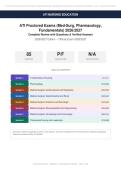
ATI NURSING EDUCATION
ATI Proctored Exams (Med-Surg, Pharmacology,
Fundamentals) 2026/2027
Complete Review with Questions & Verified Answers
2026/2027 Edition -- Official Exam 2026/2027
85 P/F N/A
QUESTIONS PASSING SCORE RECERTIFICATION
TABLE OF CONTENTS
Section 1 Fundamentals of Nursing Q1-Q11
Section 2 Pharmacology Q12-Q22
Section 3 Medical-Surgical: Cardiovascular and Respiratory Q23-Q33
Section 4 Medical-Surgical: Gastrointestinal and Renal Q34-Q43
Section 5 Medical-Surgical: Endocrine and Neurologic Q44-Q53
Section 6 Medical-Surgical: Musculoskeletal and Integumentary Q54-Q63
Section 7 Medical-Surgical: Hematologic and Immunologic Q64-Q74
Section 8 Professional Nursing and Leadership Q75-Q85
Instructions: Select the single best answer for each question. This exam is designed for ATI Proctored Exams certification preparation.
Passing score determined by ATI standard.
ATI
ATIProctored
ProctoredExams
Exams----2026/2027
2026/2027 || Passing
PassingScore:
Score:Pass/Fail
Pass/Fail || Page
Page11of
of45
1
, SECTION 1 | Fundamentals of Nursing | Q1-Q11 | ATI Proctored Exams 2026/2027
Q1 Question 1 of 85
A 72-year-old female patient is admitted to the medical unit with dehydration and confusion. The
nurse assesses the patient's skin turgor by pinching the skin on the back of the hand, and it
remains tented for 10 seconds. The patient's mucous membranes are dry and sticky. Based on
these findings, which nursing intervention should the nurse implement first?
A. Encourage the patient to drink clear fluids independently
B. Apply a moisture barrier cream to dry skin areas
C. Initiate intravenous fluid replacement as prescribed
D. Request a dietary consultation for oral hydration options
Correct Answer: C
Rationale:
The patient presents with severe dehydration evidenced by tented skin turgor, dry mucous membranes, and
confusion, which indicates the need for immediate IV fluid resuscitation. Oral hydration alone is insufficient and
unsafe for a confused patient at risk for aspiration. Moisture barrier cream addresses skin integrity but not the
life-threatening fluid deficit.
Q2 Question 2 of 85
A newly licensed nurse is preparing to administer a cleansing enema to a 58-year-old male patient
scheduled for a colonoscopy. The patient expresses embarrassment and reluctance to proceed
with the procedure. Which action by the nurse best demonstrates respect for the patient's dignity?
A. Close the door, ensure privacy, and allow the patient to express concerns before proceeding
B. Explain that the enema is required and proceed with the procedure
C. Ask the charge nurse to administer the enema instead
D. Document the patient's refusal and notify the healthcare provider immediately
Correct Answer: A
Rationale:
Closing the door, ensuring privacy, and allowing the patient to express concerns demonstrates respect for
dignity while still addressing the therapeutic need. Simply proceeding ignores the patient's feelings. Asking
another nurse avoids the issue rather than building rapport, and documenting refusal is premature before
attempting to address concerns.
ATI Proctored Exams -- 2026/2027 | Passing Score: Pass/Fail | Page 2 of 45
,Q3 Question 3 of 85
A 45-year-old patient with type 2 diabetes is being discharged home with a new prescription for
insulin glargine. The nurse is teaching the patient about proper insulin storage. The patient states, 'I
can keep my insulin on the windowsill so I remember to take it.' Which response by the nurse is
most appropriate?
A. That is a good idea because it will help you remember your medication schedule
B. Insulin should be stored in the refrigerator at all times to maintain potency
C. You should keep all insulin in a cool, dark place such as a medicine cabinet
D. Unopened insulin should be refrigerated, but the pen in use can be kept at room temperature away
from direct sunlight for up to 28 days
Correct Answer: D
Rationale:
Unopened insulin vials or pens must be refrigerated, but the currently in-use pen can be stored at room
temperature for up to 28 days away from direct sunlight and heat. The windowsill exposes insulin to
temperature fluctuations and sunlight that degrade potency. Keeping all insulin refrigerated is incorrect for
in-use pens.
Q4 Question 4 of 85
A nurse is caring for a 68-year-old patient who fell at home and sustained a hip fracture. The
patient is now one day postoperative and refuses to use the incentive spirometer, stating, 'It hurts
too much when I breathe deeply.' Which action should the nurse take first?
A. Instruct the patient that refusal of the spirometer may lead to pneumonia
B. Administer the prescribed PRN analgesic 30 minutes before the next spirometry session
C. Document the refusal and continue with other aspects of care
D. Notify the healthcare provider about the patient's noncompliance
Correct Answer: B
Rationale:
Preemptive pain management with the prescribed PRN analgesic addresses the root cause of refusal and
enables the patient to perform deep breathing effectively. While educating about pneumonia risk is important, it
does not solve the pain barrier. Documenting refusal without intervention is neglectful, and notifying the
provider before attempting nursing interventions is premature.
ATI Proctored Exams -- 2026/2027 | Passing Score: Pass/Fail | Page 3 of 45
, Q5 Question 5 of 85
A 34-year-old patient with a history of anxiety disorder is admitted to the surgical unit for an elective
procedure. The patient is pacing the room, has a heart rate of 110 bpm, and states, 'I cannot go
through with this surgery.' Which nursing action best addresses the patient's immediate needs?
A. Remind the patient that the surgery has been planned for months and cannot be cancelled
B. Ask the family to convince the patient to proceed with the surgery
C. Administer the prescribed as-needed lorazepam and stay with the patient using therapeutic
communication
D. Notify the surgeon immediately to cancel the procedure
Correct Answer: C
Rationale:
The patient is experiencing acute anxiety with physiological manifestations. Administering the prescribed
anxiolytic and providing therapeutic presence addresses both pharmacological and emotional needs. Forcing
or coercing the patient violates autonomy. Immediate cancellation is premature without first attempting to
manage anxiety.
Q6 Question 6 of 85
A nurse working the night shift discovers a 76-year-old patient on the floor beside the bed. The
patient is conscious but confused and reports pain in the right hip. Which sequence of actions
should the nurse follow?
A. Help the patient back to bed immediately, then notify the healthcare provider and document
B. Complete the incident report first, then assess the patient and notify the provider
C. Call a code, then assess the patient and help the patient back to bed
D. Assess the patient, notify the healthcare provider, complete an incident report, and document the
event
Correct Answer: D
Rationale:
The correct sequence is to first assess the patient for injuries, then notify the provider, complete the incident
report, and document the event. Moving the patient before assessment could worsen a fracture. Completing
the incident report before assessment delays care, and calling a code is unnecessary for a conscious patient.
ATI Proctored Exams -- 2026/2027 | Passing Score: Pass/Fail | Page 4 of 45
ATI NURSING EDUCATION
ATI Proctored Exams (Med-Surg, Pharmacology,
Fundamentals) 2026/2027
Complete Review with Questions & Verified Answers
2026/2027 Edition -- Official Exam 2026/2027
85 P/F N/A
QUESTIONS PASSING SCORE RECERTIFICATION
TABLE OF CONTENTS
Section 1 Fundamentals of Nursing Q1-Q11
Section 2 Pharmacology Q12-Q22
Section 3 Medical-Surgical: Cardiovascular and Respiratory Q23-Q33
Section 4 Medical-Surgical: Gastrointestinal and Renal Q34-Q43
Section 5 Medical-Surgical: Endocrine and Neurologic Q44-Q53
Section 6 Medical-Surgical: Musculoskeletal and Integumentary Q54-Q63
Section 7 Medical-Surgical: Hematologic and Immunologic Q64-Q74
Section 8 Professional Nursing and Leadership Q75-Q85
Instructions: Select the single best answer for each question. This exam is designed for ATI Proctored Exams certification preparation.
Passing score determined by ATI standard.
ATI
ATIProctored
ProctoredExams
Exams----2026/2027
2026/2027 || Passing
PassingScore:
Score:Pass/Fail
Pass/Fail || Page
Page11of
of45
1
, SECTION 1 | Fundamentals of Nursing | Q1-Q11 | ATI Proctored Exams 2026/2027
Q1 Question 1 of 85
A 72-year-old female patient is admitted to the medical unit with dehydration and confusion. The
nurse assesses the patient's skin turgor by pinching the skin on the back of the hand, and it
remains tented for 10 seconds. The patient's mucous membranes are dry and sticky. Based on
these findings, which nursing intervention should the nurse implement first?
A. Encourage the patient to drink clear fluids independently
B. Apply a moisture barrier cream to dry skin areas
C. Initiate intravenous fluid replacement as prescribed
D. Request a dietary consultation for oral hydration options
Correct Answer: C
Rationale:
The patient presents with severe dehydration evidenced by tented skin turgor, dry mucous membranes, and
confusion, which indicates the need for immediate IV fluid resuscitation. Oral hydration alone is insufficient and
unsafe for a confused patient at risk for aspiration. Moisture barrier cream addresses skin integrity but not the
life-threatening fluid deficit.
Q2 Question 2 of 85
A newly licensed nurse is preparing to administer a cleansing enema to a 58-year-old male patient
scheduled for a colonoscopy. The patient expresses embarrassment and reluctance to proceed
with the procedure. Which action by the nurse best demonstrates respect for the patient's dignity?
A. Close the door, ensure privacy, and allow the patient to express concerns before proceeding
B. Explain that the enema is required and proceed with the procedure
C. Ask the charge nurse to administer the enema instead
D. Document the patient's refusal and notify the healthcare provider immediately
Correct Answer: A
Rationale:
Closing the door, ensuring privacy, and allowing the patient to express concerns demonstrates respect for
dignity while still addressing the therapeutic need. Simply proceeding ignores the patient's feelings. Asking
another nurse avoids the issue rather than building rapport, and documenting refusal is premature before
attempting to address concerns.
ATI Proctored Exams -- 2026/2027 | Passing Score: Pass/Fail | Page 2 of 45
,Q3 Question 3 of 85
A 45-year-old patient with type 2 diabetes is being discharged home with a new prescription for
insulin glargine. The nurse is teaching the patient about proper insulin storage. The patient states, 'I
can keep my insulin on the windowsill so I remember to take it.' Which response by the nurse is
most appropriate?
A. That is a good idea because it will help you remember your medication schedule
B. Insulin should be stored in the refrigerator at all times to maintain potency
C. You should keep all insulin in a cool, dark place such as a medicine cabinet
D. Unopened insulin should be refrigerated, but the pen in use can be kept at room temperature away
from direct sunlight for up to 28 days
Correct Answer: D
Rationale:
Unopened insulin vials or pens must be refrigerated, but the currently in-use pen can be stored at room
temperature for up to 28 days away from direct sunlight and heat. The windowsill exposes insulin to
temperature fluctuations and sunlight that degrade potency. Keeping all insulin refrigerated is incorrect for
in-use pens.
Q4 Question 4 of 85
A nurse is caring for a 68-year-old patient who fell at home and sustained a hip fracture. The
patient is now one day postoperative and refuses to use the incentive spirometer, stating, 'It hurts
too much when I breathe deeply.' Which action should the nurse take first?
A. Instruct the patient that refusal of the spirometer may lead to pneumonia
B. Administer the prescribed PRN analgesic 30 minutes before the next spirometry session
C. Document the refusal and continue with other aspects of care
D. Notify the healthcare provider about the patient's noncompliance
Correct Answer: B
Rationale:
Preemptive pain management with the prescribed PRN analgesic addresses the root cause of refusal and
enables the patient to perform deep breathing effectively. While educating about pneumonia risk is important, it
does not solve the pain barrier. Documenting refusal without intervention is neglectful, and notifying the
provider before attempting nursing interventions is premature.
ATI Proctored Exams -- 2026/2027 | Passing Score: Pass/Fail | Page 3 of 45
, Q5 Question 5 of 85
A 34-year-old patient with a history of anxiety disorder is admitted to the surgical unit for an elective
procedure. The patient is pacing the room, has a heart rate of 110 bpm, and states, 'I cannot go
through with this surgery.' Which nursing action best addresses the patient's immediate needs?
A. Remind the patient that the surgery has been planned for months and cannot be cancelled
B. Ask the family to convince the patient to proceed with the surgery
C. Administer the prescribed as-needed lorazepam and stay with the patient using therapeutic
communication
D. Notify the surgeon immediately to cancel the procedure
Correct Answer: C
Rationale:
The patient is experiencing acute anxiety with physiological manifestations. Administering the prescribed
anxiolytic and providing therapeutic presence addresses both pharmacological and emotional needs. Forcing
or coercing the patient violates autonomy. Immediate cancellation is premature without first attempting to
manage anxiety.
Q6 Question 6 of 85
A nurse working the night shift discovers a 76-year-old patient on the floor beside the bed. The
patient is conscious but confused and reports pain in the right hip. Which sequence of actions
should the nurse follow?
A. Help the patient back to bed immediately, then notify the healthcare provider and document
B. Complete the incident report first, then assess the patient and notify the provider
C. Call a code, then assess the patient and help the patient back to bed
D. Assess the patient, notify the healthcare provider, complete an incident report, and document the
event
Correct Answer: D
Rationale:
The correct sequence is to first assess the patient for injuries, then notify the provider, complete the incident
report, and document the event. Moving the patient before assessment could worsen a fracture. Completing
the incident report before assessment delays care, and calling a code is unnecessary for a conscious patient.
ATI Proctored Exams -- 2026/2027 | Passing Score: Pass/Fail | Page 4 of 45