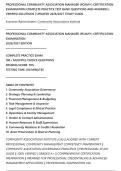
PROFESSIONAL COMMUNITY ASSOCIATION MANAGER (PCAM®) CERTIFICATION
EXAM COMPLETE PRACTICE TEST BANK QUESTIONS AND ANSWERS | VERIFIED
SOLUTIONS | UPDATED 2026/2027 STUDY GUIDE
Examiner/Administrator: Community Associations Institute
━━━━━━━━━━━━━━━━━━━━━━━━━━━━
PROFESSIONAL COMMUNITY ASSOCIATION MANAGER (PCAM®) CERTIFICATION
EXAM
2026/2027 EDITION
━━━━━━━━━━━━━━━━━━━━━━━━━━━━
COMPLETE PRACTICE EXAM
120 MULTIPLE-CHOICE QUESTIONS
PASSING SCORE: 70%
TESTING TIME: 180 MINUTES
━━━━━━━━━━━━━━━━━━━━━━━━━━━━
TABLE OF CONTENTS
Governing Documents & Legal Frameworks
Association Governance & Board Relations
Strategic Planning & Leadership
Financial Management & Budgeting
Risk Management & Insurance
Facilities & Asset Management
Human Resources & Vendor Administration
Community Relations & Conflict Resolution
Ethics & Professional Practice
Advanced Community Association Operations
COMMUNITY ASSOCIATIONS INSTITUTE (CAI) || ALIGNED WITH CURRENT
PROFESSIONAL COMMUNITY MANAGEMENT COMPETENCY BLUEPRINTS ||
GOVERNANCE AND ASSOCIATION OPERATIONS || PROFESSIONAL STUDY GUIDE ||
,100% VERIFIED | GRADED A+ || COMPREHENSIVE CERTIFICATION PREPARATION ||
PREPARED FOR PROFESSIONAL CREDENTIALING || PROFESSIONAL EXAMINATION USE
Governing Documents & Legal Frameworks (Questions 1–8)
Q1. A community association board wants to adopt a rule restricting short-term
rentals. The declaration is silent on rental duration, but the bylaws authorize the board
to adopt reasonable rules. Which action should the manager recommend first?
A. Adopt the rule immediately because board authority supersedes the declaration.
B. Review governing documents and obtain legal guidance regarding the board's rule-
making authority.
C. Hold a membership vote regardless of document requirements.
D. Enforce the restriction through informal board policy.
Correct Answer: 🔴 B. Review governing documents and obtain legal guidance
regarding the board's rule-making authority.
Explanation: 🔹 A manager must ensure proposed rules are consistent with governing
documents and applicable law. Legal review helps determine whether the board
possesses authority to restrict rentals through rules rather than amendments. Option A
incorrectly assumes unlimited board authority. Option C may be unnecessary if
documents do not require owner approval. Option D creates enforcement risk because
policies cannot override governing documents.
Q2. During a covenant enforcement dispute, an owner argues that the association
selectively enforced a landscaping standard. What is the strongest defense for the
association?
A. The board has unlimited discretion.
B. Previous violations are irrelevant.
C. The association consistently documented and enforced similar violations.
D. The owner signed the purchase agreement.
Correct Answer: 🔴 C. The association consistently documented and enforced
similar violations.
,Explanation: 🔹 Consistent enforcement is critical to maintaining credibility and legal
defensibility. Documentation demonstrating uniform treatment of comparable violations
significantly strengthens the association's position. Options A and B disregard due
process and fairness principles. Option D does not excuse inconsistent enforcement
practices.
Q3. A board member asks the manager to withhold records from owners because the
records may generate criticism. What should the manager do?
A. Refuse all record requests indefinitely.
B. Follow governing document and statutory record disclosure requirements.
C. Release only records favorable to the board.
D. Destroy nonessential records.
Correct Answer: 🔴 B. Follow governing document and statutory record disclosure
requirements.
Explanation: 🔹 Transparency obligations are governed by law and governing
documents. Managers must balance confidentiality requirements with legitimate owner
access rights. Options A, C, and D expose the association to legal, ethical, and
operational risks.
Q4. Which governing document generally has the highest authority within a
community association hierarchy?
A. Board resolutions.
B. Rules and regulations.
C. Bylaws.
D. Declaration or CC&Rs.
Correct Answer: 🔴 D. Declaration or CC&Rs.
Explanation: 🔹 The declaration typically establishes fundamental property rights and
restrictions and generally takes precedence over bylaws, rules, and resolutions. Lower-
level documents must be consistent with the declaration. The other options possess
subordinate authority.
, Q5. A manager discovers that a board-approved policy conflicts with state law. What is
the most appropriate action?
A. Continue enforcement until challenged.
B. Ignore the policy without informing the board.
C. Inform the board and recommend legal review and policy revision.
D. Allow owners to determine compliance individually.
Correct Answer: 🔴 C. Inform the board and recommend legal review and policy
revision.
Explanation: 🔹 Professional managers have a duty to identify compliance concerns and
advise governing bodies accordingly. Policies inconsistent with law should be corrected
promptly. Options A, B, and D fail to address the underlying legal risk.
Q6. An association seeks to amend its declaration. Which factor is typically most
important?
A. Manager approval.
B. Vendor approval.
C. Compliance with amendment procedures specified in governing documents.
D. Informal board consensus.
Correct Answer: 🔴 C. Compliance with amendment procedures specified in
governing documents.
Explanation: 🔹 Amendments generally require strict adherence to prescribed voting
thresholds and procedural requirements. Failure to comply may invalidate the
amendment. The other options lack legal authority to amend governing documents.
Q7. Which situation most likely requires consultation with association legal counsel?
A. Scheduling a meeting room.
B. Selecting office supplies.
EXAM COMPLETE PRACTICE TEST BANK QUESTIONS AND ANSWERS | VERIFIED
SOLUTIONS | UPDATED 2026/2027 STUDY GUIDE
Examiner/Administrator: Community Associations Institute
━━━━━━━━━━━━━━━━━━━━━━━━━━━━
PROFESSIONAL COMMUNITY ASSOCIATION MANAGER (PCAM®) CERTIFICATION
EXAM
2026/2027 EDITION
━━━━━━━━━━━━━━━━━━━━━━━━━━━━
COMPLETE PRACTICE EXAM
120 MULTIPLE-CHOICE QUESTIONS
PASSING SCORE: 70%
TESTING TIME: 180 MINUTES
━━━━━━━━━━━━━━━━━━━━━━━━━━━━
TABLE OF CONTENTS
Governing Documents & Legal Frameworks
Association Governance & Board Relations
Strategic Planning & Leadership
Financial Management & Budgeting
Risk Management & Insurance
Facilities & Asset Management
Human Resources & Vendor Administration
Community Relations & Conflict Resolution
Ethics & Professional Practice
Advanced Community Association Operations
COMMUNITY ASSOCIATIONS INSTITUTE (CAI) || ALIGNED WITH CURRENT
PROFESSIONAL COMMUNITY MANAGEMENT COMPETENCY BLUEPRINTS ||
GOVERNANCE AND ASSOCIATION OPERATIONS || PROFESSIONAL STUDY GUIDE ||
,100% VERIFIED | GRADED A+ || COMPREHENSIVE CERTIFICATION PREPARATION ||
PREPARED FOR PROFESSIONAL CREDENTIALING || PROFESSIONAL EXAMINATION USE
Governing Documents & Legal Frameworks (Questions 1–8)
Q1. A community association board wants to adopt a rule restricting short-term
rentals. The declaration is silent on rental duration, but the bylaws authorize the board
to adopt reasonable rules. Which action should the manager recommend first?
A. Adopt the rule immediately because board authority supersedes the declaration.
B. Review governing documents and obtain legal guidance regarding the board's rule-
making authority.
C. Hold a membership vote regardless of document requirements.
D. Enforce the restriction through informal board policy.
Correct Answer: 🔴 B. Review governing documents and obtain legal guidance
regarding the board's rule-making authority.
Explanation: 🔹 A manager must ensure proposed rules are consistent with governing
documents and applicable law. Legal review helps determine whether the board
possesses authority to restrict rentals through rules rather than amendments. Option A
incorrectly assumes unlimited board authority. Option C may be unnecessary if
documents do not require owner approval. Option D creates enforcement risk because
policies cannot override governing documents.
Q2. During a covenant enforcement dispute, an owner argues that the association
selectively enforced a landscaping standard. What is the strongest defense for the
association?
A. The board has unlimited discretion.
B. Previous violations are irrelevant.
C. The association consistently documented and enforced similar violations.
D. The owner signed the purchase agreement.
Correct Answer: 🔴 C. The association consistently documented and enforced
similar violations.
,Explanation: 🔹 Consistent enforcement is critical to maintaining credibility and legal
defensibility. Documentation demonstrating uniform treatment of comparable violations
significantly strengthens the association's position. Options A and B disregard due
process and fairness principles. Option D does not excuse inconsistent enforcement
practices.
Q3. A board member asks the manager to withhold records from owners because the
records may generate criticism. What should the manager do?
A. Refuse all record requests indefinitely.
B. Follow governing document and statutory record disclosure requirements.
C. Release only records favorable to the board.
D. Destroy nonessential records.
Correct Answer: 🔴 B. Follow governing document and statutory record disclosure
requirements.
Explanation: 🔹 Transparency obligations are governed by law and governing
documents. Managers must balance confidentiality requirements with legitimate owner
access rights. Options A, C, and D expose the association to legal, ethical, and
operational risks.
Q4. Which governing document generally has the highest authority within a
community association hierarchy?
A. Board resolutions.
B. Rules and regulations.
C. Bylaws.
D. Declaration or CC&Rs.
Correct Answer: 🔴 D. Declaration or CC&Rs.
Explanation: 🔹 The declaration typically establishes fundamental property rights and
restrictions and generally takes precedence over bylaws, rules, and resolutions. Lower-
level documents must be consistent with the declaration. The other options possess
subordinate authority.
, Q5. A manager discovers that a board-approved policy conflicts with state law. What is
the most appropriate action?
A. Continue enforcement until challenged.
B. Ignore the policy without informing the board.
C. Inform the board and recommend legal review and policy revision.
D. Allow owners to determine compliance individually.
Correct Answer: 🔴 C. Inform the board and recommend legal review and policy
revision.
Explanation: 🔹 Professional managers have a duty to identify compliance concerns and
advise governing bodies accordingly. Policies inconsistent with law should be corrected
promptly. Options A, B, and D fail to address the underlying legal risk.
Q6. An association seeks to amend its declaration. Which factor is typically most
important?
A. Manager approval.
B. Vendor approval.
C. Compliance with amendment procedures specified in governing documents.
D. Informal board consensus.
Correct Answer: 🔴 C. Compliance with amendment procedures specified in
governing documents.
Explanation: 🔹 Amendments generally require strict adherence to prescribed voting
thresholds and procedural requirements. Failure to comply may invalidate the
amendment. The other options lack legal authority to amend governing documents.
Q7. Which situation most likely requires consultation with association legal counsel?
A. Scheduling a meeting room.
B. Selecting office supplies.