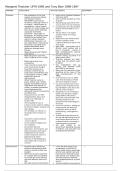
Margaret Thatcher 1979-1990 and Tony Blair 1990-1997
RANKING SUCCESSFUL NOT SUCCESSFUL JUDGEMENT
Economy - the restoration of the free retail prices doubled between
market economy to replace 1973 and 1979
the Keynsian system. VAT increase pushed up price
- INFLATION could only be of goods
tackled by reducing money in Manufacturing output fell by 14%
circulation - belief known as an many firms went out of business
monetarism - not by further Unemployment more than doubled
attempts to control wages and between 1979 and 1983 to over 3
price by gov which had been million
unpopular and failed.
The gov didn’t act to support
- June 1979 - Chancellor of
Exchequer, Sir Geoffrey Howe
industries which were facing
shifted the tax burden from problems
direct to indirect taxation High interest rates which boosted
- Deflationary measures: cut overseas confidence made
gov expenditure, reduced gov conditions difficult for anyone with
borrowing, increased taxes loans to pay.
- weaker businesses were April 1981 - riots broke out in
failing but stronger ones Brixton, south London, and in
thrived July in Liverpool - places of
- Wage demands and inflation high unemployment, poverty
were falling and racial tension.
- Rate that prices rose from Further rioting occurred in 6
18% in 1980 to 4.5% in 1983 other major cities
- Thatcher shocked but didn’t
- Britain becoming more accept that her policies were
competitive to blame
- Value of pound increased which Gov expenditure rose by
made exports dearer though it almost 13% between 1979
boosted the financial sector and 1990 in real terms
- Increase in North Sea oil Many saw the reduction of gov
production turned Britain into spending as the cause of the
a net exporter of oil by 1980 - high unemployment of mid
significant cause for 1980s.
improvement such economic success in 1980s
- When Thatcher came to came from the bonanza of North
power, Britain had 3 million Sea Oil not Thatcher’s policies
private shareholders and by too many privatised services and
1990 there were almost 11 utilities run for the profit of a few
million. Increased investment big shareholders rather than in the
and entrepreneurship interests of the consumers
- selling off Telecommunications deregulation of city encouraged a
and Electricity. selfish, ‘get-rich-quick’ attitude
- Financial Services Act 1986 - among bankers and currency
deregulated the London stock dealers that contrasted badly with
market in the ‘Big Bang’ of the bleak prospects for the
October 1986 unemployed and disadvantaged in
- This revitalised the City of the society
London’s money market by ending social cost of policies - pushing up
the Stock Exchange’s monopoly on unemployment and destroying
share dealing. communities hit by the fall in
- Gov spending was reduced as a manufacturing - outweighed the
percentage of the economy as a benefits.
whole Seemed that the gap between the
- thriving and high earning financial
- Chancellor’s policies produced sector and the depressed areas of
‘Lawson’s Boom’ traditional industry and mining in
- she succeeded in bringing down south had gotten even greater
rate of inflation she was unable to cut
- privatisation improved government spending because
performance, lowered prices, and of defence, law and order and
offered consumers more choice unemployment benefits.
- deregulation of City ensured
London remained at centre of a
global financial market
- extension of shareholding gave
more people stake in success of
economy
-
Social policies Hospitals were allowed to it was the first stage in the
become self-governing NHS privatisation of the NHS in
trusts in control of their own which profit motive would take
budgets priority over patient care and
NHS services were expected that business methods would
to compete with one another take priority over patient care
to provide the most efficient and that business methods
and cost effective service to were inappropriate for a public
GPs service.
GPs also became fund-holders Thatcher doubtful but persuaded by
, with their own budget to Keith Joseph that GCSEs would
manage not lead to lowering of standards
The gov’s supporters argued Some argued that GCSEs were not
that these changes injected academically vigorous enough
some much-needed financial content of national curriculum
discipline into the NHS.
especially in English in history
her gov cut university budgets in caused disagreement and some
1981, forcing universities to seek thought setting down what should
alternative sources of revenue and be taught was too restrictive and
accept more students. testing too frequent.
1988 - University funding council Some maintained that Thatcher not
was created to ensure uni education being consistent. Allowing schools
reflected needs of the economy to control own budgets suggested a
rather than concentrating on pure extension of freedom from gov
research. control but the imposition of the
Gov didn’t abolish grants for young
national curriculum meant that the
people to attend places of higher
Department of Education in
education
London decided what schools
one of first actions - allowed long-
would teach.
term council tenants right to buy
some university staff lost security of
their houses. their tenure
To encourage home ownership, she changes controversial and in
also insisted that home owners 1985 Oxford University
should continue to get tax relief on refused to grant Thatcher an
their mortgages. honorary degree something
During her premiership the amount given to the 6 previous
of gov money spent on subsidising Oxford-educated PMs since
mortgages doubled and property the war.
ownership increased by 12%. There was limited interest in
Social security spending was the cabinet in education
more carefully targeted, child Local authorities’ strong
benefit recues and it did not opponents of educational
go up with inflation changes
Leaks to the press and fear of
election loss meant that major
changes to NHS not made
Thatcher failed to end
dependency culture
No reduction in central control
possibly even an increase.
Industrial Thatcher benefitted from 1984-85 Miner’s Strike - Coal
relations lessons of the 1971 Industrial strike began in March 1984 in
Relations Act which response to announcement
incorporated all the measures that 20 economic pits were
to restrict union power in a too close with the loss of
single act making it easy for 20,000 jobs. The dispute
union to mobilise their became exceptionally bitter
opposition. and violent because neither
1980 Employment Act - outlawed side was prepared to
secondary picketing and increased compromise
rights of employees who refused to
join unions. gov money was made Not thatcher’s policies that
available to encourage unions to were successful: high levels of
hold secret ballots. unemployment deterred strike
1982 Employment Act - restricted action. Workers less ready to strike
sympathy strikes and allowed knowing that they could easily be
closed shops only if a ballot replaced by large pool of
showed a 85% support. Anyone unemployed.
sacked for not joining a union
became entitled to high rates of National Coal Board facing
compensation. loss of £250 million for 1983-
84
1984 Trade Union Act - required
Miner’s strike wasn’t defeated
unions to hold secret ballots of
due to the gov: miners not
their members before launching united - those who wanted to
industrial action. continue working formed a
Number of working days lost break-away union - The Union
to strikes dropped significantly of Democratic Mineworkers in
Thatcher’s economic policies Dec 1984. Strike which began
accelerated social and economic in march, held in spring and
changes that had been affecting summer when less demand for
trade union membership since the coal. This deprived the miners
1960s of key weapon as coal stocks
Miner’s strike defeated: Gov remained adequate. Although
prepared to use considerable there was widespread
force to protect the right of sympathy for miners, violent
miners who wanted to work incidents on the picket lines
and was not swayed by the undermined public support
scale of unrest and violence. Thatcher’s enemies still
April 1984 - Arthur Scargill believed that she destroyed
refused to hold a national the livelihoods and historic
ballot of miners on whether to communities some of which
continue strike action. This have never been restored.
deprived the strike of legal
RANKING SUCCESSFUL NOT SUCCESSFUL JUDGEMENT
Economy - the restoration of the free retail prices doubled between
market economy to replace 1973 and 1979
the Keynsian system. VAT increase pushed up price
- INFLATION could only be of goods
tackled by reducing money in Manufacturing output fell by 14%
circulation - belief known as an many firms went out of business
monetarism - not by further Unemployment more than doubled
attempts to control wages and between 1979 and 1983 to over 3
price by gov which had been million
unpopular and failed.
The gov didn’t act to support
- June 1979 - Chancellor of
Exchequer, Sir Geoffrey Howe
industries which were facing
shifted the tax burden from problems
direct to indirect taxation High interest rates which boosted
- Deflationary measures: cut overseas confidence made
gov expenditure, reduced gov conditions difficult for anyone with
borrowing, increased taxes loans to pay.
- weaker businesses were April 1981 - riots broke out in
failing but stronger ones Brixton, south London, and in
thrived July in Liverpool - places of
- Wage demands and inflation high unemployment, poverty
were falling and racial tension.
- Rate that prices rose from Further rioting occurred in 6
18% in 1980 to 4.5% in 1983 other major cities
- Thatcher shocked but didn’t
- Britain becoming more accept that her policies were
competitive to blame
- Value of pound increased which Gov expenditure rose by
made exports dearer though it almost 13% between 1979
boosted the financial sector and 1990 in real terms
- Increase in North Sea oil Many saw the reduction of gov
production turned Britain into spending as the cause of the
a net exporter of oil by 1980 - high unemployment of mid
significant cause for 1980s.
improvement such economic success in 1980s
- When Thatcher came to came from the bonanza of North
power, Britain had 3 million Sea Oil not Thatcher’s policies
private shareholders and by too many privatised services and
1990 there were almost 11 utilities run for the profit of a few
million. Increased investment big shareholders rather than in the
and entrepreneurship interests of the consumers
- selling off Telecommunications deregulation of city encouraged a
and Electricity. selfish, ‘get-rich-quick’ attitude
- Financial Services Act 1986 - among bankers and currency
deregulated the London stock dealers that contrasted badly with
market in the ‘Big Bang’ of the bleak prospects for the
October 1986 unemployed and disadvantaged in
- This revitalised the City of the society
London’s money market by ending social cost of policies - pushing up
the Stock Exchange’s monopoly on unemployment and destroying
share dealing. communities hit by the fall in
- Gov spending was reduced as a manufacturing - outweighed the
percentage of the economy as a benefits.
whole Seemed that the gap between the
- thriving and high earning financial
- Chancellor’s policies produced sector and the depressed areas of
‘Lawson’s Boom’ traditional industry and mining in
- she succeeded in bringing down south had gotten even greater
rate of inflation she was unable to cut
- privatisation improved government spending because
performance, lowered prices, and of defence, law and order and
offered consumers more choice unemployment benefits.
- deregulation of City ensured
London remained at centre of a
global financial market
- extension of shareholding gave
more people stake in success of
economy
-
Social policies Hospitals were allowed to it was the first stage in the
become self-governing NHS privatisation of the NHS in
trusts in control of their own which profit motive would take
budgets priority over patient care and
NHS services were expected that business methods would
to compete with one another take priority over patient care
to provide the most efficient and that business methods
and cost effective service to were inappropriate for a public
GPs service.
GPs also became fund-holders Thatcher doubtful but persuaded by
, with their own budget to Keith Joseph that GCSEs would
manage not lead to lowering of standards
The gov’s supporters argued Some argued that GCSEs were not
that these changes injected academically vigorous enough
some much-needed financial content of national curriculum
discipline into the NHS.
especially in English in history
her gov cut university budgets in caused disagreement and some
1981, forcing universities to seek thought setting down what should
alternative sources of revenue and be taught was too restrictive and
accept more students. testing too frequent.
1988 - University funding council Some maintained that Thatcher not
was created to ensure uni education being consistent. Allowing schools
reflected needs of the economy to control own budgets suggested a
rather than concentrating on pure extension of freedom from gov
research. control but the imposition of the
Gov didn’t abolish grants for young
national curriculum meant that the
people to attend places of higher
Department of Education in
education
London decided what schools
one of first actions - allowed long-
would teach.
term council tenants right to buy
some university staff lost security of
their houses. their tenure
To encourage home ownership, she changes controversial and in
also insisted that home owners 1985 Oxford University
should continue to get tax relief on refused to grant Thatcher an
their mortgages. honorary degree something
During her premiership the amount given to the 6 previous
of gov money spent on subsidising Oxford-educated PMs since
mortgages doubled and property the war.
ownership increased by 12%. There was limited interest in
Social security spending was the cabinet in education
more carefully targeted, child Local authorities’ strong
benefit recues and it did not opponents of educational
go up with inflation changes
Leaks to the press and fear of
election loss meant that major
changes to NHS not made
Thatcher failed to end
dependency culture
No reduction in central control
possibly even an increase.
Industrial Thatcher benefitted from 1984-85 Miner’s Strike - Coal
relations lessons of the 1971 Industrial strike began in March 1984 in
Relations Act which response to announcement
incorporated all the measures that 20 economic pits were
to restrict union power in a too close with the loss of
single act making it easy for 20,000 jobs. The dispute
union to mobilise their became exceptionally bitter
opposition. and violent because neither
1980 Employment Act - outlawed side was prepared to
secondary picketing and increased compromise
rights of employees who refused to
join unions. gov money was made Not thatcher’s policies that
available to encourage unions to were successful: high levels of
hold secret ballots. unemployment deterred strike
1982 Employment Act - restricted action. Workers less ready to strike
sympathy strikes and allowed knowing that they could easily be
closed shops only if a ballot replaced by large pool of
showed a 85% support. Anyone unemployed.
sacked for not joining a union
became entitled to high rates of National Coal Board facing
compensation. loss of £250 million for 1983-
84
1984 Trade Union Act - required
Miner’s strike wasn’t defeated
unions to hold secret ballots of
due to the gov: miners not
their members before launching united - those who wanted to
industrial action. continue working formed a
Number of working days lost break-away union - The Union
to strikes dropped significantly of Democratic Mineworkers in
Thatcher’s economic policies Dec 1984. Strike which began
accelerated social and economic in march, held in spring and
changes that had been affecting summer when less demand for
trade union membership since the coal. This deprived the miners
1960s of key weapon as coal stocks
Miner’s strike defeated: Gov remained adequate. Although
prepared to use considerable there was widespread
force to protect the right of sympathy for miners, violent
miners who wanted to work incidents on the picket lines
and was not swayed by the undermined public support
scale of unrest and violence. Thatcher’s enemies still
April 1984 - Arthur Scargill believed that she destroyed
refused to hold a national the livelihoods and historic
ballot of miners on whether to communities some of which
continue strike action. This have never been restored.
deprived the strike of legal