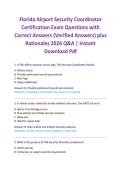
Florida Forensic Investigator
Certification Exam Questions with
Correct Answers (Verified Answers) plus
Rationales 2026 Q&A | Instant
Download Pdf
1. A forensic investigator arrives after evidence has already been moved by first
responders. The BEST response is to:
A. Disregard the scene
B. Document all alterations and continue systematic processing
C. Restart the scene entirely
D. Remove all responders from reports
Answer: B. Document all alterations and continue systematic processing
Rationale: Scene changes must be recorded to maintain evidentiary integrity.
2. A suspect confesses verbally at the scene. The investigator should:
A. Rely only on confession
B. Continue collecting corroborating physical evidence
C. Stop the investigation
D. Ignore physical evidence
Answer: B. Continue collecting corroborating physical evidence
Rationale: Confessions must be supported by independent evidence.
3. Which is the MOST reliable method for documenting a crime scene?
,A. Memory
B. Sketches only
C. Photography with notes and measurements
D. Witness statements only
Answer: C. Photography with notes and measurements
Rationale: Multiple documentation methods ensure accuracy and completeness.
4. A broken window at a burglary scene should be:
A. Replaced immediately
B. Photographed and documented before disturbance
C. Ignored
D. Cleaned for safety first
Answer: B. Photographed and documented before disturbance
Rationale: Evidence must be preserved in its original condition.
5. Which is considered pattern evidence?
A. Fingerprint
B. Bloodstain pattern
C. DNA profile
D. Receipt
Answer: B. Bloodstain pattern
Rationale: Patterns help reconstruct events.
6. A forensic investigator should change gloves:
A. Never
B. Between handling different evidence items
C. Only at end of scene
D. Only when dirty
Answer: B. Between handling different evidence items
Rationale: Prevents cross-contamination.
, 7. The primary purpose of securing a crime scene perimeter is to:
A. Prevent media access
B. Prevent contamination and preserve evidence
C. Arrest suspects
D. Interview witnesses
Answer: B. Prevent contamination and preserve evidence
Rationale: Scene integrity is critical.
8. A latent fingerprint is typically developed using:
A. Dusting powders or chemical reagents
B. Water
C. Fire
D. Heat only
Answer: A. Dusting powders or chemical reagents
Rationale: Latent prints require enhancement techniques.
9. Which is NOT appropriate at a crime scene?
A. Photographing evidence
B. Taking measurements
C. Contaminating evidence with poor handling
D. Documenting scene conditions
Answer: C. Contaminating evidence with poor handling
Rationale: Contamination undermines forensic value.
10. A forensic investigator finds potential digital video evidence. They should:
A. Play the video repeatedly on-site
B. Preserve device state and follow digital protocols
Certification Exam Questions with
Correct Answers (Verified Answers) plus
Rationales 2026 Q&A | Instant
Download Pdf
1. A forensic investigator arrives after evidence has already been moved by first
responders. The BEST response is to:
A. Disregard the scene
B. Document all alterations and continue systematic processing
C. Restart the scene entirely
D. Remove all responders from reports
Answer: B. Document all alterations and continue systematic processing
Rationale: Scene changes must be recorded to maintain evidentiary integrity.
2. A suspect confesses verbally at the scene. The investigator should:
A. Rely only on confession
B. Continue collecting corroborating physical evidence
C. Stop the investigation
D. Ignore physical evidence
Answer: B. Continue collecting corroborating physical evidence
Rationale: Confessions must be supported by independent evidence.
3. Which is the MOST reliable method for documenting a crime scene?
,A. Memory
B. Sketches only
C. Photography with notes and measurements
D. Witness statements only
Answer: C. Photography with notes and measurements
Rationale: Multiple documentation methods ensure accuracy and completeness.
4. A broken window at a burglary scene should be:
A. Replaced immediately
B. Photographed and documented before disturbance
C. Ignored
D. Cleaned for safety first
Answer: B. Photographed and documented before disturbance
Rationale: Evidence must be preserved in its original condition.
5. Which is considered pattern evidence?
A. Fingerprint
B. Bloodstain pattern
C. DNA profile
D. Receipt
Answer: B. Bloodstain pattern
Rationale: Patterns help reconstruct events.
6. A forensic investigator should change gloves:
A. Never
B. Between handling different evidence items
C. Only at end of scene
D. Only when dirty
Answer: B. Between handling different evidence items
Rationale: Prevents cross-contamination.
, 7. The primary purpose of securing a crime scene perimeter is to:
A. Prevent media access
B. Prevent contamination and preserve evidence
C. Arrest suspects
D. Interview witnesses
Answer: B. Prevent contamination and preserve evidence
Rationale: Scene integrity is critical.
8. A latent fingerprint is typically developed using:
A. Dusting powders or chemical reagents
B. Water
C. Fire
D. Heat only
Answer: A. Dusting powders or chemical reagents
Rationale: Latent prints require enhancement techniques.
9. Which is NOT appropriate at a crime scene?
A. Photographing evidence
B. Taking measurements
C. Contaminating evidence with poor handling
D. Documenting scene conditions
Answer: C. Contaminating evidence with poor handling
Rationale: Contamination undermines forensic value.
10. A forensic investigator finds potential digital video evidence. They should:
A. Play the video repeatedly on-site
B. Preserve device state and follow digital protocols