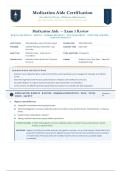
Medication Aide Certification
WEIVER 1 MAXE
CMA
State Board of Nursing · Medication Administration
S A F E M E D I C AT I O N P R A C T I C E S · Q U A L I T Y R E S I D E N T C A R E
STATE CERT.
Medication Aide — Exam 1 Review
M E D I C AT I O N R I G H TS · R O U T E S · P H A R M A CO K I N E T I CS · PA I N A SS E SS M E N T · I N F E C T I O N CO N T R O L ·
S CO P E O F P R A C T I C E
INSTITUTION State Medication Aide Certification Board COURSE CODE CMA-EXAM1-2026
PROGRAM Certified Medication Aide (CMA) · Long- ACADEMIC YEAR
Term Care
EXAM TITLE Medication Aide — Examination 1: TOTAL QUESTIONS 40 Questions
Foundations
COURSE TITLE Medication Administration for Unlicensed FORMAT Multiple Choice / True-False — Select the
Personnel Single Best Answer
EXAMINATION INSTRUCTIONS
▸ Questions cover medication rights, routes of administration, pharmacokinetics, pain management, vital signs, and infection
control.
▸ Select the single best answer for each question based on medication aide certification curriculum.
▸ Pay careful attention to scope of practice and situations requiring licensed nurse notification.
▸ Correct answers and detailed rationales appear below each question for comprehensive exam preparation.
MEDICATION RIGHTS · ROUTES · PHARMACOKINETICS · PAIN · VITAL Questions 1 –
SIGNS · SAFETY 40
1. Neglect is best defined as:
A. Purposeful mistreatment causing physical pain
B. Not providing goods or services needed by a person to prevent injury, emotional pain, mental distress, or physical
illness
C. Verbal threats made toward a resident
D. Taking a resident's personal property without permission
CORRECT ANSWER B. Not providing goods or services needed by a person to prevent injury, emotional pain, mental
distress, or physical illness
RATIONALE Neglect is the failure to provide necessary care, goods, or services—it is an act of omission. Abuse (Option A) is
purposeful mistreatment causing harm. Neglect may be unintentional but still constitutes a serious violation
of resident rights. Medication aides are mandated reporters who must report any suspected neglect
immediately.
, 2. What are the six rights of medication administration?
A. Right patient, medication, time, dose, route, and documentation
B. Right patient, medication, time, dose, route, and diagnosis
C. Right patient, medication, time, dose, route, and provider
D. Right patient, medication, time, dose, route, and pharmacy
CORRECT ANSWER A. Right patient, medication, time, dose, route, and documentation
RATIONALE The six rights are the foundation of safe medication administration: (1) Right patient—verify using two
identifiers; (2) Right medication—compare label to MAR three times; (3) Right time—administer within 30
minutes of scheduled time; (4) Right dose—verify calculation if needed; (5) Right route—oral, topical, etc.; (6)
Right documentation—record immediately after administration, not before.
3. Medication action is defined as:
A. Any unintended reaction to a medication
B. The anticipated, desired effect of a medication
C. The process of eliminating a drug from the body
D. The chemical breakdown of a drug in the liver
CORRECT ANSWER B. The anticipated, desired effect of a medication
RATIONALE Medication action is the therapeutic (desired) effect—what the drug is intended to do. A side effect (Option A)
is any unintended reaction. Excretion (Option C) is elimination. Metabolism (Option D) is chemical
transformation. The medication aide must understand the expected action to evaluate whether the
medication is working and to recognize unexpected responses.
4. A side effect is:
A. The desired therapeutic response to a medication
B. Any unintended reaction to a medication
C. The process of absorption across tissues
D. An allergic immune response
CORRECT ANSWER B. Any unintended reaction to a medication
RATIONALE Side effects are unintended, often predictable reactions to medications—drowsiness from antihistamines, dry
mouth from anticholinergics, GI upset from antibiotics. They differ from allergic reactions (immune-
mediated, Option D). Side effects may be tolerable or may require intervention. The medication aide must
document and report side effects to the licensed nurse.
5. Beth Nelson, a medication aide, accidentally gave a resident a morning medication at 5:00 p.m. What should she
do?
A. Document it as given at the correct time and continue
B. Call the LPN STAT—this is a medication error requiring immediate notification
C. Skip the next dose to compensate
D. Wait until the end of the shift to report
CORRECT ANSWER B. Call the LPN STAT—this is a medication error requiring immediate notification
RATIONALE Administering a medication at the wrong time is a medication error. The medication aide must immediately
notify the licensed nurse (LPN/RN) who will assess the resident, determine if any intervention is needed, and
provide direction. Never falsify documentation, skip doses independently, or delay reporting. Timely, honest
reporting protects resident safety.
WEIVER 1 MAXE
CMA
State Board of Nursing · Medication Administration
S A F E M E D I C AT I O N P R A C T I C E S · Q U A L I T Y R E S I D E N T C A R E
STATE CERT.
Medication Aide — Exam 1 Review
M E D I C AT I O N R I G H TS · R O U T E S · P H A R M A CO K I N E T I CS · PA I N A SS E SS M E N T · I N F E C T I O N CO N T R O L ·
S CO P E O F P R A C T I C E
INSTITUTION State Medication Aide Certification Board COURSE CODE CMA-EXAM1-2026
PROGRAM Certified Medication Aide (CMA) · Long- ACADEMIC YEAR
Term Care
EXAM TITLE Medication Aide — Examination 1: TOTAL QUESTIONS 40 Questions
Foundations
COURSE TITLE Medication Administration for Unlicensed FORMAT Multiple Choice / True-False — Select the
Personnel Single Best Answer
EXAMINATION INSTRUCTIONS
▸ Questions cover medication rights, routes of administration, pharmacokinetics, pain management, vital signs, and infection
control.
▸ Select the single best answer for each question based on medication aide certification curriculum.
▸ Pay careful attention to scope of practice and situations requiring licensed nurse notification.
▸ Correct answers and detailed rationales appear below each question for comprehensive exam preparation.
MEDICATION RIGHTS · ROUTES · PHARMACOKINETICS · PAIN · VITAL Questions 1 –
SIGNS · SAFETY 40
1. Neglect is best defined as:
A. Purposeful mistreatment causing physical pain
B. Not providing goods or services needed by a person to prevent injury, emotional pain, mental distress, or physical
illness
C. Verbal threats made toward a resident
D. Taking a resident's personal property without permission
CORRECT ANSWER B. Not providing goods or services needed by a person to prevent injury, emotional pain, mental
distress, or physical illness
RATIONALE Neglect is the failure to provide necessary care, goods, or services—it is an act of omission. Abuse (Option A) is
purposeful mistreatment causing harm. Neglect may be unintentional but still constitutes a serious violation
of resident rights. Medication aides are mandated reporters who must report any suspected neglect
immediately.
, 2. What are the six rights of medication administration?
A. Right patient, medication, time, dose, route, and documentation
B. Right patient, medication, time, dose, route, and diagnosis
C. Right patient, medication, time, dose, route, and provider
D. Right patient, medication, time, dose, route, and pharmacy
CORRECT ANSWER A. Right patient, medication, time, dose, route, and documentation
RATIONALE The six rights are the foundation of safe medication administration: (1) Right patient—verify using two
identifiers; (2) Right medication—compare label to MAR three times; (3) Right time—administer within 30
minutes of scheduled time; (4) Right dose—verify calculation if needed; (5) Right route—oral, topical, etc.; (6)
Right documentation—record immediately after administration, not before.
3. Medication action is defined as:
A. Any unintended reaction to a medication
B. The anticipated, desired effect of a medication
C. The process of eliminating a drug from the body
D. The chemical breakdown of a drug in the liver
CORRECT ANSWER B. The anticipated, desired effect of a medication
RATIONALE Medication action is the therapeutic (desired) effect—what the drug is intended to do. A side effect (Option A)
is any unintended reaction. Excretion (Option C) is elimination. Metabolism (Option D) is chemical
transformation. The medication aide must understand the expected action to evaluate whether the
medication is working and to recognize unexpected responses.
4. A side effect is:
A. The desired therapeutic response to a medication
B. Any unintended reaction to a medication
C. The process of absorption across tissues
D. An allergic immune response
CORRECT ANSWER B. Any unintended reaction to a medication
RATIONALE Side effects are unintended, often predictable reactions to medications—drowsiness from antihistamines, dry
mouth from anticholinergics, GI upset from antibiotics. They differ from allergic reactions (immune-
mediated, Option D). Side effects may be tolerable or may require intervention. The medication aide must
document and report side effects to the licensed nurse.
5. Beth Nelson, a medication aide, accidentally gave a resident a morning medication at 5:00 p.m. What should she
do?
A. Document it as given at the correct time and continue
B. Call the LPN STAT—this is a medication error requiring immediate notification
C. Skip the next dose to compensate
D. Wait until the end of the shift to report
CORRECT ANSWER B. Call the LPN STAT—this is a medication error requiring immediate notification
RATIONALE Administering a medication at the wrong time is a medication error. The medication aide must immediately
notify the licensed nurse (LPN/RN) who will assess the resident, determine if any intervention is needed, and
provide direction. Never falsify documentation, skip doses independently, or delay reporting. Timely, honest
reporting protects resident safety.