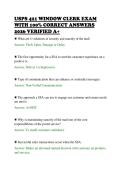
HESI NCLEX PRACTICE QUESTIONS AND
ANSWERS 100% CORRECT!!
,A client has not had a bowel movement in 2 days and reports this information to the
nurse. Which intervention should the nurse implement first?
A. Instruct the caregiver to offer a glass of warm prune juice at mealtimes.
B. Notify the HCP and request a prescription for a stool softener
C. Assess the client's medical record to determine his normal bowel pattern.
D. Instruct the caregiver to increase the client's fluids to five 8 ounce glasses per day. -
ANSWER C. Assess the client's medical record to determine his normal bowel pattern.
Bowel movements vary per person. Some people go multiple times a day and others go
a few times a week. The answer is an assessment, not an intervention.
A client who has chronic obstructive pulmonary disease (COPD) is resting in a semi-
Fowler's position with oxygen at 2 L/min per nasal cannula. The client develops
dyspnea. Which action should the nurse take first?
A. Call the HCP
B. Obtain a bedside pulse oximeter
C. Raise the head of the bed higher
D. Assess the clients vital signs - ANSWER C. Raise the head of the bed higher
For COPD you want an SpO2 >90%. Fowler's position can help to open up the chest
wall and aid in breathing. B and D are normally done in the same assessment so you
can check those off.
A client who has hyperparathyroidism is scheduled to receive a prescribed dose of oral
phosphate. The nurse notes that the client's serum calcium is 12.5 mg/dL. What action
should the nurse take?
A. Hold the phosphate and notify the HCP
B. Review the client's serum parathyroid hormone level
C. Give a PRN dose of IV calcium per protocol
D. Administer the dose of oral phosphate - ANSWER D. Administer the dose of oral
phosphate
A normal calcium level is 5.5-10.5 mg/dL so this value is high. Calcium and phosphate
have an inverse reaction so in order to lower the calcium, there needs to be more
, phosphate. Giving the oral phosphate will be beneficial to lowering the serum calcium
level.
In completing a client's perioperative routine, the nurse finds that the consent form has
not been signed. The client begins to ask more questions about the surgical procedure.
Which action should the nurse take?
A. Witness the client's signature on the consent form
B. Answer the client's questions about the surgery
C. Inform the HCP that the client has questions about the surgery
D. Reassure the client that the surgeon will answer any questions before the anesthetic
is administered - ANSWER C. Inform the HCP that the client has questions about the
surgery
The nurse has to witness the surgery in person but because the client has questions,
informed consent is not given. The nurse cannot answer questions about the surgery
because that is the HCP's responsibility. If the HCP does not know about questions,
they may not answer them before the surgery.
This is a HIPPA violation and needs to be addressed presently. The new nurse should
tell them to talk privately or not at all about the case. If they continue the conversation
the nurse should inform the nurse manager of the conversation. There is no event taken
place with a patient or to a patient so a report is not necessary.
An awake, alert client with impending pulmonary edema is brought to the emergency
department. The client provides the nurse with a copy of a living will that states that "no
invasive" medical procedures should be used to "keep her alive". The healthcare team
is questioning whether the client should be intubated. WHich information should guid
the team's decision?
A. The living will removes the obligation to the client in any medical decision making.
B. The client is awake and alter, which makes the living will irrelevant and nonbinding
C. Lifesaving measures do not have to be explained to the client because of the signed
living will.
D. The family shoul dbe contacted to determine who has durable power of attorney for
health care for the client. - ANSWER B. The client is awake and alter, which makes the
living will irrelevant and nonbinding
Because they are awake and alert they are bale to make medical decisions and the
living will is not active. If they were not awake and alert then the healthcare team would
use the living will to decide.
ANSWERS 100% CORRECT!!
,A client has not had a bowel movement in 2 days and reports this information to the
nurse. Which intervention should the nurse implement first?
A. Instruct the caregiver to offer a glass of warm prune juice at mealtimes.
B. Notify the HCP and request a prescription for a stool softener
C. Assess the client's medical record to determine his normal bowel pattern.
D. Instruct the caregiver to increase the client's fluids to five 8 ounce glasses per day. -
ANSWER C. Assess the client's medical record to determine his normal bowel pattern.
Bowel movements vary per person. Some people go multiple times a day and others go
a few times a week. The answer is an assessment, not an intervention.
A client who has chronic obstructive pulmonary disease (COPD) is resting in a semi-
Fowler's position with oxygen at 2 L/min per nasal cannula. The client develops
dyspnea. Which action should the nurse take first?
A. Call the HCP
B. Obtain a bedside pulse oximeter
C. Raise the head of the bed higher
D. Assess the clients vital signs - ANSWER C. Raise the head of the bed higher
For COPD you want an SpO2 >90%. Fowler's position can help to open up the chest
wall and aid in breathing. B and D are normally done in the same assessment so you
can check those off.
A client who has hyperparathyroidism is scheduled to receive a prescribed dose of oral
phosphate. The nurse notes that the client's serum calcium is 12.5 mg/dL. What action
should the nurse take?
A. Hold the phosphate and notify the HCP
B. Review the client's serum parathyroid hormone level
C. Give a PRN dose of IV calcium per protocol
D. Administer the dose of oral phosphate - ANSWER D. Administer the dose of oral
phosphate
A normal calcium level is 5.5-10.5 mg/dL so this value is high. Calcium and phosphate
have an inverse reaction so in order to lower the calcium, there needs to be more
, phosphate. Giving the oral phosphate will be beneficial to lowering the serum calcium
level.
In completing a client's perioperative routine, the nurse finds that the consent form has
not been signed. The client begins to ask more questions about the surgical procedure.
Which action should the nurse take?
A. Witness the client's signature on the consent form
B. Answer the client's questions about the surgery
C. Inform the HCP that the client has questions about the surgery
D. Reassure the client that the surgeon will answer any questions before the anesthetic
is administered - ANSWER C. Inform the HCP that the client has questions about the
surgery
The nurse has to witness the surgery in person but because the client has questions,
informed consent is not given. The nurse cannot answer questions about the surgery
because that is the HCP's responsibility. If the HCP does not know about questions,
they may not answer them before the surgery.
This is a HIPPA violation and needs to be addressed presently. The new nurse should
tell them to talk privately or not at all about the case. If they continue the conversation
the nurse should inform the nurse manager of the conversation. There is no event taken
place with a patient or to a patient so a report is not necessary.
An awake, alert client with impending pulmonary edema is brought to the emergency
department. The client provides the nurse with a copy of a living will that states that "no
invasive" medical procedures should be used to "keep her alive". The healthcare team
is questioning whether the client should be intubated. WHich information should guid
the team's decision?
A. The living will removes the obligation to the client in any medical decision making.
B. The client is awake and alter, which makes the living will irrelevant and nonbinding
C. Lifesaving measures do not have to be explained to the client because of the signed
living will.
D. The family shoul dbe contacted to determine who has durable power of attorney for
health care for the client. - ANSWER B. The client is awake and alter, which makes the
living will irrelevant and nonbinding
Because they are awake and alert they are bale to make medical decisions and the
living will is not active. If they were not awake and alert then the healthcare team would
use the living will to decide.