Transport in Plants
9.1 Transport Systems in Dicotyledonous Plants
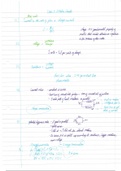
9.1 Transport systems in dicotyledonous plants
- The need for transport systems:
o Metabolic demands – many internal cells do not 9.2 water transport in multicellular plants
photosynthesise, and they need O2 and C6H12O6 9.3 transpiration
to respire. Hormones and ions must also be
transported, and waste products remove. 9.4 translocation
o Size – some trees are huge, and leaves are very 9.5 Plant adaptations to water availability
far form roots so would take ages by diffusion
o Surface area: volume ratio – leaves have a relatively large SA:V ratio however, the stem,
trunks and roots are taken into account overall plants have a relatively small SA:V ratio. This
means that they cannot rely on diffusion alone to get everything they need to the cells.
Xylem Tissue:
- Xylem tissue consists of xylem vessels, fibres and xylem parenchyma.
- The fibres and xylem parenchyma are supportive tissues, and the
parenchyma holds other xylem elements in place.
- Xylem vessels carry water and minerals up the plant.
- Narrow vessel cells have become thickened by being impregnated with lignin
which is a waterproof chemical. It strengthens and prevents the collapse of
vessels.
- The cells die and the contents and the end walls of the cells are lost.
- Spiral, annular and reticulate thickening gives flexibility and allows cells to
stretch as the plant grows.
- Thick-walled xylem parenchyma packs around the xylem vessels and stores
food and tannin deposits – tannin is a bitter astringent chemical that
protects plant tissue from attack by herbivores.
- Adaptations ~ dead cells end to end, narrow tubes continuous water
column, pits allow water to translocate from vessel to vessel, lignification
pattern allows vessels to bend and stretch as the plant grows,
uninterrupted water flow.
Phloem Tissue:
- The phloem’s role is transport of organic solutes and ions around the plant from a source to a sink.
- The tissue consists of sieve tube elements, companion cells, phloem fibres and phloem parenchyma
- Sieve tube elements:
o Contain some cell contents and are lined up end to end.
o The ends of the cell have become perforated to make sieve plates, making long continuous
tubes.
o Most organelles have degenerated.
o The tubes transport sugars (sucrose) dissolved in water as
sap.
o Phloem protein may be seen, they have thin walls and are
not lignified.
- Companion cells:
o Connected to sieve tubes by plasmodesma.
o Lots of mitochondria and other organelles.
o Supply phloem with ATP and new phloem protein and other
enzymes for activation of the sieve tube elements.
o Companion cells act as transfer cells to actively load
sucrose into sieve tube elements.
, Plant Leaf Adaptations
Photosynthesis Gas exchange Reduce Water Loss
- Palisade mesophyll ~ large - Thin leaves with large surface - Waxy cuticle ~ waterproof
number of chloroplasts to absorb area to give large surface area layer prevents water from
light. to volume ration, increases the leaving the leaf.
- Water supplied via xylem rate of diffusion. - Guard cells can close stomata
- Large surface area of leaves - Short diffusion distances to reduce water loss.
to maximise absorption - Spongy mesophyll and stomata - Different plants may have
allowing gases to diffuse to/from further adaptations.
palisade cells.
9.2 Water Transport in Multicellular Plants
- Uses for water in plants
o Tugor pressure as a result of osmosis, also drives cell expansion which is the force that enables
plant roots to force their way through tarmac and concrete.
o The loss of water through evaporation helps keep plants cool.
o Mineral ions and products of photosynthesis are transported in aqueous solutions.
o Water is a raw material for photosynthesis.
- Water enters the root hairs by osmosis moving down its water potential gradient. There is a water
potential gradient from the roots and soil water where it is least negative and the xylem where it is
more negative. Once in the cytoplasm it moves thorough the cortex cells through the plasmodesma this
is called the symplast pathway.
- Water can also move via osmosis from vacuole to vacuole (vacuolar pathway)
- Water also moves from the soil to the endodermis via the permeable cell walls in the apoplast pathway
moving by mass flow down a pressure gradient as there is lower hydrostatic pressure at the endodermis.
The apoplast route is stopped by the casparian strip at the endodermis and has to enter the symplast
pathway.
- Active transport of minerals into the xylem from the endodermis cells lowers the water potential and
low hydrostatic pressure created by transpiration means that the water moves from the endodermis
into the xylem by osmosis. This creates root pressure at the bottom of the xylem.
- Evidence for the role of active transport in root pressure:
o Cyanide affects the mitochondria and prevent the production of ATP. If cyanide is applied to
root cells so there is no energy supply, the root pressure disappears.
o Root pressure increases with rise in temperature, and falls with decrease in temperature, this
suggests chemical reactions are involved.
o If levels of oxygen or respiratory substrates fall, root pressure falls.
9.1 Transport Systems in Dicotyledonous Plants
9.1 Transport systems in dicotyledonous plants
- The need for transport systems:
o Metabolic demands – many internal cells do not 9.2 water transport in multicellular plants
photosynthesise, and they need O2 and C6H12O6 9.3 transpiration
to respire. Hormones and ions must also be
transported, and waste products remove. 9.4 translocation
o Size – some trees are huge, and leaves are very 9.5 Plant adaptations to water availability
far form roots so would take ages by diffusion
o Surface area: volume ratio – leaves have a relatively large SA:V ratio however, the stem,
trunks and roots are taken into account overall plants have a relatively small SA:V ratio. This
means that they cannot rely on diffusion alone to get everything they need to the cells.
Xylem Tissue:
- Xylem tissue consists of xylem vessels, fibres and xylem parenchyma.
- The fibres and xylem parenchyma are supportive tissues, and the
parenchyma holds other xylem elements in place.
- Xylem vessels carry water and minerals up the plant.
- Narrow vessel cells have become thickened by being impregnated with lignin
which is a waterproof chemical. It strengthens and prevents the collapse of
vessels.
- The cells die and the contents and the end walls of the cells are lost.
- Spiral, annular and reticulate thickening gives flexibility and allows cells to
stretch as the plant grows.
- Thick-walled xylem parenchyma packs around the xylem vessels and stores
food and tannin deposits – tannin is a bitter astringent chemical that
protects plant tissue from attack by herbivores.
- Adaptations ~ dead cells end to end, narrow tubes continuous water
column, pits allow water to translocate from vessel to vessel, lignification
pattern allows vessels to bend and stretch as the plant grows,
uninterrupted water flow.
Phloem Tissue:
- The phloem’s role is transport of organic solutes and ions around the plant from a source to a sink.
- The tissue consists of sieve tube elements, companion cells, phloem fibres and phloem parenchyma
- Sieve tube elements:
o Contain some cell contents and are lined up end to end.
o The ends of the cell have become perforated to make sieve plates, making long continuous
tubes.
o Most organelles have degenerated.
o The tubes transport sugars (sucrose) dissolved in water as
sap.
o Phloem protein may be seen, they have thin walls and are
not lignified.
- Companion cells:
o Connected to sieve tubes by plasmodesma.
o Lots of mitochondria and other organelles.
o Supply phloem with ATP and new phloem protein and other
enzymes for activation of the sieve tube elements.
o Companion cells act as transfer cells to actively load
sucrose into sieve tube elements.
, Plant Leaf Adaptations
Photosynthesis Gas exchange Reduce Water Loss
- Palisade mesophyll ~ large - Thin leaves with large surface - Waxy cuticle ~ waterproof
number of chloroplasts to absorb area to give large surface area layer prevents water from
light. to volume ration, increases the leaving the leaf.
- Water supplied via xylem rate of diffusion. - Guard cells can close stomata
- Large surface area of leaves - Short diffusion distances to reduce water loss.
to maximise absorption - Spongy mesophyll and stomata - Different plants may have
allowing gases to diffuse to/from further adaptations.
palisade cells.
9.2 Water Transport in Multicellular Plants
- Uses for water in plants
o Tugor pressure as a result of osmosis, also drives cell expansion which is the force that enables
plant roots to force their way through tarmac and concrete.
o The loss of water through evaporation helps keep plants cool.
o Mineral ions and products of photosynthesis are transported in aqueous solutions.
o Water is a raw material for photosynthesis.
- Water enters the root hairs by osmosis moving down its water potential gradient. There is a water
potential gradient from the roots and soil water where it is least negative and the xylem where it is
more negative. Once in the cytoplasm it moves thorough the cortex cells through the plasmodesma this
is called the symplast pathway.
- Water can also move via osmosis from vacuole to vacuole (vacuolar pathway)
- Water also moves from the soil to the endodermis via the permeable cell walls in the apoplast pathway
moving by mass flow down a pressure gradient as there is lower hydrostatic pressure at the endodermis.
The apoplast route is stopped by the casparian strip at the endodermis and has to enter the symplast
pathway.
- Active transport of minerals into the xylem from the endodermis cells lowers the water potential and
low hydrostatic pressure created by transpiration means that the water moves from the endodermis
into the xylem by osmosis. This creates root pressure at the bottom of the xylem.
- Evidence for the role of active transport in root pressure:
o Cyanide affects the mitochondria and prevent the production of ATP. If cyanide is applied to
root cells so there is no energy supply, the root pressure disappears.
o Root pressure increases with rise in temperature, and falls with decrease in temperature, this
suggests chemical reactions are involved.
o If levels of oxygen or respiratory substrates fall, root pressure falls.