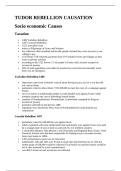
TUDOR REBELLION CAUSATION
Socio economic Causes
Taxation
1489 Yorkshire Rebellion
1497 Cornwall Rebellion
1525 Amicable Grant
minor in Pilgrimage of Grace and Western
tax collectors often assaulted and locally people claimed they were too poor or not
willing to pay
1515 Henry VIII returned payments from 19 Yorkshire towns and villages as they
were so poverty stricken
according to the 1522 Survey 1/3 of people in Exeter and Leicester escaped on
account of poverty
60% of male population was liable for taxation but was levied occasionally when
there was an emergency
Yorkshire Rebellion 1489
objections came from Yorkshire council about having to pat a tax for a war that did
not concern them
parliament voted to allow Henry VII £100,000 to meet the costs of a campaign against
France
saw it as unfair as traditionally people in south funded wars against France while
northern counties met cost of defending Sottish border
counties of Northumberland, Westmorland, Cumberland exempted by King on
account of poverty
protestors affected by bad harvest 1488
unpopular news that Henry Percy Earl of Northumberland would lead the tax
commission
Cornish Rebellion 1497
parliament voted for £60,000 for war against Scots
rebels explained with some justification that customarily wars against Scots were paid
by a scutage (type of tax) or land tax and only by 4 of northern counties
2 councillors blamed: John Morton, Lord Chancellor and Reginald Bray, King’s Chief
Financial Adviser who had been responsible for finding ways to increase revenue
from royal estate in 1490s
1497 parliamentary grant was an innovation
traditionally 15th and 10th were levied as usual rates that had been set in 1334 but
further grant of £60,000 would be collected if war broke out and this money would be
set at rates assessed by royal commissioners
war didn’t break out and second tax not collected
,Amicable Grant 1525
non parliamentary tax which commissioners were ordered to collect in the spring of
1525
objected as in 1522 Wolsey had raised £260,000 in forced loans which he said would
be repaid out of the next parliamentary subsidy - didn’t happen
1523 Wolsey tried to get parliament to vote a subsidy of £800,000 but ordered only
£151,00 payable over 4 years
church expected to pay £120,000
grant made excessive demands on the laity and clergy alike
since 1513, Wolsey had introduced tax assessments based on land, income and
personal assets and collected what yielded the highest tax
assessments mad by the gov officials and ended paying fixed rate
laity required to pay special tax of 5% if they were rated below £20, 7.5% if rated at
between £20 and £50 and 16.5% if rated above £50 a year
many of the protestors would not have been paying tax for the first time at high rates
clergy hit harder as had to pay rate of 25% of their annual revenue or value of their
movable goods worth less than £10 and 33% of those above £10
grave shortages of coinage which is why the gov urgently needed to collect tax and
rising unemployment following a fall in wool prices = economic stress
Pilgrimage of Grace 1536
only 1 set of articles concerned tax
didnt want to pay tax due to Subsidy Act of 1534
in Lincolnshire there were rumours that the tax was a prelude for further fiscal
exactions such as tax on white meat and horned cattle
subsidy’s yield of £80,000 small and affected onyl few people but many rebels
claimed couldn’t afford it
there were also attempts to collect taxes in peacetime in 1540 and 1553
Western Rebellion 1549
Somerset’s Subsidy Act 1549
tax on sheep and on every pound of wool cloth was levied on pasture farmers and
cloth producers
tax hit poorer peasants and tenants most of all as wealthy clothiers and sheep farmers
raised prices to pay costs
west country was not the only sheep farming region but Devon was a largely enclosed
country and was affected more than most
tax due to be assessed 2 weeks after the introduction of the English prayer Book so
this added to their list of grievances
Enclosures
caused tensions between landowners and tenants, provoked local disturbances and
riots
Midland Revolt 1607
, Pilgrimage of Grace 1536
only 1 of articles cited enclosures as cause
much rioting over illegal enclosures in course of 1535 and common grievance among
northern rebels
over 300 people at Gigglewick in Yorkshire pulled down hedges and dykes
there were riots at Fressington in Cumberland
both areas sent rebels in the following year to attack the lands of the Earl of
Cumberland, a notorious landlord who had enclosed on his tenants lands in Eden
Valley and denied them grazing rights
Husbandmen at Horncastle in Lincolnshire were also concerned at the encroachment
of tenants rights although this was a minor grievance among the commons
Ketts Rebellion 1549
caused by unlawful enclosures
triggered by local incident between 2 rival landowners, Robert Kett and John
Flowerdew
both had recently enclosed their lands and Flowerdew, Norfolk’s feodary was not
popular in Wymondham and nearby Attleborough where rioting began
Kett became the spokesman for the rebels
sparked by allegations that landlords had been deliberately obstructing a gov
commission that was investigating illegal enclosures
rebels believed they could have the backing of the gov if they were to take the law
into their own hands
similar riots and hedge breaking occurred in Sussex, Kent, Cambridgeshire, Midlands
and south west countries but it was in Norfolk where riots turned to open rebellion
many tenant farmers actually favoured enclosure because it denied their landlords the
ancient right of folding their sheep and cattle on the tenants arable fields and only
opposed enclosure when they denied this practise
Kett keen to maintain enclosures where saffron was grown so animals could not
damage valuable crop
concern of wealthy landowners such as lords of the manor who had extensive private
estates pasturing their flocks on common land which was in short supply
overstocking of common land common complaint
1540s Norfolk peasants from Hingham and Great Durham has prosecuted their
landlords for grazing animals on common lands → not successful
magistrates usually landlords themselves and either knew or sympathised with
landlords involved
1549: The year of commotion
Somerset - open fields converted to deer parks
Wilton in Wiltshire - peasants removed Lord Herbert’s hedges that had put up a
common land
Sussex - serious revolts only prevented when the Earl of Arundel forced gentlemen to
dismantle their hedges
only in low lying sheep corn areas in much of Midlands, East Anglia, southern and
south east England was it an issue
Socio economic Causes
Taxation
1489 Yorkshire Rebellion
1497 Cornwall Rebellion
1525 Amicable Grant
minor in Pilgrimage of Grace and Western
tax collectors often assaulted and locally people claimed they were too poor or not
willing to pay
1515 Henry VIII returned payments from 19 Yorkshire towns and villages as they
were so poverty stricken
according to the 1522 Survey 1/3 of people in Exeter and Leicester escaped on
account of poverty
60% of male population was liable for taxation but was levied occasionally when
there was an emergency
Yorkshire Rebellion 1489
objections came from Yorkshire council about having to pat a tax for a war that did
not concern them
parliament voted to allow Henry VII £100,000 to meet the costs of a campaign against
France
saw it as unfair as traditionally people in south funded wars against France while
northern counties met cost of defending Sottish border
counties of Northumberland, Westmorland, Cumberland exempted by King on
account of poverty
protestors affected by bad harvest 1488
unpopular news that Henry Percy Earl of Northumberland would lead the tax
commission
Cornish Rebellion 1497
parliament voted for £60,000 for war against Scots
rebels explained with some justification that customarily wars against Scots were paid
by a scutage (type of tax) or land tax and only by 4 of northern counties
2 councillors blamed: John Morton, Lord Chancellor and Reginald Bray, King’s Chief
Financial Adviser who had been responsible for finding ways to increase revenue
from royal estate in 1490s
1497 parliamentary grant was an innovation
traditionally 15th and 10th were levied as usual rates that had been set in 1334 but
further grant of £60,000 would be collected if war broke out and this money would be
set at rates assessed by royal commissioners
war didn’t break out and second tax not collected
,Amicable Grant 1525
non parliamentary tax which commissioners were ordered to collect in the spring of
1525
objected as in 1522 Wolsey had raised £260,000 in forced loans which he said would
be repaid out of the next parliamentary subsidy - didn’t happen
1523 Wolsey tried to get parliament to vote a subsidy of £800,000 but ordered only
£151,00 payable over 4 years
church expected to pay £120,000
grant made excessive demands on the laity and clergy alike
since 1513, Wolsey had introduced tax assessments based on land, income and
personal assets and collected what yielded the highest tax
assessments mad by the gov officials and ended paying fixed rate
laity required to pay special tax of 5% if they were rated below £20, 7.5% if rated at
between £20 and £50 and 16.5% if rated above £50 a year
many of the protestors would not have been paying tax for the first time at high rates
clergy hit harder as had to pay rate of 25% of their annual revenue or value of their
movable goods worth less than £10 and 33% of those above £10
grave shortages of coinage which is why the gov urgently needed to collect tax and
rising unemployment following a fall in wool prices = economic stress
Pilgrimage of Grace 1536
only 1 set of articles concerned tax
didnt want to pay tax due to Subsidy Act of 1534
in Lincolnshire there were rumours that the tax was a prelude for further fiscal
exactions such as tax on white meat and horned cattle
subsidy’s yield of £80,000 small and affected onyl few people but many rebels
claimed couldn’t afford it
there were also attempts to collect taxes in peacetime in 1540 and 1553
Western Rebellion 1549
Somerset’s Subsidy Act 1549
tax on sheep and on every pound of wool cloth was levied on pasture farmers and
cloth producers
tax hit poorer peasants and tenants most of all as wealthy clothiers and sheep farmers
raised prices to pay costs
west country was not the only sheep farming region but Devon was a largely enclosed
country and was affected more than most
tax due to be assessed 2 weeks after the introduction of the English prayer Book so
this added to their list of grievances
Enclosures
caused tensions between landowners and tenants, provoked local disturbances and
riots
Midland Revolt 1607
, Pilgrimage of Grace 1536
only 1 of articles cited enclosures as cause
much rioting over illegal enclosures in course of 1535 and common grievance among
northern rebels
over 300 people at Gigglewick in Yorkshire pulled down hedges and dykes
there were riots at Fressington in Cumberland
both areas sent rebels in the following year to attack the lands of the Earl of
Cumberland, a notorious landlord who had enclosed on his tenants lands in Eden
Valley and denied them grazing rights
Husbandmen at Horncastle in Lincolnshire were also concerned at the encroachment
of tenants rights although this was a minor grievance among the commons
Ketts Rebellion 1549
caused by unlawful enclosures
triggered by local incident between 2 rival landowners, Robert Kett and John
Flowerdew
both had recently enclosed their lands and Flowerdew, Norfolk’s feodary was not
popular in Wymondham and nearby Attleborough where rioting began
Kett became the spokesman for the rebels
sparked by allegations that landlords had been deliberately obstructing a gov
commission that was investigating illegal enclosures
rebels believed they could have the backing of the gov if they were to take the law
into their own hands
similar riots and hedge breaking occurred in Sussex, Kent, Cambridgeshire, Midlands
and south west countries but it was in Norfolk where riots turned to open rebellion
many tenant farmers actually favoured enclosure because it denied their landlords the
ancient right of folding their sheep and cattle on the tenants arable fields and only
opposed enclosure when they denied this practise
Kett keen to maintain enclosures where saffron was grown so animals could not
damage valuable crop
concern of wealthy landowners such as lords of the manor who had extensive private
estates pasturing their flocks on common land which was in short supply
overstocking of common land common complaint
1540s Norfolk peasants from Hingham and Great Durham has prosecuted their
landlords for grazing animals on common lands → not successful
magistrates usually landlords themselves and either knew or sympathised with
landlords involved
1549: The year of commotion
Somerset - open fields converted to deer parks
Wilton in Wiltshire - peasants removed Lord Herbert’s hedges that had put up a
common land
Sussex - serious revolts only prevented when the Earl of Arundel forced gentlemen to
dismantle their hedges
only in low lying sheep corn areas in much of Midlands, East Anglia, southern and
south east England was it an issue