

1
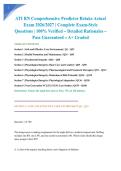
ATI RN Comprehensive Predictor Retake Actual
Exam 2026/2027 | Complete Exam-Style
Questions | 100% Verified – Detailed Rationales –
Pass Guaranteed – A+ Graded
TABLE OF CONTENTS
Section 1 | Safe and Effective Care Environment | Q1 – Q23
Section 2 | Health Promotion and Maintenance | Q24 – Q45
Section 3 | Psychosocial Integrity | Q46 – Q68
Section 4 | Physiological Integrity: Basic Care and Comfort | Q69 – Q90
Section 5 | Physiological Integrity: Pharmacological and Parenteral Therapies | Q91 – Q113
Section 6 | Physiological Integrity: Reduction of Risk Potential | Q114 – Q135
Section 7 | Physiological Integrity: Physiological Adaptation | Q136 – Q158
Section 8 | Next Generation NCLEX (NGN) Case Studies | Q159 – Q180
Instructions: Choose the single best answer. Pass: 75% in 240 minutes.
══════════════════════════════════════
SECTION 1: SAFE AND EFFECTIVE CARE ENVIRONMENT Q1 – Q23
══════════════════════════════════════
Question 1 of 180
The charge nurse is making assignments for the night shift on a medical-surgical unit. Staffing
includes one RN, one LPN, and one assistive personnel (AP). Which client should the charge
nurse assign to the LPN?
A. A client who requires teaching about a new diagnosis of diabetes
,2
B. A client who is receiving a blood transfusion and needs monitoring
C. A client who needs assistance with ambulation and hygiene
D. A client who has a new onset of atrial fibrillation
Correct Answer: C
Rationale: The LPN's scope of practice includes providing assistance with activities of daily
living, such as ambulation and hygiene, under the supervision of an RN. Teaching and
monitoring blood transfusions require the critical thinking skills and licensure of an RN.
Question 2 of 180
A client is being admitted to the emergency department with a suspected overdose of opioids.
The nurse finds the client unresponsive with snoring respirations and a respiratory rate of 8/min.
What is the nurse's priority action?
A. Administer naloxone (Narcan)
B. Check the client's blood glucose
C. Obtain a set of vital signs
D. Insert an oral airway
Correct Answer: A
Rationale: The client is exhibiting signs of opioid toxicity, which causes respiratory depression
that can be fatal; administering naloxone rapidly reverses the effects and restores respiratory
drive. While vital signs are important, airway and breathing take precedence in this life-
threatening situation.
Question 3 of 180
,3
The nurse is caring for a client who is scheduled for a mastectomy later today. The client is
visibly anxious and asks the nurse, "Do you think the surgeon will get all the cancer?" What is
the best response by the nurse?
A. "You should ask the surgeon that question before you go to the operating room."
B. "I am sure the surgeon will do his best to remove all the cancerous tissue."
C. "It sounds like you are worried about the surgery; tell me more about your concerns."
D. "Most clients who have this surgery do very well, so try not to worry."
Correct Answer: C
Rationale: This response uses therapeutic communication to explore the client's feelings and
concerns, encouraging the client to express emotions rather than offering false reassurance or
closing off the conversation. Redirecting the client to the surgeon passes the buck and fails to
address the immediate emotional need.
Question 4 of 180
A client on a medical unit is verbally abusive toward the nursing staff and threatens to sue the
hospital. The nurse manager speaks with the client regarding his behavior. Which of the
following statements by the manager best addresses the client's behavior?
A. "We are here to help you, but if you continue to yell, we will have to call security."
B. "It is against hospital policy to threaten staff, so you must stop immediately."
C. "I can see you are very frustrated, but it is not acceptable to threaten staff."
D. "If you do not lower your voice, I will have to ask you to leave the hospital."
Correct Answer: C
Rationale: This statement validates the client's underlying emotion (frustration) while clearly
setting a limit on the unacceptable behavior (threats). Setting limits is essential for safety, but
doing so with empathy helps de-escalate the situation.
, 4
Question 5 of 180
The nurse is preparing to administer a medication to a client. Which of the following identifiers
should the nurse use to verify the client's identity?
A. Ask the client to state their name and date of birth
B. Check the client's name on the whiteboard in the room
C. Verify the client's room number
D. Ask a family member to confirm the client's name
Correct Answer: A
Rationale: Using at least two client identifiers, such as asking the client to state their name and
date of birth, is the standard for preventing medication errors. Room numbers are not reliable
identifiers as patients can be moved or roommates can be confused.
Question 6 of 180
The nurse is caring for a client who has been placed in wrist restraints for confusion and pulling
at the central line. Which action should the nurse take to prevent injury?
A. Tie the restraints to the side rail of the bed
B. Check the restraints every 4 hours
C. Ensure that two fingers fit under the restraint
D. Keep the restraints on continuously for 24 hours
Correct Answer: C
Rationale: Checking that two fingers fit under the restraint ensures it is not too tight and allows
for adequate circulation, which is critical to prevent neurovascular compromise. Restraints must
ATI RN Comprehensive Predictor Retake Actual
Exam 2026/2027 | Complete Exam-Style
Questions | 100% Verified – Detailed Rationales –
Pass Guaranteed – A+ Graded
TABLE OF CONTENTS
Section 1 | Safe and Effective Care Environment | Q1 – Q23
Section 2 | Health Promotion and Maintenance | Q24 – Q45
Section 3 | Psychosocial Integrity | Q46 – Q68
Section 4 | Physiological Integrity: Basic Care and Comfort | Q69 – Q90
Section 5 | Physiological Integrity: Pharmacological and Parenteral Therapies | Q91 – Q113
Section 6 | Physiological Integrity: Reduction of Risk Potential | Q114 – Q135
Section 7 | Physiological Integrity: Physiological Adaptation | Q136 – Q158
Section 8 | Next Generation NCLEX (NGN) Case Studies | Q159 – Q180
Instructions: Choose the single best answer. Pass: 75% in 240 minutes.
══════════════════════════════════════
SECTION 1: SAFE AND EFFECTIVE CARE ENVIRONMENT Q1 – Q23
══════════════════════════════════════
Question 1 of 180
The charge nurse is making assignments for the night shift on a medical-surgical unit. Staffing
includes one RN, one LPN, and one assistive personnel (AP). Which client should the charge
nurse assign to the LPN?
A. A client who requires teaching about a new diagnosis of diabetes
,2
B. A client who is receiving a blood transfusion and needs monitoring
C. A client who needs assistance with ambulation and hygiene
D. A client who has a new onset of atrial fibrillation
Correct Answer: C
Rationale: The LPN's scope of practice includes providing assistance with activities of daily
living, such as ambulation and hygiene, under the supervision of an RN. Teaching and
monitoring blood transfusions require the critical thinking skills and licensure of an RN.
Question 2 of 180
A client is being admitted to the emergency department with a suspected overdose of opioids.
The nurse finds the client unresponsive with snoring respirations and a respiratory rate of 8/min.
What is the nurse's priority action?
A. Administer naloxone (Narcan)
B. Check the client's blood glucose
C. Obtain a set of vital signs
D. Insert an oral airway
Correct Answer: A
Rationale: The client is exhibiting signs of opioid toxicity, which causes respiratory depression
that can be fatal; administering naloxone rapidly reverses the effects and restores respiratory
drive. While vital signs are important, airway and breathing take precedence in this life-
threatening situation.
Question 3 of 180
,3
The nurse is caring for a client who is scheduled for a mastectomy later today. The client is
visibly anxious and asks the nurse, "Do you think the surgeon will get all the cancer?" What is
the best response by the nurse?
A. "You should ask the surgeon that question before you go to the operating room."
B. "I am sure the surgeon will do his best to remove all the cancerous tissue."
C. "It sounds like you are worried about the surgery; tell me more about your concerns."
D. "Most clients who have this surgery do very well, so try not to worry."
Correct Answer: C
Rationale: This response uses therapeutic communication to explore the client's feelings and
concerns, encouraging the client to express emotions rather than offering false reassurance or
closing off the conversation. Redirecting the client to the surgeon passes the buck and fails to
address the immediate emotional need.
Question 4 of 180
A client on a medical unit is verbally abusive toward the nursing staff and threatens to sue the
hospital. The nurse manager speaks with the client regarding his behavior. Which of the
following statements by the manager best addresses the client's behavior?
A. "We are here to help you, but if you continue to yell, we will have to call security."
B. "It is against hospital policy to threaten staff, so you must stop immediately."
C. "I can see you are very frustrated, but it is not acceptable to threaten staff."
D. "If you do not lower your voice, I will have to ask you to leave the hospital."
Correct Answer: C
Rationale: This statement validates the client's underlying emotion (frustration) while clearly
setting a limit on the unacceptable behavior (threats). Setting limits is essential for safety, but
doing so with empathy helps de-escalate the situation.
, 4
Question 5 of 180
The nurse is preparing to administer a medication to a client. Which of the following identifiers
should the nurse use to verify the client's identity?
A. Ask the client to state their name and date of birth
B. Check the client's name on the whiteboard in the room
C. Verify the client's room number
D. Ask a family member to confirm the client's name
Correct Answer: A
Rationale: Using at least two client identifiers, such as asking the client to state their name and
date of birth, is the standard for preventing medication errors. Room numbers are not reliable
identifiers as patients can be moved or roommates can be confused.
Question 6 of 180
The nurse is caring for a client who has been placed in wrist restraints for confusion and pulling
at the central line. Which action should the nurse take to prevent injury?
A. Tie the restraints to the side rail of the bed
B. Check the restraints every 4 hours
C. Ensure that two fingers fit under the restraint
D. Keep the restraints on continuously for 24 hours
Correct Answer: C
Rationale: Checking that two fingers fit under the restraint ensures it is not too tight and allows
for adequate circulation, which is critical to prevent neurovascular compromise. Restraints must

