

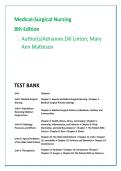
Medical-Surgical Nursing
8th Edition
• Author(s)Adrianne Dill Linton; Mary
Ann Matteson
TEST BANK
Unit Chapters
Unit I: Medical-Surgical Chapter 1: Aspects of Medical-Surgical Nursing • Chapter 2:
Nursing Medical-Surgical Practice Settings
Unit II: Populations
Chapter 3: Medical-Surgical Patients: Individuals, Families, and
Receiving Medical-
Communities
Surgical Care
Chapter 4: Health, Illness, Stress, and Coping • Chapter 5:
Unit III: Pathology Immunity, Inflammation, and Infection • Chapter 6: Fluid,
Processes and Effects Electrolyte, and Acid-Base Balance • Chapter 7: The Patient With
Cancer • Chapter 8: Pain • Chapter 9: Shock
Chapter 10: The Older Adult Patient • Chapter 11: Falls • Chapter
Unit IV: Special Problems
12: Immobility • Chapter 13: Delirium and Dementia • Chapter 14:
of the Older Adult Patient
Incontinence
Unit V: Therapeutics Chapter 15: Nutrition • Chapter 16: Intravenous Therapy •
Chapter 17: Surgery • Chapter 18: The Patient With an Ostomy •
,Unit Chapters
Chapter 19: Palliative and Hospice Care • Chapter 20:
Complementary and Alternative Therapies and Integrative Health
Care
Chapter 21: Neurologic System Introduction • Chapter 22:
Unit VI: Neurological
Neurologic Disorders • Chapter 23: Cerebrovascular Accident •
System
Chapter 24: Spinal Cord Injury
Chapter 25: Respiratory System Introduction • Chapter 26: Upper
Unit VII: Respiratory Respiratory Disorders • Chapter 27: Acute Lower Respiratory
System Tract Disorders • Chapter 28: Chronic Lower Respiratory Tract
Disorders
Unit VIII: Hematologic Chapter 29: Hematologic System Introduction • Chapter 30:
and Immunologic Hematologic Disorders • Chapter 31: Immunologic System
Systems Introduction • Chapter 32: Immunologic Disorders
Chapter 33: Cardiovascular System Introduction • Chapter 34:
Unit IX: Cardiovascular
Hypertension • Chapter 35: Cardiac Disorders • Chapter 36:
System
Vascular Disorders
Chapter 37: Digestive System Introduction • Chapter 38: Upper
Digestive Tract Disorders • Chapter 39: Lower Digestive Tract
Unit X: Digestive System
Disorders • Chapter 40: Liver, Gallbladder, and Pancreatic
Disorders
Chapter 41: Urologic System Introduction • Chapter 42: Urologic
Unit XI: Urologic System
Disorders
Chapter 43: Musculoskeletal System Introduction • Chapter 44:
Unit XII: Musculoskeletal
Connective Tissue Disorders • Chapter 45: Fractures • Chapter 46:
System
Amputations
Chapter 47: Endocrine System Introduction • Chapter 48: Pituitary
Unit XIII: Endocrine
and Adrenal Disorders • Chapter 49: Thyroid and Parathyroid
System
Disorders • Chapter 50: Diabetes and Hypoglycemia
Unit XIV: Reproductive Chapter 51: Female Reproductive System Introduction • Chapter
Systems 52: Female Reproductive Disorders • Chapter 53: Male
Reproductive System Introduction • Chapter 54: Male
,Unit Chapters
Reproductive Disorders • Chapter 55: Sexually Transmitted
Infections
Unit XV: Integumentary Chapter 56: Integumentary System Introduction • Chapter 57:
Systems Skin Disorders
Chapter 58: Special Senses: Vision and Hearing Introduction •
Unit XVI: Special Senses:
Chapter 59: Eye and Vision Disorders • Chapter 60: Ear and
Vision and Hearing
Hearing Disorders
Unit XVII: Medical-
Chapter 61: Psychobiologic Disorders • Chapter 62: Substance-
Surgical Patients with
Related and Addictive Disorders
Psychiatric Disorders
Unit XVIII: Nursing in
Chapter 63: First Aid, Emergency Care, and Disaster Management
Disasters and First Aid
Question 1
A nurse on a medical-surgical unit is caring for four clients.
Which client should the nurse assess first?
A. A client reporting postoperative pain rated 6/10 after
receiving oral analgesics 1 hour ago
B. A client with chronic heart failure who gained 1 lb overnight
C. A client with a new onset of confusion and restlessness after
surgery
D. A client requesting assistance to ambulate to the bathroom
Correct Answer: C
Rationale:
New onset confusion and restlessness may indicate hypoxia,
, decreased perfusion, or other acute deterioration requiring
immediate assessment. Prioritization in medical-surgical
nursing focuses on identifying unstable clients and recognizing
early signs of clinical deterioration. Pain management and
assistance with ambulation are important but are lower
priority. A 1-lb overnight weight gain in chronic heart failure is
not immediately life threatening.
Source:
Medical-Surgical Nursing, 8th Edition — Chapter 1: Aspects of
Medical-Surgical Nursing
Question 2
A nurse delegates care activities to an experienced unlicensed
assistive personnel (UAP). Which task is appropriate to
delegate?
A. Assessing a client’s pain after analgesic administration
B. Teaching a client how to use an incentive spirometer
C. Obtaining and recording routine vital signs on a stable client
D. Evaluating the effectiveness of a blood pressure medication
Correct Answer: C
Rationale:
Routine vital signs on a stable client may be delegated to
trained UAP. Nursing assessment, teaching, and evaluation
require professional nursing judgment and cannot be
8th Edition
• Author(s)Adrianne Dill Linton; Mary
Ann Matteson
TEST BANK
Unit Chapters
Unit I: Medical-Surgical Chapter 1: Aspects of Medical-Surgical Nursing • Chapter 2:
Nursing Medical-Surgical Practice Settings
Unit II: Populations
Chapter 3: Medical-Surgical Patients: Individuals, Families, and
Receiving Medical-
Communities
Surgical Care
Chapter 4: Health, Illness, Stress, and Coping • Chapter 5:
Unit III: Pathology Immunity, Inflammation, and Infection • Chapter 6: Fluid,
Processes and Effects Electrolyte, and Acid-Base Balance • Chapter 7: The Patient With
Cancer • Chapter 8: Pain • Chapter 9: Shock
Chapter 10: The Older Adult Patient • Chapter 11: Falls • Chapter
Unit IV: Special Problems
12: Immobility • Chapter 13: Delirium and Dementia • Chapter 14:
of the Older Adult Patient
Incontinence
Unit V: Therapeutics Chapter 15: Nutrition • Chapter 16: Intravenous Therapy •
Chapter 17: Surgery • Chapter 18: The Patient With an Ostomy •
,Unit Chapters
Chapter 19: Palliative and Hospice Care • Chapter 20:
Complementary and Alternative Therapies and Integrative Health
Care
Chapter 21: Neurologic System Introduction • Chapter 22:
Unit VI: Neurological
Neurologic Disorders • Chapter 23: Cerebrovascular Accident •
System
Chapter 24: Spinal Cord Injury
Chapter 25: Respiratory System Introduction • Chapter 26: Upper
Unit VII: Respiratory Respiratory Disorders • Chapter 27: Acute Lower Respiratory
System Tract Disorders • Chapter 28: Chronic Lower Respiratory Tract
Disorders
Unit VIII: Hematologic Chapter 29: Hematologic System Introduction • Chapter 30:
and Immunologic Hematologic Disorders • Chapter 31: Immunologic System
Systems Introduction • Chapter 32: Immunologic Disorders
Chapter 33: Cardiovascular System Introduction • Chapter 34:
Unit IX: Cardiovascular
Hypertension • Chapter 35: Cardiac Disorders • Chapter 36:
System
Vascular Disorders
Chapter 37: Digestive System Introduction • Chapter 38: Upper
Digestive Tract Disorders • Chapter 39: Lower Digestive Tract
Unit X: Digestive System
Disorders • Chapter 40: Liver, Gallbladder, and Pancreatic
Disorders
Chapter 41: Urologic System Introduction • Chapter 42: Urologic
Unit XI: Urologic System
Disorders
Chapter 43: Musculoskeletal System Introduction • Chapter 44:
Unit XII: Musculoskeletal
Connective Tissue Disorders • Chapter 45: Fractures • Chapter 46:
System
Amputations
Chapter 47: Endocrine System Introduction • Chapter 48: Pituitary
Unit XIII: Endocrine
and Adrenal Disorders • Chapter 49: Thyroid and Parathyroid
System
Disorders • Chapter 50: Diabetes and Hypoglycemia
Unit XIV: Reproductive Chapter 51: Female Reproductive System Introduction • Chapter
Systems 52: Female Reproductive Disorders • Chapter 53: Male
Reproductive System Introduction • Chapter 54: Male
,Unit Chapters
Reproductive Disorders • Chapter 55: Sexually Transmitted
Infections
Unit XV: Integumentary Chapter 56: Integumentary System Introduction • Chapter 57:
Systems Skin Disorders
Chapter 58: Special Senses: Vision and Hearing Introduction •
Unit XVI: Special Senses:
Chapter 59: Eye and Vision Disorders • Chapter 60: Ear and
Vision and Hearing
Hearing Disorders
Unit XVII: Medical-
Chapter 61: Psychobiologic Disorders • Chapter 62: Substance-
Surgical Patients with
Related and Addictive Disorders
Psychiatric Disorders
Unit XVIII: Nursing in
Chapter 63: First Aid, Emergency Care, and Disaster Management
Disasters and First Aid
Question 1
A nurse on a medical-surgical unit is caring for four clients.
Which client should the nurse assess first?
A. A client reporting postoperative pain rated 6/10 after
receiving oral analgesics 1 hour ago
B. A client with chronic heart failure who gained 1 lb overnight
C. A client with a new onset of confusion and restlessness after
surgery
D. A client requesting assistance to ambulate to the bathroom
Correct Answer: C
Rationale:
New onset confusion and restlessness may indicate hypoxia,
, decreased perfusion, or other acute deterioration requiring
immediate assessment. Prioritization in medical-surgical
nursing focuses on identifying unstable clients and recognizing
early signs of clinical deterioration. Pain management and
assistance with ambulation are important but are lower
priority. A 1-lb overnight weight gain in chronic heart failure is
not immediately life threatening.
Source:
Medical-Surgical Nursing, 8th Edition — Chapter 1: Aspects of
Medical-Surgical Nursing
Question 2
A nurse delegates care activities to an experienced unlicensed
assistive personnel (UAP). Which task is appropriate to
delegate?
A. Assessing a client’s pain after analgesic administration
B. Teaching a client how to use an incentive spirometer
C. Obtaining and recording routine vital signs on a stable client
D. Evaluating the effectiveness of a blood pressure medication
Correct Answer: C
Rationale:
Routine vital signs on a stable client may be delegated to
trained UAP. Nursing assessment, teaching, and evaluation
require professional nursing judgment and cannot be

