100% de satisfacción garantizada Inmediatamente disponible después del pago Tanto en línea como en PDF No estas atado a nada 4.2 TrustPilot
logo-home
Examen

PYC3705 Transformative Counselling Encounters (2021 - Semester 1 and Semester 2 - Assignment 2)

Puntuación
4.3
(3)
Vendido
23
Páginas
5
Grado
A+
Subido en
18-05-2021
Escrito en
2021/2022

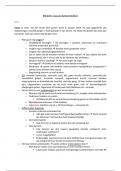
PYC3705 – Transformative Counselling Encounters 2021 – Semester 1 and Semester 2 - Assignment 2 Question 1: The unique aspects of Transformative Counselling Encounters remind us that ... 1. All interviewing involves multicultural and diversity dimensions. 2. Diversity includes areas often missed by definitions of multiculturalism such as experience with trauma, social class, family background, and location and language. 3. We will be spending a lifetime learning more about the many issues of diversity. 4. All of the above. Question 2: The rules of professional-client relationships set forth and explained in transformative Counselling Encounters are: 1. Autonomy, privacy, respect, and confidentiality. 2. Reliability, privacy, beneficence, and nonmaleficence. 3. Respect for autonomy, nonmaleficence, beneficence, and justice. 4. Reliability, privacy, confidentiality, respect, and trustworthiness. Question 3: The study unit on surveying life within the cracks teaches us ... 1. that by nature, human beings do not have the desire to solve their own problems hence a constant pool towards falling within the cracks. 2. to sympathise better with our clients. 3. that we will not be able to solve our client’s problems unless we success in identifying pathological patterns in their behaviour. 4. to think about people’s experiences of pain, suffering and strive from the context which they are part of. Question 4: Based on the discussion of privacy and confidentiality, what would be an example of breach of privacy that does not involve a breach of confidentiality? 1. A person who does not have authorisation views a client’s medical record on a hospital computer. 2. One counsellor discusses a client’s case with another who is not involved in the client’s treatment, using the client’s name and identifying information. 3. A counsellor calls a suicidal client’s family members to ask them to look out for the client’s well-being. 4. A counsellor talks to his or her spouse in detail about the patients under his or her care. Question 5: Paulina believes that her adolescent client would not talk to her if she knew that Paulina was speaking to the client’s parents. Therefore, Paulina promises the client confidentiality and secretly arranges to call the client’s parents when the client is at school. Which ethical principle is Paulina violating? 1. Autonomy 2. Fidelity 3. Justice 4. All of the above Question 6: If you ask an open question, the intentional prediction is ... 1. it will puzzle clients as they need more direction. 2. it will seem like an intrusion. 3. it won’t work cross-culturally. 4. the client will talk more about the topic. Question 7: What is being built in the first interview that is required for counselling to continue? 1. Faith 2. Rapport 3. Non-professional relationship 4. Friendship Question 8: The client’s right to agree to participate in counselling, assessment, or other professional procedures or services after such services are explained and understood is ... 1. Professional responsibility 2. Personal responsibility 3. Professional relationship 4. Informed consent Question 9: The ethical issue of ‘recognizing limits’ refers to: 1. not practicing beyond the areas of competence 2. allowing outside contact with the client 3. not going over the established time for the session Question 10: Which of the following are not way of being ethically responsible related to culture? 1. recognizing that traditional ways of providing help may not be sufficient for clients from another culture. 2. demonstrating interest in the client’s culture. 3. assuming that the client wants to assimilate into the dominant culture. 4. becoming aware of your own values. Question 11: Client records ... (a) are privileged communication (b) when writing record of client sessions, counsellors should keep in mind that other parties. Including the client, may access the records in the future. (c) counsellors must obtain client consent to disclose or transfer records. (d) client records in paperer and electronic forms should be stored securely at all times. The correct answer is: 1. (a), (b), (c) and (d) 2. (a) and (c) 3. (a) and (d) 4. (a) and (b) Question 12: The client’s right to keep the counselling relationship secret is ... 1. Confidentiality 2. Their business 3. Privacy 4. The client’s responsibility Question 13: Unconditional positive regards means ... 1. liking everyone equally 2. verbalizing a lot of validation to client’s 3. principle ethics 4. accepting a client despite his or her behaviour Question 14: Empathy could best be described as ... 1. deep sympathy 2. feeling what a client is feeling and conveying this to the client 3. careful ongoing assessment 4. therapeutic alliance Question 15: Listening to client stories and narratives is described by the study guide as central to the helping process. We can’t build client strength through ... 1. listening patiently to the client’s full story before moving on. 2. seeking to find positive assets and strength withing the client story, even if the story is full of difficulties and problems. 3. ignoring negative parts of the story and focusing only on the positive. 4. drawing on counselling theory in a careful manner. Question 16: Which of the following specifically restricts the use of psychological measures to appropriately trained psychology professionals? 1. Professional Code of Conduct 2. Health Professions Act, No. 56 of 1974 3. South African Constitution 4. All are correct Question 17: Which ONE of the following terms described a counsellor’s learned ability to both understand and communicate understanding of the culturally diverse client’s experience? 1. Cultural empathy 2. Worldview 3. Multiculturalism 4. Cultural trust Question 18: When ..., the counsellor is ‘reflecting back’, the main points of the session so that the client has opportunity to recap. 1. Questioning 2. Self-disclosure 3. Summarising 4. Active listening Question 19: The following are important when initiating the termination phase: 1. Ask the client to summarise the main points that have merged in the session. 2. Emphasises achievements. 3. None of option 1 and 2. 4. Both options 1 and 2. Question 20: All of the following ideas (except for one) are suggestions for counsellors who want to use socially and culturally appropriate interventions. Which ONE of the following is NOT a suggestion discussed in Transformative Counselling Encounters? 1. Become familiar with a variety of theoretical orientations and approaches. 2. Become knowledgeable regarding the effect of all dimensions of diversity upon communication style. 3. Study with a mentor who is especially skilled at applying culturally sensitive interventions. 4. Assess all counselling interventions for strengths and weaknesses with respect to client’s social, cultural, spiritual, and political dimensions.

Mostrar más Leer menos
Institución
Grado


Ups! No podemos cargar tu documento ahora. Inténtalo de nuevo o contacta con soporte.

Escuela, estudio y materia

Institución
Grado

Información del documento

Subido en
18 de mayo de 2021
Archivo actualizado en
14 de julio de 2022
Número de páginas
5
Escrito en
2021/2022
Tipo
Examen
Contiene
Preguntas y respuestas

Temas

Vista previa del contenido

PYC3705 – Transformative Counselling Encounters
2021 – Semester 1 and Semester 2 – Assignment 2


Question 1:
The unique aspects of Transformative Counselling Encounters remind us that ...
a) All interviewing involves multicultural and diversity dimensions.
b) Diversity includes areas often missed by definitions of multiculturalism such as
experience with trauma, social class, family background, and location and language.
c) We will be spending a lifetime learning more about the many issues of diversity.
d) All of the above.

Question 2:
The rules of professional-client relationships set forth and explained in transformative
Counselling Encounters are:
a) Autonomy, privacy, respect, and confidentiality.
b) Reliability, privacy, beneficence, and nonmaleficence.
c) Respect for autonomy, nonmaleficence, beneficence, and justice.
d) Reliability, privacy, confidentiality, respect, and trustworthiness.

Question 3:
The study unit on surveying life within the cracks teaches us ...
a) that by nature, human beings do not have the desire to solve their own problems hence
a constant pool towards falling within the cracks.
b) to sympathise better with our clients.
c) that we will not be able to solve our client’s problems unless we success in identifying
pathological patterns in their behaviour.
d) to think about people’s experiences of pain, suffering and strive from the context which
they are part of.

REMAINING ANSWERS ONLY AVAILABLE UPON PURCHASE OF THIS
DOCUMENT
Disclaimer: Extreme care has been used to create this document, however the contents are
provided ‘as is’ without any representation or warranties, express of implied. This document
is to be used for comparison, research and reference purposes ONLY. Directly submitting
and/or reselling/distribution/reproduction any part of this document is not permitted.


Page 1 of 5
$3.40
Accede al documento completo:
Comprado por 23 estudiantes

100% de satisfacción garantizada
Inmediatamente disponible después del pago
Tanto en línea como en PDF
No estas atado a nada

Reseñas de compradores verificados

Se muestran los 3 comentarios
3 año hace

4 año hace

4 año hace

4.3

3 reseñas

5
2
4
0
3
1
2
0
1
0
Reseñas confiables sobre Stuvia

Todas las reseñas las realizan usuarios reales de Stuvia después de compras verificadas.

Conoce al vendedor

Seller avatar
Los indicadores de reputación están sujetos a la cantidad de artículos vendidos por una tarifa y las reseñas que ha recibido por esos documentos. Hay tres niveles: Bronce, Plata y Oro. Cuanto mayor reputación, más podrás confiar en la calidad del trabajo del vendedor.
studentworx University of South Africa (Unisa)
Seguir Necesitas iniciar sesión para seguir a otros usuarios o asignaturas
Vendido
460
Miembro desde
6 año
Número de seguidores
313
Documentos
0
Última venta
1 año hace
Studentworx

4.2

69 reseñas

5
38
4
17
3
9
2
2
1
3

Recientemente visto por ti

Por qué los estudiantes eligen Stuvia

Creado por compañeros estudiantes, verificado por reseñas

Calidad en la que puedes confiar: escrito por estudiantes que aprobaron y evaluado por otros que han usado estos resúmenes.

¿No estás satisfecho? Elige otro documento

¡No te preocupes! Puedes elegir directamente otro documento que se ajuste mejor a lo que buscas.

Paga como quieras, empieza a estudiar al instante

Sin suscripción, sin compromisos. Paga como estés acostumbrado con tarjeta de crédito y descarga tu documento PDF inmediatamente.

Student with book image

“Comprado, descargado y aprobado. Así de fácil puede ser.”

Alisha Student

Preguntas frecuentes