

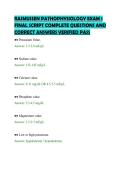
RASMUSSEN PATHOPHYSIOLOGY EXAM 1
FINAL SCRIPT COMPLETE QUESTIONS AND
CORRECT ANSWERS VERIFIED PASS
●● Potassium Value.
Answer: 3.5-5.0 mEq/L
●● Sodium value.
Answer: 135-145 mEq/L
●● Calcium value.
Answer: 9-11 mg/dL OR 4.5-5.5 mEq/L
●● Phosphate value.
Answer: 2.5-4.5 mg/dL
●● Magnesium value.
Answer: 1.5-2.5 mEq/L
●● Low or high potassium.
Answer: hypokalemia / hyperkalemia
,●● low or high sodium.
Answer: hyponatremia / hypernatremia
●● low or high phosphate.
Answer: hypophophatemia
●● low or high chloride.
Answer: hypochloremia
●● low or high magnesium.
Answer: hypomagnesemia
●● low or high calcium.
Answer: hypocalcemia
●● Pathophysiology.
Answer: the study of abnormalities in physiologic functioning of living
beings
●● Pathology.
Answer: the study and diagnosis of disease through examination of
organs, tissues, cells, and bodily fluids
, ●● Etiology.
Answer: The study of the causes and origins of disease
●● pathogenesis.
Answer: development or evolution of a disease
●● clinical manifestation.
Answer: signs and symptoms or evidence of disease
●● exacerbation.
Answer: a relatively sudden increase in the severity of a disease or any
of its signs and symptom
●● remission.
Answer: decline in severity of symptoms
●● sequela.
Answer: a disorder or condition usually resulting from a previous
disease or injury
●● acute.
Answer: sudden onset and short duration
FINAL SCRIPT COMPLETE QUESTIONS AND
CORRECT ANSWERS VERIFIED PASS
●● Potassium Value.
Answer: 3.5-5.0 mEq/L
●● Sodium value.
Answer: 135-145 mEq/L
●● Calcium value.
Answer: 9-11 mg/dL OR 4.5-5.5 mEq/L
●● Phosphate value.
Answer: 2.5-4.5 mg/dL
●● Magnesium value.
Answer: 1.5-2.5 mEq/L
●● Low or high potassium.
Answer: hypokalemia / hyperkalemia
,●● low or high sodium.
Answer: hyponatremia / hypernatremia
●● low or high phosphate.
Answer: hypophophatemia
●● low or high chloride.
Answer: hypochloremia
●● low or high magnesium.
Answer: hypomagnesemia
●● low or high calcium.
Answer: hypocalcemia
●● Pathophysiology.
Answer: the study of abnormalities in physiologic functioning of living
beings
●● Pathology.
Answer: the study and diagnosis of disease through examination of
organs, tissues, cells, and bodily fluids
, ●● Etiology.
Answer: The study of the causes and origins of disease
●● pathogenesis.
Answer: development or evolution of a disease
●● clinical manifestation.
Answer: signs and symptoms or evidence of disease
●● exacerbation.
Answer: a relatively sudden increase in the severity of a disease or any
of its signs and symptom
●● remission.
Answer: decline in severity of symptoms
●● sequela.
Answer: a disorder or condition usually resulting from a previous
disease or injury
●● acute.
Answer: sudden onset and short duration

