

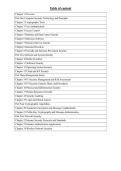
Table of content
Chapter 1 Overview
Part One Computer Security Technology and Principles
Chapter 2 Cryptographic Tools
Chapter 3 User Authentication
Chapter 4 Access Control
Chapter 5 Database and Data Center Security
Chapter 6 Malicious Software
Chapter 7 Denial-of-Service Attacks
Chapter 8 Intrusion Detection
Chapter 9 Firewalls and Intrusion Prevention Systems
ST
Part Two Software and System Security
Chapter 10 Buffer Overflow
Chapter 11 Software Security
Chapter 12 Operating System Security
Chapter 13 Cloud and IoT Security
U
Part Three Management Issues
Chapter 14 IT Security Management and Risk Assessment
D
Chapter 15 IT Security Controls, Plans, and Procedures
Chapter 16 Physical and Infrastructure Security
Chapter 17 Human Resources Security
YL
Chapter 18 Security Auditing
Chapter 19 Legal and Ethical Aspects
Part Four Cryptographic Algorithms
Chapter 20 Symmetric Encryption and Message Confidentiality
AB
Chapter 21 Public-Key Cryptography and Message Authentication
Part Five Network Security
Chapter 22 Internet Security Protocols and Standards
Chapter 23 Internet Authentication Applications
Chapter 24 Wireless Network Security
, kjhgfdsa
All Chapters
Chapter 1 – Computer Systems Overview
All Answers
TRUE/FALSE QUESTIONS:
T F 1. Threats are attacks carried out.
T F 2. Computer security is protection of the integrity, availability, and
confidentiality of information system resources.
T F 3. Data integrity assures that information and programs are changed only
in a specified and authorized manner.
T F 4. Availability assures that systems works promptly and service is not
ST
denied to authorized users.
T F 5. The “A” in the CIA triad stands for “authenticity”.
T F 6. The more critical a component or service, the higher the level of
availability required.
U
T F 7. Computer security is essentially a battle of wits between a perpetrator
who tries to find holes and the administrator who tries to close them.
D
T F 8. Security mechanisms typically do not involve more than one particular
algorithm or protocol.
YL
T F 9. Many security administrators view strong security as an impediment to
efficient and user-friendly operation of an information system.
T F 10. In the context of security our concern is with the vulnerabilities of
system resources.
AB
T F 11. Hardware is the most vulnerable to attack and the least susceptible to
automated controls.
T F 12. Contingency planning is a functional area that primarily requires
computer security technical measures.
T F 13. X.800 architecture was developed as an international standard and
focuses on security in the context of networks and communications.
T F 14. The first step in devising security services and mechanisms is to
develop a security policy.
T F 15. Assurance is the process of examining a computer product or system
with respect to certain criteria.
lkjhgfdsa
, kjhgfdsa
MULTIPLE CHOICE QUESTIONS:
1. assures that individuals control or influence what information related
to them may be collected and stored and by whom and to whom that information
may be disclosed.
A. Availability B. System Integrity
C. Privacy D. Data Integrity
2. assures that a system performs its intended function in an unimpaired
manner, free from deliberate or inadvertent unauthorized manipulation of the
system.
A. System Integrity B. Data Integrity
ST
C. Availability D. Confidentiality
3. A loss of is the unauthorized disclosure of information.
A. confidentiality B. integrity
U
C. authenticity D. availability
4. A level breach of security could be expected to have a severe or
catastrophic adverse effect on organizational operations, organizational assets, or
D
individuals.
A. low B. normal
YL
C. moderate D. high
5. A flaw or weakness in a system’s design, implementation, or operation and
management that could be exploited to violate the system’s security policy is
a(n) .
A. countermeasure B. vulnerability
AB
C. adversary D. risk
6. An assault on system security that derives from an intelligent act that is a
deliberate attempt to evade security services and violate the security policy of a
system is a(n) .
A. risk B. asset
C. attack D. vulnerability
lkjhgfdsa
, kjhgfdsa
7. A(n) is an action, device, procedure, or technique that reduces a
threat, a vulnerability, or an attack by eliminating or preventing it, by minimizing
the harm it can cause, or by discovering and reporting it so that correct action can
be taken.
A. attack B. countermeasure
C. adversary D. protocol
8. A(n) is an attempt to learn or make use of information from the system
that does not affect system resources.
A. passive attack B. inside attack
C. outside attack D. active attack
ST
9. Masquerade, falsification, and repudiation are threat actions that cause
threat consequences.
A. unauthorized disclosure B. deception
C. disruption D. usurpation
U
10. A threat action in which sensitive data are directly released to an unauthorized
entity is .
D
A. corruption B. disruption
C. intrusion D. exposure
YL
11. An example of is an attempt by an unauthorized user to gain access
to a system by posing as an authorized user.
A. masquerade B. interception
C. repudiation D. inference
AB
12. The prevents or inhibits the normal use or management of
communications facilities.
A. passive attack B. traffic encryption
C. denial of service D. masquerade
13. A is any action that compromises the security of information owned
by an organization.
A. security mechanism B. security attack
C. security policy D. security service
lkjhgfdsa
Chapter 1 Overview
Part One Computer Security Technology and Principles
Chapter 2 Cryptographic Tools
Chapter 3 User Authentication
Chapter 4 Access Control
Chapter 5 Database and Data Center Security
Chapter 6 Malicious Software
Chapter 7 Denial-of-Service Attacks
Chapter 8 Intrusion Detection
Chapter 9 Firewalls and Intrusion Prevention Systems
ST
Part Two Software and System Security
Chapter 10 Buffer Overflow
Chapter 11 Software Security
Chapter 12 Operating System Security
Chapter 13 Cloud and IoT Security
U
Part Three Management Issues
Chapter 14 IT Security Management and Risk Assessment
D
Chapter 15 IT Security Controls, Plans, and Procedures
Chapter 16 Physical and Infrastructure Security
Chapter 17 Human Resources Security
YL
Chapter 18 Security Auditing
Chapter 19 Legal and Ethical Aspects
Part Four Cryptographic Algorithms
Chapter 20 Symmetric Encryption and Message Confidentiality
AB
Chapter 21 Public-Key Cryptography and Message Authentication
Part Five Network Security
Chapter 22 Internet Security Protocols and Standards
Chapter 23 Internet Authentication Applications
Chapter 24 Wireless Network Security
, kjhgfdsa
All Chapters
Chapter 1 – Computer Systems Overview
All Answers
TRUE/FALSE QUESTIONS:
T F 1. Threats are attacks carried out.
T F 2. Computer security is protection of the integrity, availability, and
confidentiality of information system resources.
T F 3. Data integrity assures that information and programs are changed only
in a specified and authorized manner.
T F 4. Availability assures that systems works promptly and service is not
ST
denied to authorized users.
T F 5. The “A” in the CIA triad stands for “authenticity”.
T F 6. The more critical a component or service, the higher the level of
availability required.
U
T F 7. Computer security is essentially a battle of wits between a perpetrator
who tries to find holes and the administrator who tries to close them.
D
T F 8. Security mechanisms typically do not involve more than one particular
algorithm or protocol.
YL
T F 9. Many security administrators view strong security as an impediment to
efficient and user-friendly operation of an information system.
T F 10. In the context of security our concern is with the vulnerabilities of
system resources.
AB
T F 11. Hardware is the most vulnerable to attack and the least susceptible to
automated controls.
T F 12. Contingency planning is a functional area that primarily requires
computer security technical measures.
T F 13. X.800 architecture was developed as an international standard and
focuses on security in the context of networks and communications.
T F 14. The first step in devising security services and mechanisms is to
develop a security policy.
T F 15. Assurance is the process of examining a computer product or system
with respect to certain criteria.
lkjhgfdsa
, kjhgfdsa
MULTIPLE CHOICE QUESTIONS:
1. assures that individuals control or influence what information related
to them may be collected and stored and by whom and to whom that information
may be disclosed.
A. Availability B. System Integrity
C. Privacy D. Data Integrity
2. assures that a system performs its intended function in an unimpaired
manner, free from deliberate or inadvertent unauthorized manipulation of the
system.
A. System Integrity B. Data Integrity
ST
C. Availability D. Confidentiality
3. A loss of is the unauthorized disclosure of information.
A. confidentiality B. integrity
U
C. authenticity D. availability
4. A level breach of security could be expected to have a severe or
catastrophic adverse effect on organizational operations, organizational assets, or
D
individuals.
A. low B. normal
YL
C. moderate D. high
5. A flaw or weakness in a system’s design, implementation, or operation and
management that could be exploited to violate the system’s security policy is
a(n) .
A. countermeasure B. vulnerability
AB
C. adversary D. risk
6. An assault on system security that derives from an intelligent act that is a
deliberate attempt to evade security services and violate the security policy of a
system is a(n) .
A. risk B. asset
C. attack D. vulnerability
lkjhgfdsa
, kjhgfdsa
7. A(n) is an action, device, procedure, or technique that reduces a
threat, a vulnerability, or an attack by eliminating or preventing it, by minimizing
the harm it can cause, or by discovering and reporting it so that correct action can
be taken.
A. attack B. countermeasure
C. adversary D. protocol
8. A(n) is an attempt to learn or make use of information from the system
that does not affect system resources.
A. passive attack B. inside attack
C. outside attack D. active attack
ST
9. Masquerade, falsification, and repudiation are threat actions that cause
threat consequences.
A. unauthorized disclosure B. deception
C. disruption D. usurpation
U
10. A threat action in which sensitive data are directly released to an unauthorized
entity is .
D
A. corruption B. disruption
C. intrusion D. exposure
YL
11. An example of is an attempt by an unauthorized user to gain access
to a system by posing as an authorized user.
A. masquerade B. interception
C. repudiation D. inference
AB
12. The prevents or inhibits the normal use or management of
communications facilities.
A. passive attack B. traffic encryption
C. denial of service D. masquerade
13. A is any action that compromises the security of information owned
by an organization.
A. security mechanism B. security attack
C. security policy D. security service
lkjhgfdsa

