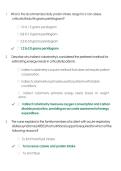
1. What is the recommended daily protein intake range for a non-obese,
r. r. r. r. r. r. r. r. r. r.
critically ill adult in grams per kilogram?
r . r. r. r. r. r. r.
1.0 to 1.5 grams per kilogram
r. r. r. r. r.
0.8 to 1.0 grams per kilogram
r. r. r. r. r.
2.5 to 3.0 grams per kilogram
r. r. r. r. r.
1.2 to 2.0 grams per kilogram
r. r. r. r. r.
2. Describe why indirect calorimetry is considered the preferred method for
r. r. r. r. r. r. r. r. r.
estimating energy needs in critically ill patients.
r. r. r. r. r. r. r.
r. Indirect calorimetry is a quick method that does not require patient
r. r. r. r. r. r. r. r. r. r.
cooperation.
r.
r. Indirect calorimetry is primarily used for patients with stable
r. r. r. r. r. r. r. r.
conditions.
r.
Indirect calorimetry estimates energy needs based on weight
r . r. r. r. r. r. r. r.
r. alone.
r . Indirect calorimetry measures oxygen consumption and carbon
r. r. r. r. r. r.
r. dioxide production, providing an accurate assessment of energy
r. r. r. r. r. r. r.
r. expenditure.
3. The nurse explains to the family members of a client with acute respiratory
r. r. r. r. r. r. r. r. r. r. r. r.
distress syndrome (ARDS) that nutritional support is required for which of the
r. r. r. r. r. r. r. r. r. r. r. r.
following reasons?
r. r.
r. To limit total fluid intake
r. r. r. r.
r . To increase calorie and protein intake
r. r. r. r. r.
r . To limit fiber r. r.
, r . To increase empty-calorie liquids
r. r. r.
4. In a clinical scenario where a critically ill patient with sepsis is being
r. r. r. r. r. r. r. r. r. r. r. r.
considered for nutritional support, how might the inclusion of arginine affect
r. r. r. r. r. r. r. r. r. r. r.
their treatment plan?
r. r. r.
r . Including arginine would primarily focus on energy needs.
r. r. r. r. r. r. r.
r . Including arginine is contraindicated in all critically ill patients.
r. r. r. r. r. r. r. r. r.
r. Including arginine would have no impact on treatment.
r. r. r. r. r. r. r.
r. Including arginine may enhance immune response and support
r. r. r. r. r. r. r.
r. recovery.
5. What is the term used to describe the metabolic state induced by stress
r. r. r. r. r. r. r. r. r. r. r. r.
hormones during critical illness?
r. r. r. r.
r. Cachexia
r. Hypermetabolism
r. Anorexia
r. Hypoglycemia
6. What physiological changes characterize the acute-phase response (APR)?
r. r. r. r. r. r. r.
r . Increased production of acute-phase proteins, changes in r. r. r. r. r. r.
r. metabolism, and immune response activation. r. r. r. r.
r . Increased appetite and enhanced digestion. r. r. r. r.
r . Decreased energy expenditure and reduced protein synthesis. r. r. r. r. r. r.
r . Stabilization of blood glucose levels and decreased inflammation. r. r. r. r. r. r. r.
7. What is a key focus in nutrition management for patients with respiratory
r. r. r. r. r. r. r. r. r. r. r.
failure or ARDS?
r. r. r.
, r . Minimizing fluid intake r. r.
r . Increasing carbohydrate consumption r. r.
r . Prioritizing energy needs and protein intake r. r. r. r. r.
r . Reducing caloric intake r. r.
8. Which laboratory values are known to decrease during the acute-phase
r. r. r. r. r. r. r. r. r.
response?
r.
r . Hemoglobin levels r.
r. White blood cell countr. r. r. r.
r. Blood glucose levels r. r.
r. Albumin levels r.
9. Positive outcomes in critical illness may be more dependent on adequate
r. r. r. r. r. r. r. r. r. r.
protein intake than total calorie intake.
r . r. r. r. r. r.
r. false
r. true
10. Describe the role of cytokines in the immune response as produced by
r. r. r. r. r. r. r. r. r. r. r.
white blood cells.
r. r. r.
r . Cytokines are proteins that directly attack pathogens.
r. r. r. r. r. r.
r . Cytokines are structural components of white blood cells.
r. r. r. r. r. r. r.
r. Cytokines are signaling molecules that help regulate and
r. r. r. r. r. r. r.
r. coordinate the immune response. r. r. r.
r . Cytokines are waste products of immune cells. r. r. r. r. r. r.
11. If a critically ill patient is receiving parenteral nutrition with a dextrose intake
r. r. r. r. r. r. r. r. r. r. r. r.
of 6 mg/kg/min, what potential issue could arise, and how should it be
r. r. r. r. r. r. r. r. r. r. r. r. r.
, addressed?
r . The patient may become dehydrated, requiring additional fluids.
r. r. r. r. r. r. r.
r . The patient may develop hyperglycemia, which should be managed
r. r. r. r. r. r. r. r.
r. by adjusting the dextrose intake.
r. r. r. r.
r. The patient will experience increased energy levels, which is
r. r. r. r. r. r. r. r.
r. beneficial.
r . The patient will not need any adjustments as 6 mg/kg/min is safe.
r. r. r. r. r. r. r. r. r. r. r.
12. Describe how excess caloric intake can impact the health of a patient with
r. r. r. r. r. r. r. r. r. r. r. r.
COPD.
r.
r . Excess caloric intake has no effect on COPD patients.
r. r. r. r. r. r. r. r.
r. Excess caloric intake can lead to increased carbon dioxide
r. r. r. r. r. r. r. r.
production, which may worsen respiratory function in COPD
r. r. r. r. r. r. r. r.
patients.
r.
r . Excess caloric intake reduces the need for supplemental oxygen.
r. r. r. r. r. r. r. r. r.
r. Excess caloric intake improves lung capacity and oxygenation.
r. r. r. r. r. r. r.
13. Describe how inadequate enteral nutrition can affect critically ill patients like
r. r. r. r. r. r. r. r. r. r.
Angel.
r.
r . Inadequate enteral nutrition has no significant impact on recovery.
r. r. r. r. r. r. r. r.
r . Inadequate enteral nutrition can lead to malnutrition, delayed r. r. r. r. r. r. r.
r. recovery, and impaired organ function. r. r. r. r.
r . Inadequate enteral nutrition improves metabolic rates. r. r. r. r. r. r.
r. Inadequate enteral nutrition only affects weight gain. r. r. r. r. r. r.
r. r. r. r. r. r. r. r. r. r.
critically ill adult in grams per kilogram?
r . r. r. r. r. r. r.
1.0 to 1.5 grams per kilogram
r. r. r. r. r.
0.8 to 1.0 grams per kilogram
r. r. r. r. r.
2.5 to 3.0 grams per kilogram
r. r. r. r. r.
1.2 to 2.0 grams per kilogram
r. r. r. r. r.
2. Describe why indirect calorimetry is considered the preferred method for
r. r. r. r. r. r. r. r. r.
estimating energy needs in critically ill patients.
r. r. r. r. r. r. r.
r. Indirect calorimetry is a quick method that does not require patient
r. r. r. r. r. r. r. r. r. r.
cooperation.
r.
r. Indirect calorimetry is primarily used for patients with stable
r. r. r. r. r. r. r. r.
conditions.
r.
Indirect calorimetry estimates energy needs based on weight
r . r. r. r. r. r. r. r.
r. alone.
r . Indirect calorimetry measures oxygen consumption and carbon
r. r. r. r. r. r.
r. dioxide production, providing an accurate assessment of energy
r. r. r. r. r. r. r.
r. expenditure.
3. The nurse explains to the family members of a client with acute respiratory
r. r. r. r. r. r. r. r. r. r. r. r.
distress syndrome (ARDS) that nutritional support is required for which of the
r. r. r. r. r. r. r. r. r. r. r. r.
following reasons?
r. r.
r. To limit total fluid intake
r. r. r. r.
r . To increase calorie and protein intake
r. r. r. r. r.
r . To limit fiber r. r.
, r . To increase empty-calorie liquids
r. r. r.
4. In a clinical scenario where a critically ill patient with sepsis is being
r. r. r. r. r. r. r. r. r. r. r. r.
considered for nutritional support, how might the inclusion of arginine affect
r. r. r. r. r. r. r. r. r. r. r.
their treatment plan?
r. r. r.
r . Including arginine would primarily focus on energy needs.
r. r. r. r. r. r. r.
r . Including arginine is contraindicated in all critically ill patients.
r. r. r. r. r. r. r. r. r.
r. Including arginine would have no impact on treatment.
r. r. r. r. r. r. r.
r. Including arginine may enhance immune response and support
r. r. r. r. r. r. r.
r. recovery.
5. What is the term used to describe the metabolic state induced by stress
r. r. r. r. r. r. r. r. r. r. r. r.
hormones during critical illness?
r. r. r. r.
r. Cachexia
r. Hypermetabolism
r. Anorexia
r. Hypoglycemia
6. What physiological changes characterize the acute-phase response (APR)?
r. r. r. r. r. r. r.
r . Increased production of acute-phase proteins, changes in r. r. r. r. r. r.
r. metabolism, and immune response activation. r. r. r. r.
r . Increased appetite and enhanced digestion. r. r. r. r.
r . Decreased energy expenditure and reduced protein synthesis. r. r. r. r. r. r.
r . Stabilization of blood glucose levels and decreased inflammation. r. r. r. r. r. r. r.
7. What is a key focus in nutrition management for patients with respiratory
r. r. r. r. r. r. r. r. r. r. r.
failure or ARDS?
r. r. r.
, r . Minimizing fluid intake r. r.
r . Increasing carbohydrate consumption r. r.
r . Prioritizing energy needs and protein intake r. r. r. r. r.
r . Reducing caloric intake r. r.
8. Which laboratory values are known to decrease during the acute-phase
r. r. r. r. r. r. r. r. r.
response?
r.
r . Hemoglobin levels r.
r. White blood cell countr. r. r. r.
r. Blood glucose levels r. r.
r. Albumin levels r.
9. Positive outcomes in critical illness may be more dependent on adequate
r. r. r. r. r. r. r. r. r. r.
protein intake than total calorie intake.
r . r. r. r. r. r.
r. false
r. true
10. Describe the role of cytokines in the immune response as produced by
r. r. r. r. r. r. r. r. r. r. r.
white blood cells.
r. r. r.
r . Cytokines are proteins that directly attack pathogens.
r. r. r. r. r. r.
r . Cytokines are structural components of white blood cells.
r. r. r. r. r. r. r.
r. Cytokines are signaling molecules that help regulate and
r. r. r. r. r. r. r.
r. coordinate the immune response. r. r. r.
r . Cytokines are waste products of immune cells. r. r. r. r. r. r.
11. If a critically ill patient is receiving parenteral nutrition with a dextrose intake
r. r. r. r. r. r. r. r. r. r. r. r.
of 6 mg/kg/min, what potential issue could arise, and how should it be
r. r. r. r. r. r. r. r. r. r. r. r. r.
, addressed?
r . The patient may become dehydrated, requiring additional fluids.
r. r. r. r. r. r. r.
r . The patient may develop hyperglycemia, which should be managed
r. r. r. r. r. r. r. r.
r. by adjusting the dextrose intake.
r. r. r. r.
r. The patient will experience increased energy levels, which is
r. r. r. r. r. r. r. r.
r. beneficial.
r . The patient will not need any adjustments as 6 mg/kg/min is safe.
r. r. r. r. r. r. r. r. r. r. r.
12. Describe how excess caloric intake can impact the health of a patient with
r. r. r. r. r. r. r. r. r. r. r. r.
COPD.
r.
r . Excess caloric intake has no effect on COPD patients.
r. r. r. r. r. r. r. r.
r. Excess caloric intake can lead to increased carbon dioxide
r. r. r. r. r. r. r. r.
production, which may worsen respiratory function in COPD
r. r. r. r. r. r. r. r.
patients.
r.
r . Excess caloric intake reduces the need for supplemental oxygen.
r. r. r. r. r. r. r. r. r.
r. Excess caloric intake improves lung capacity and oxygenation.
r. r. r. r. r. r. r.
13. Describe how inadequate enteral nutrition can affect critically ill patients like
r. r. r. r. r. r. r. r. r. r.
Angel.
r.
r . Inadequate enteral nutrition has no significant impact on recovery.
r. r. r. r. r. r. r. r.
r . Inadequate enteral nutrition can lead to malnutrition, delayed r. r. r. r. r. r. r.
r. recovery, and impaired organ function. r. r. r. r.
r . Inadequate enteral nutrition improves metabolic rates. r. r. r. r. r. r.
r. Inadequate enteral nutrition only affects weight gain. r. r. r. r. r. r.