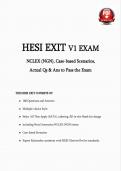
HESI EXIT V1 EXAM
NCLEX (NGN), Case-based Scenarios,
Actual Qs & Ans to Pass the Exam
THIS HESI EXIT CONSISTS OF
160 Questions and Answers
Multiple-choice Style
Select All That Apply (SATA), ordering, fill-in-the-blank for dosage
including Next Generation NCLEX (NGN) items
Case-based Scenarios
Expert Rationales consistent with HESI−Elsevier/Evolve standards.
,──────────────────────────────────────────
──────────────
1. (Multiple-Choice)
While caring for a toddler with croup, which initial sign of croup requires the nurse’s immediate
attention?
A. Respiratory rate of 42
B. Lethargy for the past hour
C. Apical pulse of 54
D. Coughing up copious secretions
Answer: A) Respiratory rate of 42
Expert-Verified Explanation:
• A normal toddler respiratory rate is around 24–40 breaths per minute; 42 suggests respiratory
distress.
• Croup (laryngotracheobronchitis) can escalate, so tachypnea is an early sign requiring immediate
intervention.
──────────────────────────────────────────
──────────────
2. (Multiple-Choice)
A client is admitted with low T3 and T4 levels and an elevated TSH level. On initial assessment, the
nurse would anticipate which finding?
A. Lethargy
B. Heat intolerance
C. Diarrhea
D. Skin eruptions
,Answer: A) Lethargy
Expert-Verified Explanation:
• Low T3/T4 with high TSH → hypothyroidism.
• Classic signs: weight gain, fatigue, lethargy, cold intolerance, constipation.
• Heat intolerance and diarrhea are typical of hyperthyroidism.
──────────────────────────────────────────
──────────────
3. (Case Scenario/NGN-Style)
A child who experienced a seizure at school is admitted to the ER. The father says this is the first
occurrence and there is no family history of epilepsy. The nurse’s BEST response:
A. “Do not worry. Epilepsy can be treated with medications.”
B. “The seizure may or may not mean your child has epilepsy.”
C. “Since this was the first convulsion, it may not happen again.”
D. “Long-term treatment will prevent future seizures.”
Answer: B) “The seizure may or may not mean your child has epilepsy.”
Expert-Verified Explanation:
• One seizure does not confirm epilepsy (diagnosis typically requires recurrent unprovoked seizures).
• Accuracy and avoiding false reassurance are key.
──────────────────────────────────────────
──────────────
4. (Multiple-Choice)
Alcohol and drug abuse impair judgment and increase risk-taking behavior. Which nursing diagnosis
best applies?
, A. Risk for injury
B. Risk for knowledge deficit
C. Altered thought process
D. Disturbance in self-esteem
Answer: A) Risk for injury
Expert-Verified Explanation:
• Substance abuse heightens accident risk (falls, fights, driving under influence).
• “Risk for injury” covers possible physical, psychological, or situational harm.
──────────────────────────────────────────
──────────────
5. (Multiple-Choice)
Which finding would the nurse more closely associate with anemia in a 10-month-old infant?
A. Hemoglobin level of 12 g/dL
B. Pale mucosa of the eyelids and lips
C. Hypoactivity
D. A heart rate between 140 and 160
Answer: B) Pale mucosa of the eyelids and lips
Expert-Verified Explanation:
• Pallor (especially mucosal) is a hallmark sign of anemia.
• An Hgb of 12 g/dL can be normal.
• Visible mucosal pallor strongly suggests decreased RBCs or hemoglobin.
NCLEX (NGN), Case-based Scenarios,
Actual Qs & Ans to Pass the Exam
THIS HESI EXIT CONSISTS OF
160 Questions and Answers
Multiple-choice Style
Select All That Apply (SATA), ordering, fill-in-the-blank for dosage
including Next Generation NCLEX (NGN) items
Case-based Scenarios
Expert Rationales consistent with HESI−Elsevier/Evolve standards.
,──────────────────────────────────────────
──────────────
1. (Multiple-Choice)
While caring for a toddler with croup, which initial sign of croup requires the nurse’s immediate
attention?
A. Respiratory rate of 42
B. Lethargy for the past hour
C. Apical pulse of 54
D. Coughing up copious secretions
Answer: A) Respiratory rate of 42
Expert-Verified Explanation:
• A normal toddler respiratory rate is around 24–40 breaths per minute; 42 suggests respiratory
distress.
• Croup (laryngotracheobronchitis) can escalate, so tachypnea is an early sign requiring immediate
intervention.
──────────────────────────────────────────
──────────────
2. (Multiple-Choice)
A client is admitted with low T3 and T4 levels and an elevated TSH level. On initial assessment, the
nurse would anticipate which finding?
A. Lethargy
B. Heat intolerance
C. Diarrhea
D. Skin eruptions
,Answer: A) Lethargy
Expert-Verified Explanation:
• Low T3/T4 with high TSH → hypothyroidism.
• Classic signs: weight gain, fatigue, lethargy, cold intolerance, constipation.
• Heat intolerance and diarrhea are typical of hyperthyroidism.
──────────────────────────────────────────
──────────────
3. (Case Scenario/NGN-Style)
A child who experienced a seizure at school is admitted to the ER. The father says this is the first
occurrence and there is no family history of epilepsy. The nurse’s BEST response:
A. “Do not worry. Epilepsy can be treated with medications.”
B. “The seizure may or may not mean your child has epilepsy.”
C. “Since this was the first convulsion, it may not happen again.”
D. “Long-term treatment will prevent future seizures.”
Answer: B) “The seizure may or may not mean your child has epilepsy.”
Expert-Verified Explanation:
• One seizure does not confirm epilepsy (diagnosis typically requires recurrent unprovoked seizures).
• Accuracy and avoiding false reassurance are key.
──────────────────────────────────────────
──────────────
4. (Multiple-Choice)
Alcohol and drug abuse impair judgment and increase risk-taking behavior. Which nursing diagnosis
best applies?
, A. Risk for injury
B. Risk for knowledge deficit
C. Altered thought process
D. Disturbance in self-esteem
Answer: A) Risk for injury
Expert-Verified Explanation:
• Substance abuse heightens accident risk (falls, fights, driving under influence).
• “Risk for injury” covers possible physical, psychological, or situational harm.
──────────────────────────────────────────
──────────────
5. (Multiple-Choice)
Which finding would the nurse more closely associate with anemia in a 10-month-old infant?
A. Hemoglobin level of 12 g/dL
B. Pale mucosa of the eyelids and lips
C. Hypoactivity
D. A heart rate between 140 and 160
Answer: B) Pale mucosa of the eyelids and lips
Expert-Verified Explanation:
• Pallor (especially mucosal) is a hallmark sign of anemia.
• An Hgb of 12 g/dL can be normal.
• Visible mucosal pallor strongly suggests decreased RBCs or hemoglobin.