NR566 Advanced Pharmacology for Care of the Family: Complete
Week 5-8 Final Exam Review100 Practice Questions with Correct
Answers & Rationales | Comprehensive FNP Pharmacology Study Guide
Covering EENT, Dermatology, Mental Health, CNS Disorders, Pain
Management & Weight Loss Pharmacotherapy
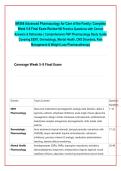
Coverage Week 5-8 Final Exam
Domain Topics Covered Question
Numbers
EENT Glaucoma medications (prostaglandin analogs, beta-blockers, alpha-2 1-16
Pharmacology agonists, carbonic anhydrase inhibitors), acute angle-closure glaucoma
management, allergic rhinitis (intranasal corticosteroids, antihistamines,
leukotriene receptor antagonists, decongestants), otitis media, otitis
externa
Dermatologic Acne treatments (topical retinoids, benzoyl peroxide, isotretinoin with 17-25
Pharmacology iPLEDGE), atopic dermatitis (topical corticosteroids, calcineurin
inhibitors), psoriasis (vitamin D analogs), medication administration
teaching, adverse effects monitoring
Mental Health Antidepressants (SSRIs, SNRIs, bupropion, trazodone), anxiolytics 26-46
Pharmacology (benzodiazepines, buspirone), antipsychotics (typical, atypical), mood
stabilizers (lithium, valproate), monitoring requirements (serum levels,
, metabolic syndrome, EPS, NMS, tardive dyskinesia), drug interactions
(serotonin syndrome, bleeding risk)
CNS Disorders Alzheimer's disease (cholinesterase inhibitors: donepezil, rivastigmine; 47-59, 85-
Pharmacology NMDA antagonist: memantine), Parkinson's disease 100
(levodopa/carbidopa, dopamine agonists, adverse effects), seizure
disorders (phenytoin, levetiracetam, valproate, lamotrigine), multiple
sclerosis (interferon beta), headache disorders (triptans, beta-blockers,
CGRP antagonists)
Pain Management Neuropathic pain (gabapentin, pregabalin), tramadol (serotonin 60-66, 85-
syndrome risk), opioid overdose (naloxone), opioid use disorder 86
(buprenorphine/naloxone), acetaminophen dosing, NSAID interactions
Weight Loss Orlistat (lipase inhibitor, fat-soluble vitamin deficiency), phentermine 67-75
Pharmacotherapy (sympathomimetic, Schedule IV), phentermine/topiramate (Qsymia),
bupropion/naltrexone (Contrave), liraglutide (Saxenda), semaglutide
(Wegovy), GLP-1 receptor agonists (nausea, dosing)
Health Promotion Vaccinations (HPV), smoking cessation (varenicline, bupropion),
& Prevention osteoporosis (bisphosphonates, administration instructions),
cardiovascular prevention (statins, aspirin, clopidogrel), insomnia
medications (zolpidem, ramelteon, suvorexant), ADHD medications
(methylphenidate, amphetamines)
Domain: EENT Pharmacology
1. A patient is diagnosed with open-angle glaucoma. What is the mechanism of
action of prostaglandin analogs (e.g., latanoprost, bimatoprost)?
A) Decreased aqueous humor production by beta-adrenergic blockade
B) Increased uveoscleral outflow of aqueous humor
C) Decreased aqueous humor production via carbonic anhydrase inhibition
D) Increased trabecular outflow via cholinergic stimulation
Correct Answer: B) Increased uveoscleral outflow of aqueous humor
,Rationale: Prostaglandin analogs (latanoprost, bimatoprost, travoprost) increase
uveoscleral outflow of aqueous humor, reducing intraocular pressure (IOP). They are
first-line agents for open-angle glaucoma due to once-daily dosing and excellent
efficacy with minimal systemic side effects.
2. A patient using latanoprost (Xalatan) for glaucoma reports that their iris color
appears to be darkening. What is the appropriate nursing response?
A) Discontinue the medication immediately
B) Reassure the patient that this is a known side effect; increased iris pigmentation
is usually benign but should be monitored
C) This indicates an allergic reaction requiring emergency care
D) Switch to a different prostaglandin analog
Correct Answer: B) Reassure the patient that this is a known side effect; increased
iris pigmentation is usually benign but should be monitored
Rationale: Prostaglandin analogs can cause increased iris pigmentation (browning),
particularly in patients with mixed-color irises (blue-brown, green-brown). This change is
usually benign but permanent. Patients should be counseled about this possibility
before initiating therapy.
3. What is the mechanism of action of beta-blocker eye drops (e.g., timolol) in the
treatment of glaucoma?
A) Decreased aqueous humor production via beta-adrenergic blockade in the
ciliary body
B) Increased uveoscleral outflow
C) Increased trabecular outflow via cholinergic stimulation
D) Decreased aqueous humor production via carbonic anhydrase inhibition
Correct Answer: A) Decreased aqueous humor production via beta-adrenergic
blockade in the ciliary body
Rationale: Beta-blocker eye drops (timolol, betaxolol) reduce intraocular pressure by
decreasing aqueous humor production in the ciliary body. They are effective but should
, be used with caution in patients with asthma, bradycardia, or heart failure due to
potential systemic absorption.
4. A patient with glaucoma is prescribed timolol eye drops. What systemic adverse
effect should the nurse monitor for?
A) Tachycardia
B) Bradycardia, hypotension, and bronchospasm (especially in patients with
asthma or COPD)
C) Hypertension
D) Hyperglycemia
Correct Answer: B) Bradycardia, hypotension, and bronchospasm (especially in
patients with asthma or COPD)
Rationale: Timolol is a non-selective beta-blocker that can be systemically absorbed
through the nasolacrimal duct. It can cause bradycardia, hypotension, and
bronchospasm, particularly in patients with pre-existing cardiac or pulmonary
conditions. Nasolacrimal occlusion (pressing the inner canthus for 1-2 minutes after
instillation) reduces systemic absorption.
5. A patient is prescribed brimonidine (Alphagan) for glaucoma. What is the
mechanism of action?
A) Beta-adrenergic blockade
B) *Alpha-2 adrenergic agonist; decreases aqueous humor production and
increases uveoscleral outflow*
C) Carbonic anhydrase inhibition
D) Prostaglandin analog
Correct Answer: *B) Alpha-2 adrenergic agonist; decreases aqueous humor
production and increases uveoscleral outflow*
Rationale: Brimonidine is an alpha-2 adrenergic agonist that reduces intraocular
pressure by decreasing aqueous humor production and increasing uveoscleral outflow.
Week 5-8 Final Exam Review100 Practice Questions with Correct
Answers & Rationales | Comprehensive FNP Pharmacology Study Guide
Covering EENT, Dermatology, Mental Health, CNS Disorders, Pain
Management & Weight Loss Pharmacotherapy
Coverage Week 5-8 Final Exam
Domain Topics Covered Question
Numbers
EENT Glaucoma medications (prostaglandin analogs, beta-blockers, alpha-2 1-16
Pharmacology agonists, carbonic anhydrase inhibitors), acute angle-closure glaucoma
management, allergic rhinitis (intranasal corticosteroids, antihistamines,
leukotriene receptor antagonists, decongestants), otitis media, otitis
externa
Dermatologic Acne treatments (topical retinoids, benzoyl peroxide, isotretinoin with 17-25
Pharmacology iPLEDGE), atopic dermatitis (topical corticosteroids, calcineurin
inhibitors), psoriasis (vitamin D analogs), medication administration
teaching, adverse effects monitoring
Mental Health Antidepressants (SSRIs, SNRIs, bupropion, trazodone), anxiolytics 26-46
Pharmacology (benzodiazepines, buspirone), antipsychotics (typical, atypical), mood
stabilizers (lithium, valproate), monitoring requirements (serum levels,
, metabolic syndrome, EPS, NMS, tardive dyskinesia), drug interactions
(serotonin syndrome, bleeding risk)
CNS Disorders Alzheimer's disease (cholinesterase inhibitors: donepezil, rivastigmine; 47-59, 85-
Pharmacology NMDA antagonist: memantine), Parkinson's disease 100
(levodopa/carbidopa, dopamine agonists, adverse effects), seizure
disorders (phenytoin, levetiracetam, valproate, lamotrigine), multiple
sclerosis (interferon beta), headache disorders (triptans, beta-blockers,
CGRP antagonists)
Pain Management Neuropathic pain (gabapentin, pregabalin), tramadol (serotonin 60-66, 85-
syndrome risk), opioid overdose (naloxone), opioid use disorder 86
(buprenorphine/naloxone), acetaminophen dosing, NSAID interactions
Weight Loss Orlistat (lipase inhibitor, fat-soluble vitamin deficiency), phentermine 67-75
Pharmacotherapy (sympathomimetic, Schedule IV), phentermine/topiramate (Qsymia),
bupropion/naltrexone (Contrave), liraglutide (Saxenda), semaglutide
(Wegovy), GLP-1 receptor agonists (nausea, dosing)
Health Promotion Vaccinations (HPV), smoking cessation (varenicline, bupropion),
& Prevention osteoporosis (bisphosphonates, administration instructions),
cardiovascular prevention (statins, aspirin, clopidogrel), insomnia
medications (zolpidem, ramelteon, suvorexant), ADHD medications
(methylphenidate, amphetamines)
Domain: EENT Pharmacology
1. A patient is diagnosed with open-angle glaucoma. What is the mechanism of
action of prostaglandin analogs (e.g., latanoprost, bimatoprost)?
A) Decreased aqueous humor production by beta-adrenergic blockade
B) Increased uveoscleral outflow of aqueous humor
C) Decreased aqueous humor production via carbonic anhydrase inhibition
D) Increased trabecular outflow via cholinergic stimulation
Correct Answer: B) Increased uveoscleral outflow of aqueous humor
,Rationale: Prostaglandin analogs (latanoprost, bimatoprost, travoprost) increase
uveoscleral outflow of aqueous humor, reducing intraocular pressure (IOP). They are
first-line agents for open-angle glaucoma due to once-daily dosing and excellent
efficacy with minimal systemic side effects.
2. A patient using latanoprost (Xalatan) for glaucoma reports that their iris color
appears to be darkening. What is the appropriate nursing response?
A) Discontinue the medication immediately
B) Reassure the patient that this is a known side effect; increased iris pigmentation
is usually benign but should be monitored
C) This indicates an allergic reaction requiring emergency care
D) Switch to a different prostaglandin analog
Correct Answer: B) Reassure the patient that this is a known side effect; increased
iris pigmentation is usually benign but should be monitored
Rationale: Prostaglandin analogs can cause increased iris pigmentation (browning),
particularly in patients with mixed-color irises (blue-brown, green-brown). This change is
usually benign but permanent. Patients should be counseled about this possibility
before initiating therapy.
3. What is the mechanism of action of beta-blocker eye drops (e.g., timolol) in the
treatment of glaucoma?
A) Decreased aqueous humor production via beta-adrenergic blockade in the
ciliary body
B) Increased uveoscleral outflow
C) Increased trabecular outflow via cholinergic stimulation
D) Decreased aqueous humor production via carbonic anhydrase inhibition
Correct Answer: A) Decreased aqueous humor production via beta-adrenergic
blockade in the ciliary body
Rationale: Beta-blocker eye drops (timolol, betaxolol) reduce intraocular pressure by
decreasing aqueous humor production in the ciliary body. They are effective but should
, be used with caution in patients with asthma, bradycardia, or heart failure due to
potential systemic absorption.
4. A patient with glaucoma is prescribed timolol eye drops. What systemic adverse
effect should the nurse monitor for?
A) Tachycardia
B) Bradycardia, hypotension, and bronchospasm (especially in patients with
asthma or COPD)
C) Hypertension
D) Hyperglycemia
Correct Answer: B) Bradycardia, hypotension, and bronchospasm (especially in
patients with asthma or COPD)
Rationale: Timolol is a non-selective beta-blocker that can be systemically absorbed
through the nasolacrimal duct. It can cause bradycardia, hypotension, and
bronchospasm, particularly in patients with pre-existing cardiac or pulmonary
conditions. Nasolacrimal occlusion (pressing the inner canthus for 1-2 minutes after
instillation) reduces systemic absorption.
5. A patient is prescribed brimonidine (Alphagan) for glaucoma. What is the
mechanism of action?
A) Beta-adrenergic blockade
B) *Alpha-2 adrenergic agonist; decreases aqueous humor production and
increases uveoscleral outflow*
C) Carbonic anhydrase inhibition
D) Prostaglandin analog
Correct Answer: *B) Alpha-2 adrenergic agonist; decreases aqueous humor
production and increases uveoscleral outflow*
Rationale: Brimonidine is an alpha-2 adrenergic agonist that reduces intraocular
pressure by decreasing aqueous humor production and increasing uveoscleral outflow.