LMSW SOLUTION PACK CERTIFICATION
EVALUATION 2026 SOLVED QUESTIONS
AND SOLUTIONS GRADED A+
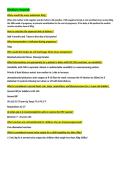
⩥ What are SSRIs? Answer: selective serotonin reuptake inhibitors
⩥ Medications that reduce levels of anxiety. Answer: SSRIs/Zoloft
(sertraline), Benzodiazepines, Valium (diazepam)
⩥ Summative evaluations. Answer: occur at the end of services and
provide an overall description of their effectiveness. Summative
evaluation examines outcomes to determine whether objectives were
met. Summative evaluations enable decisions to be made regarding
future service directions that cannot be made during implementation.
Impact evaluations and cost-benefit analyses are types of summative
evaluations.
⩥ Antianxiety-Benzos. Answer: Ativan (lorazepam) Buspar (buspirone)
Klonopin (clonazepam) Valium (diazepam) Xanax (alprazolam)
⩥ Typical Antipsychotic medications. Answer: Haldol (haloperidol)
Haldol Decanoate (long-acting injectable) Loxitane (loxapine) Mellaril
(thioridazine) Moban (molindone) Navane (thiothixene) Prolixin
(fluphenazine) Serentil (mesoridazine) Stelazine (trifluoperazine)
Thorazine (chlorpromazine) Trilafon (perphenazine)
,⩥ Atypical antipsychotic medications. Answer: Abilify (aripiprazole)
Clozaril (clozapine) Geodon (ziprasidone) Risperdal (risperidone)
Seroquel (quetiapine) Zyprexa (olanzapine)
⩥ Antidepressant SSRI medications. Answer: Celexa (citalopram)
Lexapro (escitalopram) Luvox (fluvoxamine) Paxil (paroxetine) Prozac
(fluoxetine) Zoloft (sertraline)
⩥ Antidepressant tricyclics medications. Answer: Anafranil
(clomipramine) Asendin (amoxapine) Elavil (amitriptyline) Norpramin
(desipramine) Pamelor (nortriptyline) Sinequan (doxepin) Surmontil
(trimipramine) Tofranil (imipramine) Vivactil (protriptyline) Monoamine
Oxidase Inhibitors (MAOIs) Nardil (phenelzine) Parnate
(tranylcypromine)
⩥ Stimulant medication. Answer: (treated for ADHD/ADD) Adderall
(amphetamine, mixed salts) Concerta (methylphenidate, long acting)
Dexedrine (dextroamphetamine) Dexedrine Spansules
(dextroamphetamine, long acting) Metadate (methylphenidate, long
acting) Ritalin (methylphenidate)
⩥ Medications ending in "pram/line/mine" are typically which type of
medication?. Answer: SSRI/Antidepressants
, ⩥ Medications ending in "zine/dol" are typically which type of
medication?. Answer: Antipsychotics
⩥ Medications ending in pam/lam are typically which type of
medication?. Answer: Anti-anxiety
⩥ Medications ending in mine/date are typically which type of
medication?. Answer: Stimulants
⩥ Aphasia. Answer: a change in cognition (mental ability) that is
characterized by difficulty understanding language or using language to
speak or write
⩥ Ataxia. Answer: Difficulty with common motor skills, a lack of
muscle control during voluntary movements, such as walking or picking
up objects. A sign of an underlying condition, it can affect movement,
speech, eye movement, and swallowing
⩥ Agnosia. Answer: the inability to recognize familiar objects.
⩥ Acalculia. Answer: the inability to do simple arithmetic
⩥ A paradoxical intent or directive. Answer: prescribes the symptomatic
behavior so the client realizes control over it and uses the strength of
resistance to change
EVALUATION 2026 SOLVED QUESTIONS
AND SOLUTIONS GRADED A+
⩥ What are SSRIs? Answer: selective serotonin reuptake inhibitors
⩥ Medications that reduce levels of anxiety. Answer: SSRIs/Zoloft
(sertraline), Benzodiazepines, Valium (diazepam)
⩥ Summative evaluations. Answer: occur at the end of services and
provide an overall description of their effectiveness. Summative
evaluation examines outcomes to determine whether objectives were
met. Summative evaluations enable decisions to be made regarding
future service directions that cannot be made during implementation.
Impact evaluations and cost-benefit analyses are types of summative
evaluations.
⩥ Antianxiety-Benzos. Answer: Ativan (lorazepam) Buspar (buspirone)
Klonopin (clonazepam) Valium (diazepam) Xanax (alprazolam)
⩥ Typical Antipsychotic medications. Answer: Haldol (haloperidol)
Haldol Decanoate (long-acting injectable) Loxitane (loxapine) Mellaril
(thioridazine) Moban (molindone) Navane (thiothixene) Prolixin
(fluphenazine) Serentil (mesoridazine) Stelazine (trifluoperazine)
Thorazine (chlorpromazine) Trilafon (perphenazine)
,⩥ Atypical antipsychotic medications. Answer: Abilify (aripiprazole)
Clozaril (clozapine) Geodon (ziprasidone) Risperdal (risperidone)
Seroquel (quetiapine) Zyprexa (olanzapine)
⩥ Antidepressant SSRI medications. Answer: Celexa (citalopram)
Lexapro (escitalopram) Luvox (fluvoxamine) Paxil (paroxetine) Prozac
(fluoxetine) Zoloft (sertraline)
⩥ Antidepressant tricyclics medications. Answer: Anafranil
(clomipramine) Asendin (amoxapine) Elavil (amitriptyline) Norpramin
(desipramine) Pamelor (nortriptyline) Sinequan (doxepin) Surmontil
(trimipramine) Tofranil (imipramine) Vivactil (protriptyline) Monoamine
Oxidase Inhibitors (MAOIs) Nardil (phenelzine) Parnate
(tranylcypromine)
⩥ Stimulant medication. Answer: (treated for ADHD/ADD) Adderall
(amphetamine, mixed salts) Concerta (methylphenidate, long acting)
Dexedrine (dextroamphetamine) Dexedrine Spansules
(dextroamphetamine, long acting) Metadate (methylphenidate, long
acting) Ritalin (methylphenidate)
⩥ Medications ending in "pram/line/mine" are typically which type of
medication?. Answer: SSRI/Antidepressants
, ⩥ Medications ending in "zine/dol" are typically which type of
medication?. Answer: Antipsychotics
⩥ Medications ending in pam/lam are typically which type of
medication?. Answer: Anti-anxiety
⩥ Medications ending in mine/date are typically which type of
medication?. Answer: Stimulants
⩥ Aphasia. Answer: a change in cognition (mental ability) that is
characterized by difficulty understanding language or using language to
speak or write
⩥ Ataxia. Answer: Difficulty with common motor skills, a lack of
muscle control during voluntary movements, such as walking or picking
up objects. A sign of an underlying condition, it can affect movement,
speech, eye movement, and swallowing
⩥ Agnosia. Answer: the inability to recognize familiar objects.
⩥ Acalculia. Answer: the inability to do simple arithmetic
⩥ A paradoxical intent or directive. Answer: prescribes the symptomatic
behavior so the client realizes control over it and uses the strength of
resistance to change