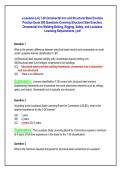
Louisiana (LA) 7-36 Ornamental Iron and Structural Steel Erection
Practice Exam 200 Questions Covering Structural Steel Erection,
Ornamental Iron Welding,Bolting, Rigging, Safety, and Louisiana
Licensing Requirements | pdf
Question 1
What is the primary difference between structural steel erection and ornamental iron work
under Louisiana license classification 7-36?
(A) Structural steel requires welding only; ornamental requires bolting only
(B) Structural steel is for bridges; ornamental is for buildings
(C) Structural steel provides building framework; ornamental iron is decorative
and non-structural
(D) There is no difference
Explanation: License classification 7-36 covers both structural steel erection
(loadbearing framework) and ornamental iron work (decorative elements such as railings,
gates, and stairs). Ornamental iron is typically non-structural.
Question 2
According to the Louisiana State Licensing Board for Contractors (LSLBC), what is the
required experience for the 7-36 license?
(A) 1 year
(B) 2 years
(C) 4 years (D) 5 years
Explanation: The Louisiana State Licensing Board for Contractors requires a minimum
of 4 years of full-time experience in the trade for the 7-36 classification.
Question 3
What is the minimum required bolt grade for structural steel connections in Louisiana?
,(A) A307
(B) A325
(C) A325 or A490 (D) A36
Explanation: Structural steel connections typically require high-strength bolts: A325
(medium carbon steel) or A490 (alloy steel) depending on design requirements.
Question 4
What is the maximum allowable gap between steel members before a shim is required?
(A) 1/8 inch
(B) 1/4 inch
(C) 1/2 inch
(D) 3/4 inch
Explanation: Gaps exceeding 1/2 inch between steel members typically require shims
to ensure proper load transfer and bolt tension.
Question 5
What is the purpose of a column base plate?
(A) To decorate the column
(B) to support the column during shipping
(C) To distribute column load to the foundation (D) to connect columns horizontally
Explanation: Column base plates distribute the concentrated load from the column to
the foundation or concrete pedestal.
Question 6
What is the minimum required edge distance for bolt holes in structural steel?
(A) 1 inch
(B) 1-1/4 inches
(C) 1-1/2 inches (D) 2 inches
,Explanation: The minimum edge distance for bolt holes is 1-1/2 inches for sheared
edges and 1-1/4 inches for rolled or gas-cut edges per AISC specifications.
Question 7
What is the purpose of a turn-of-nut method for bolt installation?
(A) To tighten bolts by hand
(B) to measure bolt tension
(C) To achieve proper bolt tension by rotating the nut a specified amount (D) to
lubricate bolts
Explanation: The turn-of-nut method achieves proper bolt tension by rotating the nut a
specified amount (typically 1/3 to 1/2 turn) after the plies are snug-tight.
Question 8
What is the minimum required bolt tension for a 3/4-inch A325 bolt?
(A) 10,000 lbs
(B) 15,000 lbs
(C) 28,000 lbs (D) 35,000 lbs
Explanation: A 3/4-inch A325 bolt requires a minimum tension of approximately
28,000 lbs (based on 3/4 inch diameter with 28 kips minimum tension).
Question 9
What is the purpose of a calibrated wrench (torque wrench) in bolt installation?
(A) To speed up installation
(B) to reduce labor
(C) To measure and verify bolt tension (D) to prevent rust
Explanation: Torque wrenches are used to verify that bolts have been tightened to the
required tension, typically after turn-of-nut or direct tension indicator installation.
, Question 10
What is the maximum allowable drift pin size for aligning bolt holes?
(A) 1/8 inch oversized
(B) 1/4 inch oversized
(C) No larger than the bolt diameter (D) 1/2 inch oversized
Explanation: Drift pins should not exceed the bolt diameter to prevent hole
enlargement that could compromise the connection.
Question 11
What is the primary cause of bolt relaxation after installation?
(A) Temperature changes only
(B) vibration only
(C) Embedment of bolt threads into the steel surface (D) corrosion
Explanation: Bolt relaxation (loss of tension) occurs primarily from embedment of bolt
threads into the steel surface under the nut and head.
Question 12
What is the minimum required bolt thread length for proper installation?
(A) Threads fully engaged only
(B) 1/2 inch beyond nut
(C) At least one thread beyond the nut
(D) Threads visible only
Explanation: At least one full thread should extend beyond the nut to ensure full
engagement and proper tension development.
Question 13
Practice Exam 200 Questions Covering Structural Steel Erection,
Ornamental Iron Welding,Bolting, Rigging, Safety, and Louisiana
Licensing Requirements | pdf
Question 1
What is the primary difference between structural steel erection and ornamental iron work
under Louisiana license classification 7-36?
(A) Structural steel requires welding only; ornamental requires bolting only
(B) Structural steel is for bridges; ornamental is for buildings
(C) Structural steel provides building framework; ornamental iron is decorative
and non-structural
(D) There is no difference
Explanation: License classification 7-36 covers both structural steel erection
(loadbearing framework) and ornamental iron work (decorative elements such as railings,
gates, and stairs). Ornamental iron is typically non-structural.
Question 2
According to the Louisiana State Licensing Board for Contractors (LSLBC), what is the
required experience for the 7-36 license?
(A) 1 year
(B) 2 years
(C) 4 years (D) 5 years
Explanation: The Louisiana State Licensing Board for Contractors requires a minimum
of 4 years of full-time experience in the trade for the 7-36 classification.
Question 3
What is the minimum required bolt grade for structural steel connections in Louisiana?
,(A) A307
(B) A325
(C) A325 or A490 (D) A36
Explanation: Structural steel connections typically require high-strength bolts: A325
(medium carbon steel) or A490 (alloy steel) depending on design requirements.
Question 4
What is the maximum allowable gap between steel members before a shim is required?
(A) 1/8 inch
(B) 1/4 inch
(C) 1/2 inch
(D) 3/4 inch
Explanation: Gaps exceeding 1/2 inch between steel members typically require shims
to ensure proper load transfer and bolt tension.
Question 5
What is the purpose of a column base plate?
(A) To decorate the column
(B) to support the column during shipping
(C) To distribute column load to the foundation (D) to connect columns horizontally
Explanation: Column base plates distribute the concentrated load from the column to
the foundation or concrete pedestal.
Question 6
What is the minimum required edge distance for bolt holes in structural steel?
(A) 1 inch
(B) 1-1/4 inches
(C) 1-1/2 inches (D) 2 inches
,Explanation: The minimum edge distance for bolt holes is 1-1/2 inches for sheared
edges and 1-1/4 inches for rolled or gas-cut edges per AISC specifications.
Question 7
What is the purpose of a turn-of-nut method for bolt installation?
(A) To tighten bolts by hand
(B) to measure bolt tension
(C) To achieve proper bolt tension by rotating the nut a specified amount (D) to
lubricate bolts
Explanation: The turn-of-nut method achieves proper bolt tension by rotating the nut a
specified amount (typically 1/3 to 1/2 turn) after the plies are snug-tight.
Question 8
What is the minimum required bolt tension for a 3/4-inch A325 bolt?
(A) 10,000 lbs
(B) 15,000 lbs
(C) 28,000 lbs (D) 35,000 lbs
Explanation: A 3/4-inch A325 bolt requires a minimum tension of approximately
28,000 lbs (based on 3/4 inch diameter with 28 kips minimum tension).
Question 9
What is the purpose of a calibrated wrench (torque wrench) in bolt installation?
(A) To speed up installation
(B) to reduce labor
(C) To measure and verify bolt tension (D) to prevent rust
Explanation: Torque wrenches are used to verify that bolts have been tightened to the
required tension, typically after turn-of-nut or direct tension indicator installation.
, Question 10
What is the maximum allowable drift pin size for aligning bolt holes?
(A) 1/8 inch oversized
(B) 1/4 inch oversized
(C) No larger than the bolt diameter (D) 1/2 inch oversized
Explanation: Drift pins should not exceed the bolt diameter to prevent hole
enlargement that could compromise the connection.
Question 11
What is the primary cause of bolt relaxation after installation?
(A) Temperature changes only
(B) vibration only
(C) Embedment of bolt threads into the steel surface (D) corrosion
Explanation: Bolt relaxation (loss of tension) occurs primarily from embedment of bolt
threads into the steel surface under the nut and head.
Question 12
What is the minimum required bolt thread length for proper installation?
(A) Threads fully engaged only
(B) 1/2 inch beyond nut
(C) At least one thread beyond the nut
(D) Threads visible only
Explanation: At least one full thread should extend beyond the nut to ensure full
engagement and proper tension development.
Question 13