Nour Khalifa
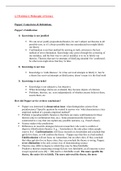
Problem 1
Anxiety is one of the most prevalent and costly disorders
Freud anxiety- inner conflict of id and superego- when overly expressed- disorder
OCD no longer anxiety disorder
Fear and anxiety responses
Anxiety involves a general feeling of apprehension about possible future danger
Fear is an alarm reaction that occurs in response to immediate danger
Fear can be more obvious and identified- it is a basic emotion
Anxiety is not clear, a lot of factors
Fear- fight or flight and ANS activation- instant reaction to immediate threat
o Adaptive value
Fear- response to real or perceived Anxiety- anticipation of future
threat threat
When that fear response occurs in the absence of any external danger, the person is
having a panic attack
o Symptoms identical to one in a dangerous sitch but here is often
accompanied by a state of fear or losing control, going crazy or dying
Fear and anxiety have 3 components
o Cognitive (afraid/ die)
o Physiological (HR and BP)
o Behavioral (urge to escape)
Why OCD got removed
Neurobiological basis
Anxiety not that prominent- anxiety is a factor in so many other disorders so is not enough
to make OCD classify as such
Anxiety disorders respond to a wider range of medications than OCD
OCD responds selectively to SSRI’s
Anxiety
Negative mood
Unpleasant emotion and cognitions oriented with the future
Threat- out of proportion
Not being able to control future
Chronic over arousal and tension
Prime person for fight or flight responses always
Adaptive value of anxiety- prepares us for possible threat
Mild anxiety- help perform
Make illusory correlations
Anxiety disorders all have unrealistic, irrational fears or anxieties of disabling intensity as
their principal and most obvious manifestation
DSM 5 anxiety disorders
, Nour Khalifa
1. Special phobia
2. Social anxiety/ phobia
a. Both can become anxious about imagining the situation and maybe panic
attack when they actually do
3. Panic disorder
a. Frequent panic attacks and anxiety about them and having another
4. Agoraphobia
a. Go to great lengths to avoid feared situations
5. Generalized anxiety disorder
a. Worry about potential bad things that may happen
Causes of anxiety
Biological predisposition
Environment- those who have less control
Phobia- persistent and disproportionate fear of some specific object of
situation that present little or no actual danger and leads to a great deal of
avoidance of these feared situations
Specific phobias
Diagnosed when the person has a strong or persistent fear Treatments
that is triggered by a specific object or situation Exposure therapy- controlled
When exposed to situation- present symptoms of exposure to stimuli of the
panic- DIFF IS THAT THERE IS A CLA EXTERNAL phobia
STIMULUS Real life conditions
Experience anxiety when thinking about that stressful Asked to expose themselves
situation alone or with therapist
Sometimes they know that there fear is unreasonable Participant modeling- part of
Some don’t know exposure, when the therapist
Because phobic response is big models that its not that
Irrational appraisal of the likelihood that something terrible dangerous to hold a spider-
will happen exposed through observation
Blood- injection injury phobias show more Exposure therapy- very
physiological response such as dizziness, nausea and affective in one sitting- they
fainting- highly heritable- evolutionary want to get over it in one
Prevalence rate of 12% time
More common in women
Animal phobias begin in childhood/ blood injection Flooding- expose patient to
and dental the most fearful thing that
Claustrophobia and driving phobia show in they fear, most aggressive
adolescence and least effective
Causal factors
Deep seated psychodynamic conflict to
Problem 1
Anxiety is one of the most prevalent and costly disorders
Freud anxiety- inner conflict of id and superego- when overly expressed- disorder
OCD no longer anxiety disorder
Fear and anxiety responses
Anxiety involves a general feeling of apprehension about possible future danger
Fear is an alarm reaction that occurs in response to immediate danger
Fear can be more obvious and identified- it is a basic emotion
Anxiety is not clear, a lot of factors
Fear- fight or flight and ANS activation- instant reaction to immediate threat
o Adaptive value
Fear- response to real or perceived Anxiety- anticipation of future
threat threat
When that fear response occurs in the absence of any external danger, the person is
having a panic attack
o Symptoms identical to one in a dangerous sitch but here is often
accompanied by a state of fear or losing control, going crazy or dying
Fear and anxiety have 3 components
o Cognitive (afraid/ die)
o Physiological (HR and BP)
o Behavioral (urge to escape)
Why OCD got removed
Neurobiological basis
Anxiety not that prominent- anxiety is a factor in so many other disorders so is not enough
to make OCD classify as such
Anxiety disorders respond to a wider range of medications than OCD
OCD responds selectively to SSRI’s
Anxiety
Negative mood
Unpleasant emotion and cognitions oriented with the future
Threat- out of proportion
Not being able to control future
Chronic over arousal and tension
Prime person for fight or flight responses always
Adaptive value of anxiety- prepares us for possible threat
Mild anxiety- help perform
Make illusory correlations
Anxiety disorders all have unrealistic, irrational fears or anxieties of disabling intensity as
their principal and most obvious manifestation
DSM 5 anxiety disorders
, Nour Khalifa
1. Special phobia
2. Social anxiety/ phobia
a. Both can become anxious about imagining the situation and maybe panic
attack when they actually do
3. Panic disorder
a. Frequent panic attacks and anxiety about them and having another
4. Agoraphobia
a. Go to great lengths to avoid feared situations
5. Generalized anxiety disorder
a. Worry about potential bad things that may happen
Causes of anxiety
Biological predisposition
Environment- those who have less control
Phobia- persistent and disproportionate fear of some specific object of
situation that present little or no actual danger and leads to a great deal of
avoidance of these feared situations
Specific phobias
Diagnosed when the person has a strong or persistent fear Treatments
that is triggered by a specific object or situation Exposure therapy- controlled
When exposed to situation- present symptoms of exposure to stimuli of the
panic- DIFF IS THAT THERE IS A CLA EXTERNAL phobia
STIMULUS Real life conditions
Experience anxiety when thinking about that stressful Asked to expose themselves
situation alone or with therapist
Sometimes they know that there fear is unreasonable Participant modeling- part of
Some don’t know exposure, when the therapist
Because phobic response is big models that its not that
Irrational appraisal of the likelihood that something terrible dangerous to hold a spider-
will happen exposed through observation
Blood- injection injury phobias show more Exposure therapy- very
physiological response such as dizziness, nausea and affective in one sitting- they
fainting- highly heritable- evolutionary want to get over it in one
Prevalence rate of 12% time
More common in women
Animal phobias begin in childhood/ blood injection Flooding- expose patient to
and dental the most fearful thing that
Claustrophobia and driving phobia show in they fear, most aggressive
adolescence and least effective
Causal factors
Deep seated psychodynamic conflict to