TEST BANK
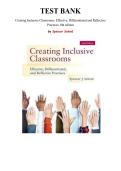
Creating Inclusive Classrooms: Effective, Differentiated and Reflective
Practices, 8th edition
by Spencer Salend
TU
TO
R
G
U
R
U
, TABLE OF CONTENT
PART I: UNDERSTANDING THE FOUNDATIONS AND FUNDAMENTALS OF
INCLUSION
1. Understanding Inclusion
2. Understanding the Special -Education Process
3. Understanding the Educational Strengths and Challenges of Students with Disabilities
4. Understanding the Educational Strengths and Challenges of Students from Diverse
Backgrounds
TU
PART II: CREATING AN INCLUSIVE ENVIRONMENT THAT SUPPORTS
LEARNING FOR ALL STUDENTS
5. Creating Collaborative Relationships and Fostering Communication
6. Fostering Transitions, Self-Determination, Acceptance, and Friendships
7. Creating a Classroom Environment That Promotes Positive Behavior
TO
PART III: DIFFERENTIATING INSTRUCTION FOR ALL STUDENTS
8. Differentiating Instruction for Diverse Learners
9. Differentiating Large- and Small-Group Instruction
R
10. Differentiating Reading, Writing, and Spelling Instruction
11. Differentiating Mathematics, Science, and Social Studies Instruction
G
PART IV: EVALUATING STUDENT AND PROGRAMMATIC PROGRESS
12. Evaluating Student Progress and the Effectiveness of Your Inclusion Program
U
R
U
, lkjhgfd
Test Bank
CHAPTER 1
Multiple Choice Questions
1. A student with a disability attends only math class with students without disabilities. This is an example of:
a. Inclusion
b. Mainstreaming
c. Reintegration
d. All of the above
What statement best describes “inclusion?”
TU
2.
a. A philosophy that brings together diverse families, educators, and institutions to increase belongingness in
schools
b. A mandate for all students that is supported by special education law
c. A system that promotes academic success by grouping students with disabilities in special classrooms
d. A program developed by special education teachers designed to improve their working conditions
3. Mainstreaming and inclusion are similar in that both:
TO
a. Require students to earn their way into general education
b. Mean full-time placement in general education
c. Share common goals
d. All of the above
4. The Least Restrictive Environment concept:
a. Means all students must be placed in general education
b. Prevents students from being placed in segregated settings
R
c. Prefers that students attend school as close as possible to their homes
d. None of the above
5. Which of the following is not a principle of inclusion?
G
a. All learners have equal access
b. All learners are treated the same
c. Individual strengths and challenges and diversity
d. Community and collaboration
U
6. Which of the following sequences is consistent with the continuum of educational services from most to least
restrictive educational placements for students?
a. Full-time special class, special school, residential school
R
b. Full-time special class, part-time special class, general education class with
assistance
c. Full-time special class, residential school, general education class with assistance
d. All of the above
U
7. The idea that the ratio of students with and without disabilities in society should mirror the proportion of
students with disabilities in a classroom is known as:
a. the principle of overrepresentation
b. the principle of natural proportions
c. the principle of universal design for learning
d. none of the above
likujhgfd
, lkjhgfd
8. Jamal leaves Mr. Thom’s general education classroom to receive individualized instruction in specific skills to
help him succeed in Mr. Thom’s class. This is an example of a student attending a:
a. Self-contained special education classroom
b. Resource room
c. Alternative class
d. None of the above
9. Rosa, a student with a learning disability, spends all day in a general education classroom with a special
education consultant teacher for most of the day. On what level of the continuum for alternative placements, is
Rosa receiving special education services?
a. General education classroom placement with collaborative teacher assistance.
b. General education classroom placement with itinerant specialist assistance.
TU
c. General education classroom placement with resource room assistance.
d. Special education classroom placement with part time in the general education classroom.
10. Ronald, an individual with a cognitive disability, participates in his community’s recreation programs. This is
an example of the:
a. Least restrictive environment principle
b. Deinstitutionalization principle
c. Universal design principle
TO
d. Normalization principle
11. Abdul uses an app on an iPad to communicate with others. Abdul is using a:
a. High-tech assistive device
b. Low-tech assistive device
c. Medium tech assistive device
d. None of the above
R
12. In which case did the Supreme Court establish the principle that separate but equal is not equal?
a. Hobson v. Mississippi State School Board
b. Brown v. Topeka Board of Education
c. Diana v. California State Board of Education
G
d. Irving Independent School District v. Tatro
13. What group is over-represented in special education programs?
a. African Americans
U
b. Asian Americans
c. Hispanic Americans
d. Caucasian Americans
R
14. A school district finds that a significant percentage of their Native American students are educated in special
education programs. This is an example of:
a. Differential treatment
b. Differential impact
U
c. Disproportionate representation
d. All of the above
15. The Congressional act that mandates school districts to show that all students are achieving adequate yearly
progress on tests is the:
a. No Child Left Behind Act
b. High Standards for All Students Act
c. Individuals with Disabilities Education Act
d. Holding Schools Accountable Act
likujhgfd
Creating Inclusive Classrooms: Effective, Differentiated and Reflective
Practices, 8th edition
by Spencer Salend
TU
TO
R
G
U
R
U
, TABLE OF CONTENT
PART I: UNDERSTANDING THE FOUNDATIONS AND FUNDAMENTALS OF
INCLUSION
1. Understanding Inclusion
2. Understanding the Special -Education Process
3. Understanding the Educational Strengths and Challenges of Students with Disabilities
4. Understanding the Educational Strengths and Challenges of Students from Diverse
Backgrounds
TU
PART II: CREATING AN INCLUSIVE ENVIRONMENT THAT SUPPORTS
LEARNING FOR ALL STUDENTS
5. Creating Collaborative Relationships and Fostering Communication
6. Fostering Transitions, Self-Determination, Acceptance, and Friendships
7. Creating a Classroom Environment That Promotes Positive Behavior
TO
PART III: DIFFERENTIATING INSTRUCTION FOR ALL STUDENTS
8. Differentiating Instruction for Diverse Learners
9. Differentiating Large- and Small-Group Instruction
R
10. Differentiating Reading, Writing, and Spelling Instruction
11. Differentiating Mathematics, Science, and Social Studies Instruction
G
PART IV: EVALUATING STUDENT AND PROGRAMMATIC PROGRESS
12. Evaluating Student Progress and the Effectiveness of Your Inclusion Program
U
R
U
, lkjhgfd
Test Bank
CHAPTER 1
Multiple Choice Questions
1. A student with a disability attends only math class with students without disabilities. This is an example of:
a. Inclusion
b. Mainstreaming
c. Reintegration
d. All of the above
What statement best describes “inclusion?”
TU
2.
a. A philosophy that brings together diverse families, educators, and institutions to increase belongingness in
schools
b. A mandate for all students that is supported by special education law
c. A system that promotes academic success by grouping students with disabilities in special classrooms
d. A program developed by special education teachers designed to improve their working conditions
3. Mainstreaming and inclusion are similar in that both:
TO
a. Require students to earn their way into general education
b. Mean full-time placement in general education
c. Share common goals
d. All of the above
4. The Least Restrictive Environment concept:
a. Means all students must be placed in general education
b. Prevents students from being placed in segregated settings
R
c. Prefers that students attend school as close as possible to their homes
d. None of the above
5. Which of the following is not a principle of inclusion?
G
a. All learners have equal access
b. All learners are treated the same
c. Individual strengths and challenges and diversity
d. Community and collaboration
U
6. Which of the following sequences is consistent with the continuum of educational services from most to least
restrictive educational placements for students?
a. Full-time special class, special school, residential school
R
b. Full-time special class, part-time special class, general education class with
assistance
c. Full-time special class, residential school, general education class with assistance
d. All of the above
U
7. The idea that the ratio of students with and without disabilities in society should mirror the proportion of
students with disabilities in a classroom is known as:
a. the principle of overrepresentation
b. the principle of natural proportions
c. the principle of universal design for learning
d. none of the above
likujhgfd
, lkjhgfd
8. Jamal leaves Mr. Thom’s general education classroom to receive individualized instruction in specific skills to
help him succeed in Mr. Thom’s class. This is an example of a student attending a:
a. Self-contained special education classroom
b. Resource room
c. Alternative class
d. None of the above
9. Rosa, a student with a learning disability, spends all day in a general education classroom with a special
education consultant teacher for most of the day. On what level of the continuum for alternative placements, is
Rosa receiving special education services?
a. General education classroom placement with collaborative teacher assistance.
b. General education classroom placement with itinerant specialist assistance.
TU
c. General education classroom placement with resource room assistance.
d. Special education classroom placement with part time in the general education classroom.
10. Ronald, an individual with a cognitive disability, participates in his community’s recreation programs. This is
an example of the:
a. Least restrictive environment principle
b. Deinstitutionalization principle
c. Universal design principle
TO
d. Normalization principle
11. Abdul uses an app on an iPad to communicate with others. Abdul is using a:
a. High-tech assistive device
b. Low-tech assistive device
c. Medium tech assistive device
d. None of the above
R
12. In which case did the Supreme Court establish the principle that separate but equal is not equal?
a. Hobson v. Mississippi State School Board
b. Brown v. Topeka Board of Education
c. Diana v. California State Board of Education
G
d. Irving Independent School District v. Tatro
13. What group is over-represented in special education programs?
a. African Americans
U
b. Asian Americans
c. Hispanic Americans
d. Caucasian Americans
R
14. A school district finds that a significant percentage of their Native American students are educated in special
education programs. This is an example of:
a. Differential treatment
b. Differential impact
U
c. Disproportionate representation
d. All of the above
15. The Congressional act that mandates school districts to show that all students are achieving adequate yearly
progress on tests is the:
a. No Child Left Behind Act
b. High Standards for All Students Act
c. Individuals with Disabilities Education Act
d. Holding Schools Accountable Act
likujhgfd