

thehuman body .
Diabet
'
'
:
↓
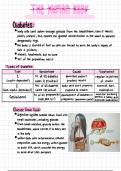
body cells can't obtain enough glucose from the bloodstream ,
even if there's
plenty present ; this causes the glucose concentration in the blood to become
dangerously high
#
the body is starved of fuel so cells are forced to burn the body's supply of
fats & proteins
#
there's treatments but ,
no cure
#
10 % of the population has it
Types of Diabetes :
Type Percentage Cause Treatment
ㅣ
'
_
그 5 % of US diabetes pancreas doesn't regular injections
(insulin dependent) cases ( 125 million)
.
produce insulin of insulin
'
2 95 % of US diabetes body cells don't properly exercise diet
, ,
(non-insulin dependent) case (32 million) respond to insulin medication
9
.% of us pregnancies development of diabetes in monitor birthing
Gestational parent + baby , diet
000/yr)
,
(368 , pregnancy (unknown cause exercise medication ,
Glucose from food :
·
digestive system breaks down food into
small molecules
including glucose
,
from small intestine ,
glucose enters the
bloodstream , which carries it to every cell
in the body
#
within each cells mitochondria , cellular
respiration uses the energy within glucose
to build ATP , which provides the energy
to drive all of lifes purposes
, Glucose Metabolism :
·
the amount of
glucose in the blood is regulated by 2 hormones produced by the
pancreas :
·
Insulin-causes body cells to take up glucose thereby lowering its
,
level in
the blood
·
Elucagon-causes the liver to release glucose ,
which increases its level in
the blood
·
the pancreas maintains homeostasis (a steady state of glucose in the blood
by releasing different quantities of one or the other hormone
* A liver cell
responds to insulin by taking in
glucose + converting it to
glycogen
(negative Feedback system)
* Blood glucose becomes high - pancreas releases insulin
+ insulin binds to
receptors on target cells - cells take in glucose - blood glucose returns to normal
Diabet
'
'
:
↓
body cells can't obtain enough glucose from the bloodstream ,
even if there's
plenty present ; this causes the glucose concentration in the blood to become
dangerously high
#
the body is starved of fuel so cells are forced to burn the body's supply of
fats & proteins
#
there's treatments but ,
no cure
#
10 % of the population has it
Types of Diabetes :
Type Percentage Cause Treatment
ㅣ
'
_
그 5 % of US diabetes pancreas doesn't regular injections
(insulin dependent) cases ( 125 million)
.
produce insulin of insulin
'
2 95 % of US diabetes body cells don't properly exercise diet
, ,
(non-insulin dependent) case (32 million) respond to insulin medication
9
.% of us pregnancies development of diabetes in monitor birthing
Gestational parent + baby , diet
000/yr)
,
(368 , pregnancy (unknown cause exercise medication ,
Glucose from food :
·
digestive system breaks down food into
small molecules
including glucose
,
from small intestine ,
glucose enters the
bloodstream , which carries it to every cell
in the body
#
within each cells mitochondria , cellular
respiration uses the energy within glucose
to build ATP , which provides the energy
to drive all of lifes purposes
, Glucose Metabolism :
·
the amount of
glucose in the blood is regulated by 2 hormones produced by the
pancreas :
·
Insulin-causes body cells to take up glucose thereby lowering its
,
level in
the blood
·
Elucagon-causes the liver to release glucose ,
which increases its level in
the blood
·
the pancreas maintains homeostasis (a steady state of glucose in the blood
by releasing different quantities of one or the other hormone
* A liver cell
responds to insulin by taking in
glucose + converting it to
glycogen
(negative Feedback system)
* Blood glucose becomes high - pancreas releases insulin
+ insulin binds to
receptors on target cells - cells take in glucose - blood glucose returns to normal

