Key Studies
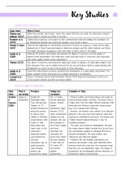
Caregiver-infant Interactions:
Study Name What it Found
Feldman and Babies have periodic ‘alert phases’ where they signal that they are ready for interaction, research
Eidleman (2007) shows mothers respond two thirds of the time.
Brazleton et al. Claimed that reciprocity is the basis for later communication skills and building the foundation for
(1975) an attachment between the infant and caregiver, says it’s like a dance.
Meltzof & Moore Observed the beginnings of interactional synchrony in infants as young as 2 weeks old. An adult
(1977) displayed one of three facial expressions or distinctive gestures and the child’s response was filmed.
The babies’ expression and gestures were more likely to mirror those of the adults.
Isabella et al. Observed 30 mothers and infants and assessed the degree of synchrony and the quality of
(1989) mother-infant attachment. The researchers found that high levels of synchrony were associated
with better quality mother-infant attachment.
Feldman (2012) Says ideas of synchrony and reciprocity simply give names to patterns of observable caregiver and
baby behaviour. They can be reliably observed but are not particularly helpful in understanding child
development as it does not tell us the purpose of these behaviours.
Isabella et al. Found that interactional synchrony predicted the development of a good quality attachment. This
(1989) means caregiver-infant interactions are probably important in development.
Crotwell et al. Found a 10-minute Parent-Child Interaction Therapy (PCIT) improved interactional synchrony in
(2013) 20 low-income mothers and their pre-school children.
Schaffer’s Stages of Attachment:
Study What it Procedure Findings and Evaluation of Study
Name was testing Conclusions
Schaffer Stages of Studied 60 50% of babies + External validity, most observations were made by
& attachment Glaswegian babies showed separation parents during ordinary activities. This means that it
Emerson from working-class anxiety towards is highly likely that the babies behaved naturally while
(1964) families, for 18 primary being observed. Whereas researchers being present
months Researchers attachment figure may have changed their behaviour.
asked the parents between 25-32 - However, the mothers were unlikely to be objective
to observe their weeks. Attachment observers, they may have been biased in what they
children in different tended to be the reported or remembered incorrectly. This means even
circumstances, keep caregiver who was if babies showed natural behaviour, it may be
a diary of their most sensitive to recorded accurately.
observations and the infants’ signals + The study was carried out longitudinally, this gives
report back to the and facial the study internal validity because they do not have
researchers. expression (not the confounding variables of individual differences
Separation anxiety necessarily the between participants. The same children were
was measured by person they spend followed-up and observed regularly.
everyday the most amount - Problems with how multiple attachments are
separations such as of time with). At assessed, just because a baby gets distressed when
adult leaving the 40 weeks 30% someone leaves the room does not necessarily mean
room. Stranger had formed that they are an attachment figure. The stages of
anxiety was multiple attachment do not distinguish between behaviour to
measured by asking attachments. attachment figures and playmates.
, mothers questions - Problem studying the asocial stage, young babies
about their have poor coordination and are fairly immobile,
children’s anxiety making it difficult to make judgements about their
response to behaviour, it may be that they may be social, but
unfamiliar adults. appear asocial due to flawed methods.
- Bowlby (1969) argues that most babies form
attachments to a single main carer before they can
form multiple attachments, but multiple attachments
are seen from the outset in cultures where multiple
attachments are the norms e.g., van Ijzendoorn 1993.
+ Real-world application in childcare. In the asocial and
indiscriminate ages childcare is likely to be
straightforward as babies can be comforted by any
skilled adult. However, a baby starting nursery in the
specific attachment stage with an unfamiliar adult
may be problematic.
The Role of the Father:
Study Name What it Found
Schaffer & Found that the majority of babies first became attached to their mother’s around 7 months. In only
Emerson 3% of cases the father was the first sole attachment. In 27% the father was the joint first object
(1964) of attachment with the mother. 75% formed an attachment with their father by 18 months,
babies protested when their father walked away.
Grossmann et Carried out a longitudinal study where babies were studied into their teens. The researchers looked at
al. (2002) both parents’ behaviour and its relationship to the quality of their babies’ later attachments. This
suggests that attachment to fathers is less important than attachment to mothers. Also found
that father’s quality of play with babies was related to the quality of adolescent attachments. This
suggest father’s role is more to do with play and stimulation, and less to do with emotional
development.
Field (1978) Filmed 4-month-old babies in face-to-face interaction with primary caregiver mothers, secondary
caregiver father and primary caregiver fathers. Primary caregiver mothers spent more time smiling,
imitating and holding babies than the secondary caregiver fathers.
Grossman Found fathers as secondary attachment figures had an important role in children’s development,
(2002) involving play and stimulation.
McCallum & Found that children growing up in single or same-sex parent families don’t develop differently from
Golombok those in two-parent families. This suggests that the fathers rile as secondary attachment figure is
(2004) not important.
Animal Studies of Attachment:
Study What it Procedure Findings and Conclusions Evaluation of Study
Name was testing
Lorenz Imprinting Investigated imprinting, The incubator group + Supporting research for imprinting, Regolin
(1952) divided 12 goose eggs followed Lorenz and the & Vallortigara (1995) exposed chicks to
into 2 groups Half the control group followed moving simple shape combinations. A range
eggs were raised in the mother. Lorenz of shape combinations were then moved in
their natural found that there was a front of them, and they followed the original
Caregiver-infant Interactions:
Study Name What it Found
Feldman and Babies have periodic ‘alert phases’ where they signal that they are ready for interaction, research
Eidleman (2007) shows mothers respond two thirds of the time.
Brazleton et al. Claimed that reciprocity is the basis for later communication skills and building the foundation for
(1975) an attachment between the infant and caregiver, says it’s like a dance.
Meltzof & Moore Observed the beginnings of interactional synchrony in infants as young as 2 weeks old. An adult
(1977) displayed one of three facial expressions or distinctive gestures and the child’s response was filmed.
The babies’ expression and gestures were more likely to mirror those of the adults.
Isabella et al. Observed 30 mothers and infants and assessed the degree of synchrony and the quality of
(1989) mother-infant attachment. The researchers found that high levels of synchrony were associated
with better quality mother-infant attachment.
Feldman (2012) Says ideas of synchrony and reciprocity simply give names to patterns of observable caregiver and
baby behaviour. They can be reliably observed but are not particularly helpful in understanding child
development as it does not tell us the purpose of these behaviours.
Isabella et al. Found that interactional synchrony predicted the development of a good quality attachment. This
(1989) means caregiver-infant interactions are probably important in development.
Crotwell et al. Found a 10-minute Parent-Child Interaction Therapy (PCIT) improved interactional synchrony in
(2013) 20 low-income mothers and their pre-school children.
Schaffer’s Stages of Attachment:
Study What it Procedure Findings and Evaluation of Study
Name was testing Conclusions
Schaffer Stages of Studied 60 50% of babies + External validity, most observations were made by
& attachment Glaswegian babies showed separation parents during ordinary activities. This means that it
Emerson from working-class anxiety towards is highly likely that the babies behaved naturally while
(1964) families, for 18 primary being observed. Whereas researchers being present
months Researchers attachment figure may have changed their behaviour.
asked the parents between 25-32 - However, the mothers were unlikely to be objective
to observe their weeks. Attachment observers, they may have been biased in what they
children in different tended to be the reported or remembered incorrectly. This means even
circumstances, keep caregiver who was if babies showed natural behaviour, it may be
a diary of their most sensitive to recorded accurately.
observations and the infants’ signals + The study was carried out longitudinally, this gives
report back to the and facial the study internal validity because they do not have
researchers. expression (not the confounding variables of individual differences
Separation anxiety necessarily the between participants. The same children were
was measured by person they spend followed-up and observed regularly.
everyday the most amount - Problems with how multiple attachments are
separations such as of time with). At assessed, just because a baby gets distressed when
adult leaving the 40 weeks 30% someone leaves the room does not necessarily mean
room. Stranger had formed that they are an attachment figure. The stages of
anxiety was multiple attachment do not distinguish between behaviour to
measured by asking attachments. attachment figures and playmates.
, mothers questions - Problem studying the asocial stage, young babies
about their have poor coordination and are fairly immobile,
children’s anxiety making it difficult to make judgements about their
response to behaviour, it may be that they may be social, but
unfamiliar adults. appear asocial due to flawed methods.
- Bowlby (1969) argues that most babies form
attachments to a single main carer before they can
form multiple attachments, but multiple attachments
are seen from the outset in cultures where multiple
attachments are the norms e.g., van Ijzendoorn 1993.
+ Real-world application in childcare. In the asocial and
indiscriminate ages childcare is likely to be
straightforward as babies can be comforted by any
skilled adult. However, a baby starting nursery in the
specific attachment stage with an unfamiliar adult
may be problematic.
The Role of the Father:
Study Name What it Found
Schaffer & Found that the majority of babies first became attached to their mother’s around 7 months. In only
Emerson 3% of cases the father was the first sole attachment. In 27% the father was the joint first object
(1964) of attachment with the mother. 75% formed an attachment with their father by 18 months,
babies protested when their father walked away.
Grossmann et Carried out a longitudinal study where babies were studied into their teens. The researchers looked at
al. (2002) both parents’ behaviour and its relationship to the quality of their babies’ later attachments. This
suggests that attachment to fathers is less important than attachment to mothers. Also found
that father’s quality of play with babies was related to the quality of adolescent attachments. This
suggest father’s role is more to do with play and stimulation, and less to do with emotional
development.
Field (1978) Filmed 4-month-old babies in face-to-face interaction with primary caregiver mothers, secondary
caregiver father and primary caregiver fathers. Primary caregiver mothers spent more time smiling,
imitating and holding babies than the secondary caregiver fathers.
Grossman Found fathers as secondary attachment figures had an important role in children’s development,
(2002) involving play and stimulation.
McCallum & Found that children growing up in single or same-sex parent families don’t develop differently from
Golombok those in two-parent families. This suggests that the fathers rile as secondary attachment figure is
(2004) not important.
Animal Studies of Attachment:
Study What it Procedure Findings and Conclusions Evaluation of Study
Name was testing
Lorenz Imprinting Investigated imprinting, The incubator group + Supporting research for imprinting, Regolin
(1952) divided 12 goose eggs followed Lorenz and the & Vallortigara (1995) exposed chicks to
into 2 groups Half the control group followed moving simple shape combinations. A range
eggs were raised in the mother. Lorenz of shape combinations were then moved in
their natural found that there was a front of them, and they followed the original