

(: 1007049101-AQA-Biology-Bioenergetics-GraspIT-GCSE-Answers
1007049101-AQA-Biology-Bioenergetics-GraspIT-GCSE-Answers.pdf
- Complete Study
1007049101-AQA-Biology-Bioenergetics-GraspIT-GCSE-Answers.pdf
Guide and Practice Test Review).
AQA GCSE Bioenergetics GraspIT – Answers
A: Bioenergetics Part 1 - Photosynthetic reaction, rate of photosynthesis and use of
glucose from photosynthesis.
1. Phytoplankton are microscopic aquatic plants. They utilise the energy transferred from the sun for
photosynthesis.
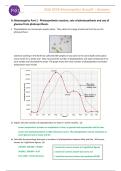
Scientists working in the North Sea collected 500 samples of sea water at the same depth and location
every month for a whole year. They measured the number of phytoplankton and water temperature for
each sample and calculated the mean. The graph shows the mean number of phytoplankton and water
temperature each month.
190 000
100 000
a) Explain why the numbers of phytoplankton are lower in winter months. (2)
Lower temperature of water so metabolism is slow, so growth and reproduction will be slow.
Lower rate of photosynthesis as light intensity is lower. The phytoplankton cannot synthesise as
much glucose and so many will die.
b) Calculate the percentage decrease in numbers of phytoplankton between May and July. Write your
answer to 3 significant figures. (3)
190 000 -100 000 = 90 000 3 marks for correct answer to 3 significant figures
90 000 = 0.47 2 marks for correct answer but not to 3 sf
0.47 x100 = 47.4% decrease 1 mark for incorrect answer but mentions 90 000
3/7/2026, 7:45:08 PM better hope − brighter future
1007049101-AQA-Biology-Bioenergetics-GraspIT-GCSE-Answers.pdf
1007049101-AQA-Biology-Bioenergetics-GraspIT-GCSE-Answers.pdf
, (: 1007049101-AQA-Biology-Bioenergetics-GraspIT-GCSE-Answers
1007049101-AQA-Biology-Bioenergetics-GraspIT-GCSE-Answers.pdf
- Complete Study
1007049101-AQA-Biology-Bioenergetics-GraspIT-GCSE-Answers.pdf
Guide and Practice Test Review).
AQA GCSE Bioenergetics GraspIT – Answers
c) Suggest the cause and reason why the numbers of phytoplankton fall at the start of summer. (2)
1 for a cause and 1 for related reason:
Water temperature is high enough
to denature metabolic enzymes causing death of phytoplankton.
More phytoplankton being eaten by animals
as they breed and increase in number.
2. Van Helmont was a scientist born in the Netherlands in 1580. It was generally believed at that time that
plants gained mass by eating soil.
Van Helmont designed an experiment to test this idea. The results of his experiment are seen below.
Only water was
added for five years.
Willow plant in an iron Willow plant in same iron
pot. pot.
Willow plant has a Willow plant has a mass of
mass of 2.5kg 77.3kg
Mass of dry soil is 91kg Mass of dry soil is 90.043kg
a) Write a conclusion for this experiment using only the information provided. Explain your reasoning. (4)
Conclusion: Increase in mass of willow plant is linked to the addition of water. (1)
Three explanations why: (3)
The mass of the plant increases over five years by 74.8 Kg.
The soil mass has not changed significantly over 5 years.
The only extra factor added to the plant was water, therefore this must have contributed to the
increase in plant mass.
The pot is the same and so did not influence results
3/7/2026, 7:45:08 PM better hope − brighter future
1007049101-AQA-Biology-Bioenergetics-GraspIT-GCSE-Answers.pdf
1007049101-AQA-Biology-Bioenergetics-GraspIT-GCSE-Answers.pdf
1007049101-AQA-Biology-Bioenergetics-GraspIT-GCSE-Answers.pdf
- Complete Study
1007049101-AQA-Biology-Bioenergetics-GraspIT-GCSE-Answers.pdf
Guide and Practice Test Review).
AQA GCSE Bioenergetics GraspIT – Answers
A: Bioenergetics Part 1 - Photosynthetic reaction, rate of photosynthesis and use of
glucose from photosynthesis.
1. Phytoplankton are microscopic aquatic plants. They utilise the energy transferred from the sun for
photosynthesis.
Scientists working in the North Sea collected 500 samples of sea water at the same depth and location
every month for a whole year. They measured the number of phytoplankton and water temperature for
each sample and calculated the mean. The graph shows the mean number of phytoplankton and water
temperature each month.
190 000
100 000
a) Explain why the numbers of phytoplankton are lower in winter months. (2)
Lower temperature of water so metabolism is slow, so growth and reproduction will be slow.
Lower rate of photosynthesis as light intensity is lower. The phytoplankton cannot synthesise as
much glucose and so many will die.
b) Calculate the percentage decrease in numbers of phytoplankton between May and July. Write your
answer to 3 significant figures. (3)
190 000 -100 000 = 90 000 3 marks for correct answer to 3 significant figures
90 000 = 0.47 2 marks for correct answer but not to 3 sf
0.47 x100 = 47.4% decrease 1 mark for incorrect answer but mentions 90 000
3/7/2026, 7:45:08 PM better hope − brighter future
1007049101-AQA-Biology-Bioenergetics-GraspIT-GCSE-Answers.pdf
1007049101-AQA-Biology-Bioenergetics-GraspIT-GCSE-Answers.pdf
, (: 1007049101-AQA-Biology-Bioenergetics-GraspIT-GCSE-Answers
1007049101-AQA-Biology-Bioenergetics-GraspIT-GCSE-Answers.pdf
- Complete Study
1007049101-AQA-Biology-Bioenergetics-GraspIT-GCSE-Answers.pdf
Guide and Practice Test Review).
AQA GCSE Bioenergetics GraspIT – Answers
c) Suggest the cause and reason why the numbers of phytoplankton fall at the start of summer. (2)
1 for a cause and 1 for related reason:
Water temperature is high enough
to denature metabolic enzymes causing death of phytoplankton.
More phytoplankton being eaten by animals
as they breed and increase in number.
2. Van Helmont was a scientist born in the Netherlands in 1580. It was generally believed at that time that
plants gained mass by eating soil.
Van Helmont designed an experiment to test this idea. The results of his experiment are seen below.
Only water was
added for five years.
Willow plant in an iron Willow plant in same iron
pot. pot.
Willow plant has a Willow plant has a mass of
mass of 2.5kg 77.3kg
Mass of dry soil is 91kg Mass of dry soil is 90.043kg
a) Write a conclusion for this experiment using only the information provided. Explain your reasoning. (4)
Conclusion: Increase in mass of willow plant is linked to the addition of water. (1)
Three explanations why: (3)
The mass of the plant increases over five years by 74.8 Kg.
The soil mass has not changed significantly over 5 years.
The only extra factor added to the plant was water, therefore this must have contributed to the
increase in plant mass.
The pot is the same and so did not influence results
3/7/2026, 7:45:08 PM better hope − brighter future
1007049101-AQA-Biology-Bioenergetics-GraspIT-GCSE-Answers.pdf
1007049101-AQA-Biology-Bioenergetics-GraspIT-GCSE-Answers.pdf

