Week 1: Media and/as Nature
Peters: “The question of how to define nature, humans, and media are ultimately the same
question.”
Peters: "Media are not just pipes or channels. Media theory has something both ecological and
existential to say. Media are more than the audiovisual and print institutions that strive to fill our
empty seconds with programming and advertising stimulus; they are our condition, our fate, and our
challenge. Without means there is no life. We are mediated by our bodies; by our dependence on
oxygen; by the ancient history of life written into each of our cells; by upright posture, sexual pair
bonding, and the domestication of plants and animals; by calendar-making and astronomy; by the
printing press, the green revolution, and the Internet. We are not only surrounded by the history-
rich artifacts of applied intelligence; we also are such artifacts. Culture is part of our natural
history." Technological advances influence human experience of time and space.
Media is obvious, like water to a fish. There is no antienvironment. The question of how we define
nature, humans, and media are ultimately the same question.
Medium has “always meant an element, environment, or vehicle in the middle of things.” The first
idea of media was that it is positioned in the middle of things. It was connected to nature long
before it was connected to technology. Roots in ancient Greece and Rome, but our contemporary
understanding depends upon medieval and modern transformations.
Media as intermediate agent: media functions to establish contact at a distance.
Classical concepts of media:
Aristotle’s concept of τὸ περιέχον (to periekhon) named a “surrounding” or environment
which expressed “sympathy and harmony between the universe and man.”
Aristotle’s concept of τὸ μεταξύ (to metaxu), the in-between, was used to posit a
transparent substance that enabled the eyes to connect with objects.
The concepts of medium and milieu are intimately linked, both deriving from the Latin word
medius (middle).
medieval and modern transformation of media:
In the 13th century, Thomas Aquinas translates Aristotle and “smuggles in the term medium
to account for the missing link in the remote action of seeing.”
“Ever since, media have always stepped in to fill the environmental gaps to explain contact
at a distance.”
In the late 17th century, Isaac Newton reconceptualized medium to be more instrumental
and scientific, “an intermediate agent” for transmitting light, sound, gravity, and magnetism.
20th century concepts:
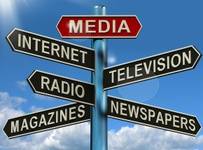
Mass media (radio, television, film, newspapers, and magazines.)
But also recovers an environmental meaning as an all pervasive “ecology.”
Understanding of what can count as media (money, power, and love).
Peters: mass media is the exaction within the media landscape. Internet becomes a means of
existence, like air, water, and fire.
21st century concepts: Peters: “Compared to mass media, digital media did seem like an enormous
historical rupture. But if we place digital devices in the broad history of communication practices,
,new media can look a lot like old or ancient media. Like ‘new media,’ ancient media such as
registers, indexes, the census, calendars, and catalogs have always been in the business of recording,
transmitting, and processing culture; of managing subjects, objects, and data; of organizing time,
space, and power. ... The chief mode of communication in the heart of the twentieth century—
audiovisual broadcasting—is the historical exception. Digital media return us to the norm of data-
processing devices of diverse size, shape and format in which many people take part and polished
‘content’ is rare.”
McLuhan: Media as extension to the central nervous system. Every time you use media to extend
your possibilities, you lose to some capacity. Once you write, you don’t have to remember anymore.
Capacity becomes incapacity. It works as amputation (McLuhan).
Leroi-Gourhan: Humans stand on two feat, they free their hands and mouths, they start to develop
tools and speech.
Peters: “The crossroads of humans and things defines the domain of media studies. We are
conditioned by conditions we conditioned. We, the created creators, shape tools that shape us. We
live by our crafts and conditions. It is hard to look them in the face.” (pen experiment)
Text: Sharma – Temporality
Machines like clocks impose new orders of time on the social field. These power machines
are media.
Culture of speed dominated by accelerated technologies. Life became faster and more
hectic. The “speeded up life” depends on temporalities to maintain their pace of life.
Time functions to recalibrate. E.G. invention of portable media, chargers in public transit,
reorient labor to maintain and serve power outlets rather than people.
McLuhan’s medium theory: The message of any medium or technology is the change of scale
or pace or pattern that it introduces into human affairs.
Innis: Cultures explain time through their technologies at hand.
The temporal is about power. It is experienced as a form of social difference (margins) and a
type of privilege (centers).
Text: Parmett – Space
“Denoting time or duration” and “area of extension”
Media are often credited with the annihilation of space through their collapse of time and
place.
Television functioned as a window to the world. TV’s space-compressing possibilities also
facilitated collective unrest and resistance e.g. George Floyd protests.
Media constructs new places e.g. Hollywood is no longer clearly located at the geographical
place.
Text: Peters – Understanding Media
McLuhan: One thing about which fish know absolutely nothing is water, since they have no
antienvironment which should enable them to perceive the element they live in. Environment
becomes invisible.
Our being is intertwined with our material shape. Feet have liberated our hands and hands have
liberated our mouths.
, “Media show up wherever we humans face the unmanageable mortality of our material existence:
the melancholy facts that memory cannot hold up and body cannot last, that time is, at base, the
merciless and generous habitat for humans and things. Media lift us out of time by providing a
symbolic world that can store and process data, in the widest sense of that word.” (Peters, p. 50)
Hannah Arendt:
Action: Bringing of new political order into being.
Work: The fabrication of things that last in a durable world.
Labor: Tasks that reproduce life itself.
Machines are understood differently throughout different time periods.
Humans are technology.
An object can be technology. Techniques can be purely cognitive or bodily. Speech is a technique,
but writing is a technology.
Most human communication is non simultaneous (there is no universal now). This is where we can
learn from dolphins.
Lo and behold:
Invisibility of the internet: everything gets arranged behind the screens.
People who were normally isolated now find each other online.
Peters: “The question of how to define nature, humans, and media are ultimately the same
question.”
Peters: "Media are not just pipes or channels. Media theory has something both ecological and
existential to say. Media are more than the audiovisual and print institutions that strive to fill our
empty seconds with programming and advertising stimulus; they are our condition, our fate, and our
challenge. Without means there is no life. We are mediated by our bodies; by our dependence on
oxygen; by the ancient history of life written into each of our cells; by upright posture, sexual pair
bonding, and the domestication of plants and animals; by calendar-making and astronomy; by the
printing press, the green revolution, and the Internet. We are not only surrounded by the history-
rich artifacts of applied intelligence; we also are such artifacts. Culture is part of our natural
history." Technological advances influence human experience of time and space.
Media is obvious, like water to a fish. There is no antienvironment. The question of how we define
nature, humans, and media are ultimately the same question.
Medium has “always meant an element, environment, or vehicle in the middle of things.” The first
idea of media was that it is positioned in the middle of things. It was connected to nature long
before it was connected to technology. Roots in ancient Greece and Rome, but our contemporary
understanding depends upon medieval and modern transformations.
Media as intermediate agent: media functions to establish contact at a distance.
Classical concepts of media:
Aristotle’s concept of τὸ περιέχον (to periekhon) named a “surrounding” or environment
which expressed “sympathy and harmony between the universe and man.”
Aristotle’s concept of τὸ μεταξύ (to metaxu), the in-between, was used to posit a
transparent substance that enabled the eyes to connect with objects.
The concepts of medium and milieu are intimately linked, both deriving from the Latin word
medius (middle).
medieval and modern transformation of media:
In the 13th century, Thomas Aquinas translates Aristotle and “smuggles in the term medium
to account for the missing link in the remote action of seeing.”
“Ever since, media have always stepped in to fill the environmental gaps to explain contact
at a distance.”
In the late 17th century, Isaac Newton reconceptualized medium to be more instrumental
and scientific, “an intermediate agent” for transmitting light, sound, gravity, and magnetism.
20th century concepts:
Mass media (radio, television, film, newspapers, and magazines.)
But also recovers an environmental meaning as an all pervasive “ecology.”
Understanding of what can count as media (money, power, and love).
Peters: mass media is the exaction within the media landscape. Internet becomes a means of
existence, like air, water, and fire.
21st century concepts: Peters: “Compared to mass media, digital media did seem like an enormous
historical rupture. But if we place digital devices in the broad history of communication practices,
,new media can look a lot like old or ancient media. Like ‘new media,’ ancient media such as
registers, indexes, the census, calendars, and catalogs have always been in the business of recording,
transmitting, and processing culture; of managing subjects, objects, and data; of organizing time,
space, and power. ... The chief mode of communication in the heart of the twentieth century—
audiovisual broadcasting—is the historical exception. Digital media return us to the norm of data-
processing devices of diverse size, shape and format in which many people take part and polished
‘content’ is rare.”
McLuhan: Media as extension to the central nervous system. Every time you use media to extend
your possibilities, you lose to some capacity. Once you write, you don’t have to remember anymore.
Capacity becomes incapacity. It works as amputation (McLuhan).
Leroi-Gourhan: Humans stand on two feat, they free their hands and mouths, they start to develop
tools and speech.
Peters: “The crossroads of humans and things defines the domain of media studies. We are
conditioned by conditions we conditioned. We, the created creators, shape tools that shape us. We
live by our crafts and conditions. It is hard to look them in the face.” (pen experiment)
Text: Sharma – Temporality
Machines like clocks impose new orders of time on the social field. These power machines
are media.
Culture of speed dominated by accelerated technologies. Life became faster and more
hectic. The “speeded up life” depends on temporalities to maintain their pace of life.
Time functions to recalibrate. E.G. invention of portable media, chargers in public transit,
reorient labor to maintain and serve power outlets rather than people.
McLuhan’s medium theory: The message of any medium or technology is the change of scale
or pace or pattern that it introduces into human affairs.
Innis: Cultures explain time through their technologies at hand.
The temporal is about power. It is experienced as a form of social difference (margins) and a
type of privilege (centers).
Text: Parmett – Space
“Denoting time or duration” and “area of extension”
Media are often credited with the annihilation of space through their collapse of time and
place.
Television functioned as a window to the world. TV’s space-compressing possibilities also
facilitated collective unrest and resistance e.g. George Floyd protests.
Media constructs new places e.g. Hollywood is no longer clearly located at the geographical
place.
Text: Peters – Understanding Media
McLuhan: One thing about which fish know absolutely nothing is water, since they have no
antienvironment which should enable them to perceive the element they live in. Environment
becomes invisible.
Our being is intertwined with our material shape. Feet have liberated our hands and hands have
liberated our mouths.
, “Media show up wherever we humans face the unmanageable mortality of our material existence:
the melancholy facts that memory cannot hold up and body cannot last, that time is, at base, the
merciless and generous habitat for humans and things. Media lift us out of time by providing a
symbolic world that can store and process data, in the widest sense of that word.” (Peters, p. 50)
Hannah Arendt:
Action: Bringing of new political order into being.
Work: The fabrication of things that last in a durable world.
Labor: Tasks that reproduce life itself.
Machines are understood differently throughout different time periods.
Humans are technology.
An object can be technology. Techniques can be purely cognitive or bodily. Speech is a technique,
but writing is a technology.
Most human communication is non simultaneous (there is no universal now). This is where we can
learn from dolphins.
Lo and behold:
Invisibility of the internet: everything gets arranged behind the screens.
People who were normally isolated now find each other online.