COMPLETE TEST BANK
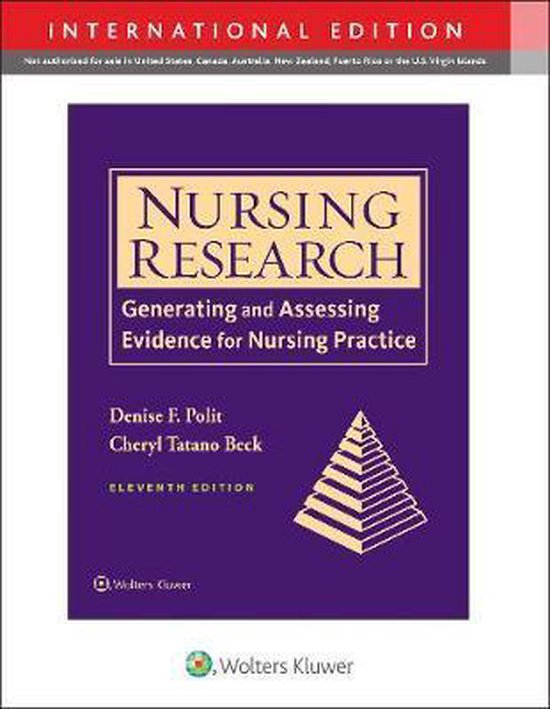
Nursing Research: Generating and Assessing Evidence for Nursing Practice 11th Edition
by Denise F. Polit, Cheryl Tatano Beck ||ALL CHAPTERS|| VERIFIED ANSWERS
11th Edition
,Table of Contents
Chapter 1: Introduction to Nursing Research in an Evidence-Based Practice Environment....... 4
Chapter 2: Evidence-Based Nursing: Translating Research Evidence into Practice ................. 10
Chapter 3: Key Concepts and Steps in Qualitative and Quantitative Research ....................... 18
Chapter 4: Research Problems, Research Questions, and Hypotheses .................................... 26
Chapter 5: Literature Reviews: Finding and Critiquing Evidence ............................................. 35
Chapter 6: Theoretical Frameworks .......................................................................................... 43
Chapter 7: Ethics in Nursing Research ...................................................................................... 50
Chapter 8: Planning a Nursing Study ....................................................................................... 57
Chapter 9: Quantitative Research Design ................................................................................ 64
Chapter 10: Rigor and Validity in Quantitative Research ......................................................... 71
Chapter 11: Specific Types of Quantitative Research ............................................................... 78
Chapter 12: Sampling in Quantitative Research ...................................................................... 85
Chapter 13: Data Collection in Quantitative Research ............................................................. 92
Chapter 14: Measurement and Data Quality ............................................................................ 99
Chapter 15: Developing and Testing Self-Report Scales ........................................................ 106
Chapter 16: Descriptive Statistics........................................................................................... 113
Chapter 17: Inferential Statistics ............................................................................................. 120
Chapter 18: Multivariate Statistics ......................................................................................... 127
Chapter 19: Processes of Quantitative Data Analysis ............................................................. 135
Chapter 20: Clinical Significance and Interpretation of Quantitative Results ......................... 142
Chapter 21: Qualitative Research Design and Approaches ................................................... 163
Chapter 22: Sampling in Qualitative Research ....................................................................... 169
Chapter 23: Data Collection in Qualitative Research ............................................................. 176
Chapter 24: Qualitative Data Analysis..................................................................................... 194
Chapter 25: Trustworthiness and Integrity in Qualitative Research ....................................... 201
Chapter 26: Basics of Mixed Methods Research .................................................................... 208
Chapter 27: Developing Complex Nursing Interventions Using Mixed Methods Research.... 215
Chapter 28: Feasibility Assessments and Pilot Tests of Interventions Using Mixed Methods222
,Chapter 29: Systematic Reviews of Research Evidence: Meta-Analysis, Metasynthesis, and
Mixed Studies Review ............................................................................................................. 229
Chapter 30: Disseminating Evidence: Reporting Research Findings ....................................... 236
Chapter 31: Writing Proposals to Generate Evidence ............................................................ 243
, Chapter 1: Introduction to Nursing Research in an Evidence-Based
Practice Environment
(ANSWER KEY ATA THE ND OF EACH CHAPTER)
1. What is the highest priority for the importance of research in the nursing profession?
A) Research findings provide evidence for informing nurses' decisions and actions.
B) Conduct research to better understand the context of nursing practice.
C) Document the role that nurses serve in society.
D) Establish nursing research areas of study.
2. Which group would be best served by clinical nursing research?
A) Nursing administrators
B) Practicing nurses
C) Nurses' clients
D) Healthcare policymakers
3. In the United States, in what area does research play an important role in nursing?
A) Chronic illness
B) Credentialing and status
C) Nurses' personalities
D) Nurses' education
4. What is the role of a consumer of nursing research?
A) Read research reports for relevant findings.
B) Participate in generating evidence by doing research.
Nursing Research: Generating and Assessing Evidence for Nursing Practice 11th Edition
by Denise F. Polit, Cheryl Tatano Beck ||ALL CHAPTERS|| VERIFIED ANSWERS
11th Edition
,Table of Contents
Chapter 1: Introduction to Nursing Research in an Evidence-Based Practice Environment....... 4
Chapter 2: Evidence-Based Nursing: Translating Research Evidence into Practice ................. 10
Chapter 3: Key Concepts and Steps in Qualitative and Quantitative Research ....................... 18
Chapter 4: Research Problems, Research Questions, and Hypotheses .................................... 26
Chapter 5: Literature Reviews: Finding and Critiquing Evidence ............................................. 35
Chapter 6: Theoretical Frameworks .......................................................................................... 43
Chapter 7: Ethics in Nursing Research ...................................................................................... 50
Chapter 8: Planning a Nursing Study ....................................................................................... 57
Chapter 9: Quantitative Research Design ................................................................................ 64
Chapter 10: Rigor and Validity in Quantitative Research ......................................................... 71
Chapter 11: Specific Types of Quantitative Research ............................................................... 78
Chapter 12: Sampling in Quantitative Research ...................................................................... 85
Chapter 13: Data Collection in Quantitative Research ............................................................. 92
Chapter 14: Measurement and Data Quality ............................................................................ 99
Chapter 15: Developing and Testing Self-Report Scales ........................................................ 106
Chapter 16: Descriptive Statistics........................................................................................... 113
Chapter 17: Inferential Statistics ............................................................................................. 120
Chapter 18: Multivariate Statistics ......................................................................................... 127
Chapter 19: Processes of Quantitative Data Analysis ............................................................. 135
Chapter 20: Clinical Significance and Interpretation of Quantitative Results ......................... 142
Chapter 21: Qualitative Research Design and Approaches ................................................... 163
Chapter 22: Sampling in Qualitative Research ....................................................................... 169
Chapter 23: Data Collection in Qualitative Research ............................................................. 176
Chapter 24: Qualitative Data Analysis..................................................................................... 194
Chapter 25: Trustworthiness and Integrity in Qualitative Research ....................................... 201
Chapter 26: Basics of Mixed Methods Research .................................................................... 208
Chapter 27: Developing Complex Nursing Interventions Using Mixed Methods Research.... 215
Chapter 28: Feasibility Assessments and Pilot Tests of Interventions Using Mixed Methods222
,Chapter 29: Systematic Reviews of Research Evidence: Meta-Analysis, Metasynthesis, and
Mixed Studies Review ............................................................................................................. 229
Chapter 30: Disseminating Evidence: Reporting Research Findings ....................................... 236
Chapter 31: Writing Proposals to Generate Evidence ............................................................ 243
, Chapter 1: Introduction to Nursing Research in an Evidence-Based
Practice Environment
(ANSWER KEY ATA THE ND OF EACH CHAPTER)
1. What is the highest priority for the importance of research in the nursing profession?
A) Research findings provide evidence for informing nurses' decisions and actions.
B) Conduct research to better understand the context of nursing practice.
C) Document the role that nurses serve in society.
D) Establish nursing research areas of study.
2. Which group would be best served by clinical nursing research?
A) Nursing administrators
B) Practicing nurses
C) Nurses' clients
D) Healthcare policymakers
3. In the United States, in what area does research play an important role in nursing?
A) Chronic illness
B) Credentialing and status
C) Nurses' personalities
D) Nurses' education
4. What is the role of a consumer of nursing research?
A) Read research reports for relevant findings.
B) Participate in generating evidence by doing research.