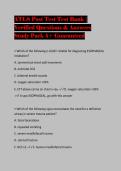
ATLS POST
v
TEST 2023
v v
QUESTION
v
S
&
ANSWERS
, ATLS POST TEST 2023 QUESTIONS & ANSWERS v v v v v v
1. The primary indication for transferring a
v v v v v 4. Which one of the following statements
v v v v v v
patient to a higher level trauma center is:
v v v v v v v v regarding patients with thoracic spine injuries is
v v v v v v v
TRUE?
v
unavailability of a surgeon or operating room v v v v v v v v Log-rolling may be destabilizing to v v v v
staff. fractures from T-12 to L-1. v v v v
v multiple system injuries, including severe
v v v v v Adequate immobilization can be v v v
head injury. v accomplished with the scoop stretcher. v v v v
resource limitations as determined by the
v v v v v v Spinal cord injury below T-10 usually spares
v v v v v v
transferring doctor. v bowel and bladder function. v v v
resource limitations as determined by the v v v v v v v Hyperflexion fractures in the upper v v v v
hospital administration. v thoracic spine are inherently unstable. v v v v
v widened mediastinum on chest x-ray v v v v v These patients rarely present with spinal
v v v v v
following blunt thoracic trauma. v v v shock in association with cord injury.
v v v v v
2. teen-aged bicycle rider is hit by a truck v v v v v v v 5. young man sustains a ritle wound to the mid-
v v v v v v v v
traveling at a high rate of speed. In the
v v v v v v v v v abdomen. He is brought promptly to the
v v v v v v v
emergency department, she is actively bleeding
v v v v v v emergency department by prehospital
v v v v
from open fractures of her legs, and has
v v v v v v v v personnel. His skin is cool and diaphoretic, and
v v v v v v v v
abrasions on her chest and abdominal wall.
v v v v v v v his systolic blood pressure is 58 rnm Hg.
v v v v v v v v
Her blood pressure is 80/50 mm Hg, heart
v v v v v v v v Warmed crystalloid fluids are initiated without
v v v v v v
rate is 140 beats per minute, respiratory rate
v v v v v v v v improvement in his vital signs. The next, most
v v v v v v v v
is 8 breaths per minute, and GCS score is 6.
v v v v v v v v v v appropriate step is to perform:
v v v v v
The first step in managing this patient is to:
v v v v v v v v a celiotomy.
v
v an abdominal CT scan.
v v v
obtain a lateral cervical spine x-ray.
v v v v v v diagnostic laparoscopy. v
v insert a central venous pressure line.
v v v v v v abdominal ultrasonography. v
v administer 2 liters of crystalloid solution. v v v v v a diagnostic peritoneal lavage.
v v v
v perform endotracheal intubation and v v v
ventilation. 6. young woman sustains a severe head injury
v v v v v v
apply the PASG and inflate the leg
v v v v v v
as the result of a motor vehicular crash. In the
v v v v v v v v v v
compartments. emergency department, her GCS score is 6.
v v v v v v v
Her blood pressure is 140/90 mm Hg and her
v v v v v v v v v
heart rate is 80 beats per minute. She is
3. Contraindication to nasogastric intubation is
v v v v v v v v v
v v v v
intubated and is being mechanically ventilated.
the presence of a:
v v v v v v
v v v v
Her pupils are 3 mm in size and equally
gastric perforation.
v v v v v v v v v
v
reactive to light. There is no other apparent
diaphragmatic rupture.
v v v v v v v v
v
injury. The most important principle to follow
open depressed skull fracture.
v v v v v v v
v v v v
in the early management of her head injury is
v v v v v v v v v
v fracture of the cervical spine. v v v v
to:
v
v fracture of the cribriform plate. v v v v
administer an osmotic diuretic. v v v
prevent secondary brain injury. v v v
1
, aggressively treat systemic hypertension. v v v 9. 8-year-old girl is an unrestrained passenger
v v v v v v
reduce metabolic requirements of the v v v v in a vehicle struck from behind. In the
v v v v v v v v
brain. emergency department, her blood pressure is
v v v v v v
v distinguish between intracranial hematoma v v v 80/60 mm Hg, heart rate is 80 beats per
v v v v v v v v v
and cerebral edema. v v minute, and respiratory rate is 16 breaths per
v v v v v v v v
minute. Her GCS score is 14. She complains
v v v v v v v v
that her legs feel "funny and won't move
v v v v v v v v
7. 22-year-old man is brought to the hospital
right;" however, her spine x-rays do not
v v v v v v
v v v v v v v
after crashing his motorcycle into a telephone
show a fracture or dislocation. A spinal cord
v v v v v v v
v v v v v v v v
pole. He is unconscious and in profound
injury in this child:
v v v v v v v
v v v v
shock. He has no open wounds or obvious
v v v v v v v v
is most likely a central cord syndrome.
v v v v v v
fractures. The cause of his shock is MOST
v v v v v v v v
must be diagnosed by magnetic resonance
v v v v v
LIKELY caused by:
imaging.
v v v
a subdural hematoma.
v v v v v
can be excluded by obtaining a CT of the
v v v v v v v v
an epidural hematoma.
v v v
entire spine. v
a transected lumbar spinal cord.
may exist in the absence of objective
v v v v v v
v v v v v v
a transected cervical spinal cord. findings on x-ray studies.
v v v v v v
v v v
v
hemorrhage into the chest or abdomen. v v v v v is unlikely because of the incomplete
v v v v v
calcification of the vertebral bodies. v v v v
8. 30-year-old man is struck by a car
v v v v v v v
vtraveling at 56 kph (35 mph). He has obviousv v v v v v v v
10. Immediate chest tube insertion is indicated v v v v v
fractures of the left tibia near the knee, pain in
v v v v v v v v v v
for which of the following conditions?
v v v v v v
the pelvic area, and severe dyspnea. His heart
v v v v v v v v
Pneumothorax
rate is 180 beats per minute, and his
v v v v v v v v
v Pneumomediastinum
respiratory rate is 48 breaths per minute with
v v v v v v v v
v Massive hemothorax v
v
no breath sounds heard in the left chest. A
v v v v v v v v v v Diaphragmatic rupture v
tension pneumothorax is relieved by immediate
v v v v v v v Subcutaneous emphysema v
needle decompression and tube thoracostomy.
v v v v v
Subsequently, his heart rate decreases to 140
v v v v v v v
11. 18-year-old, helmeted motorcyclist is
beats per minute, his respiratory rate
v v v
v v v v v v
brought by ambulance to the emergency
decreases to 36 breaths per minute, and his
v v v v v v
v v v v v v v v
department following a high-speed crash.
blood pressure is 80/50 inm Hg. Warmed
v v v v v
v v v v v v v
Prehospital persormel report that he was
Ringer's lactate is administered intravenously.
v v v v v v
v v v v v
thrown 15 meters (50 feet) off his bfice. He
The next priority should be to:
v v v v v v v v v
v v v v v v
has a history of hypotension prior to arrival in
v v v v v v v v v
perform a urethrogram and cystogram. v v v v
the emergency department, but is now awake,
v v v v v v v
v perform external fixation of the pelvis. v v v v v
alert, and conversational. Which of the
v v v v v v
v obtain abdominal and pelvic CT scans. v v v v v
following statements is TRUE?
v v v v
v perform arterial embolization of the pelvic
v v v v v
vessels.
perform diagnostic peritoneal lavage or v v v v Cerebral perfiision is intacto v v v
abdominal ultrasound. v v Intravascular volume status is normal. v v v v
v The patient has sensitive vasomotor
v v v v
reflexes.
2
v
TEST 2023
v v
QUESTION
v
S
&
ANSWERS
, ATLS POST TEST 2023 QUESTIONS & ANSWERS v v v v v v
1. The primary indication for transferring a
v v v v v 4. Which one of the following statements
v v v v v v
patient to a higher level trauma center is:
v v v v v v v v regarding patients with thoracic spine injuries is
v v v v v v v
TRUE?
v
unavailability of a surgeon or operating room v v v v v v v v Log-rolling may be destabilizing to v v v v
staff. fractures from T-12 to L-1. v v v v
v multiple system injuries, including severe
v v v v v Adequate immobilization can be v v v
head injury. v accomplished with the scoop stretcher. v v v v
resource limitations as determined by the
v v v v v v Spinal cord injury below T-10 usually spares
v v v v v v
transferring doctor. v bowel and bladder function. v v v
resource limitations as determined by the v v v v v v v Hyperflexion fractures in the upper v v v v
hospital administration. v thoracic spine are inherently unstable. v v v v
v widened mediastinum on chest x-ray v v v v v These patients rarely present with spinal
v v v v v
following blunt thoracic trauma. v v v shock in association with cord injury.
v v v v v
2. teen-aged bicycle rider is hit by a truck v v v v v v v 5. young man sustains a ritle wound to the mid-
v v v v v v v v
traveling at a high rate of speed. In the
v v v v v v v v v abdomen. He is brought promptly to the
v v v v v v v
emergency department, she is actively bleeding
v v v v v v emergency department by prehospital
v v v v
from open fractures of her legs, and has
v v v v v v v v personnel. His skin is cool and diaphoretic, and
v v v v v v v v
abrasions on her chest and abdominal wall.
v v v v v v v his systolic blood pressure is 58 rnm Hg.
v v v v v v v v
Her blood pressure is 80/50 mm Hg, heart
v v v v v v v v Warmed crystalloid fluids are initiated without
v v v v v v
rate is 140 beats per minute, respiratory rate
v v v v v v v v improvement in his vital signs. The next, most
v v v v v v v v
is 8 breaths per minute, and GCS score is 6.
v v v v v v v v v v appropriate step is to perform:
v v v v v
The first step in managing this patient is to:
v v v v v v v v a celiotomy.
v
v an abdominal CT scan.
v v v
obtain a lateral cervical spine x-ray.
v v v v v v diagnostic laparoscopy. v
v insert a central venous pressure line.
v v v v v v abdominal ultrasonography. v
v administer 2 liters of crystalloid solution. v v v v v a diagnostic peritoneal lavage.
v v v
v perform endotracheal intubation and v v v
ventilation. 6. young woman sustains a severe head injury
v v v v v v
apply the PASG and inflate the leg
v v v v v v
as the result of a motor vehicular crash. In the
v v v v v v v v v v
compartments. emergency department, her GCS score is 6.
v v v v v v v
Her blood pressure is 140/90 mm Hg and her
v v v v v v v v v
heart rate is 80 beats per minute. She is
3. Contraindication to nasogastric intubation is
v v v v v v v v v
v v v v
intubated and is being mechanically ventilated.
the presence of a:
v v v v v v
v v v v
Her pupils are 3 mm in size and equally
gastric perforation.
v v v v v v v v v
v
reactive to light. There is no other apparent
diaphragmatic rupture.
v v v v v v v v
v
injury. The most important principle to follow
open depressed skull fracture.
v v v v v v v
v v v v
in the early management of her head injury is
v v v v v v v v v
v fracture of the cervical spine. v v v v
to:
v
v fracture of the cribriform plate. v v v v
administer an osmotic diuretic. v v v
prevent secondary brain injury. v v v
1
, aggressively treat systemic hypertension. v v v 9. 8-year-old girl is an unrestrained passenger
v v v v v v
reduce metabolic requirements of the v v v v in a vehicle struck from behind. In the
v v v v v v v v
brain. emergency department, her blood pressure is
v v v v v v
v distinguish between intracranial hematoma v v v 80/60 mm Hg, heart rate is 80 beats per
v v v v v v v v v
and cerebral edema. v v minute, and respiratory rate is 16 breaths per
v v v v v v v v
minute. Her GCS score is 14. She complains
v v v v v v v v
that her legs feel "funny and won't move
v v v v v v v v
7. 22-year-old man is brought to the hospital
right;" however, her spine x-rays do not
v v v v v v
v v v v v v v
after crashing his motorcycle into a telephone
show a fracture or dislocation. A spinal cord
v v v v v v v
v v v v v v v v
pole. He is unconscious and in profound
injury in this child:
v v v v v v v
v v v v
shock. He has no open wounds or obvious
v v v v v v v v
is most likely a central cord syndrome.
v v v v v v
fractures. The cause of his shock is MOST
v v v v v v v v
must be diagnosed by magnetic resonance
v v v v v
LIKELY caused by:
imaging.
v v v
a subdural hematoma.
v v v v v
can be excluded by obtaining a CT of the
v v v v v v v v
an epidural hematoma.
v v v
entire spine. v
a transected lumbar spinal cord.
may exist in the absence of objective
v v v v v v
v v v v v v
a transected cervical spinal cord. findings on x-ray studies.
v v v v v v
v v v
v
hemorrhage into the chest or abdomen. v v v v v is unlikely because of the incomplete
v v v v v
calcification of the vertebral bodies. v v v v
8. 30-year-old man is struck by a car
v v v v v v v
vtraveling at 56 kph (35 mph). He has obviousv v v v v v v v
10. Immediate chest tube insertion is indicated v v v v v
fractures of the left tibia near the knee, pain in
v v v v v v v v v v
for which of the following conditions?
v v v v v v
the pelvic area, and severe dyspnea. His heart
v v v v v v v v
Pneumothorax
rate is 180 beats per minute, and his
v v v v v v v v
v Pneumomediastinum
respiratory rate is 48 breaths per minute with
v v v v v v v v
v Massive hemothorax v
v
no breath sounds heard in the left chest. A
v v v v v v v v v v Diaphragmatic rupture v
tension pneumothorax is relieved by immediate
v v v v v v v Subcutaneous emphysema v
needle decompression and tube thoracostomy.
v v v v v
Subsequently, his heart rate decreases to 140
v v v v v v v
11. 18-year-old, helmeted motorcyclist is
beats per minute, his respiratory rate
v v v
v v v v v v
brought by ambulance to the emergency
decreases to 36 breaths per minute, and his
v v v v v v
v v v v v v v v
department following a high-speed crash.
blood pressure is 80/50 inm Hg. Warmed
v v v v v
v v v v v v v
Prehospital persormel report that he was
Ringer's lactate is administered intravenously.
v v v v v v
v v v v v
thrown 15 meters (50 feet) off his bfice. He
The next priority should be to:
v v v v v v v v v
v v v v v v
has a history of hypotension prior to arrival in
v v v v v v v v v
perform a urethrogram and cystogram. v v v v
the emergency department, but is now awake,
v v v v v v v
v perform external fixation of the pelvis. v v v v v
alert, and conversational. Which of the
v v v v v v
v obtain abdominal and pelvic CT scans. v v v v v
following statements is TRUE?
v v v v
v perform arterial embolization of the pelvic
v v v v v
vessels.
perform diagnostic peritoneal lavage or v v v v Cerebral perfiision is intacto v v v
abdominal ultrasound. v v Intravascular volume status is normal. v v v v
v The patient has sensitive vasomotor
v v v v
reflexes.
2