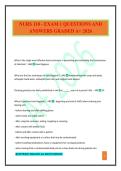
NURS 110 - EXAM 1 QUESTIONS AND
ANSWERS GRADED A+ 2026
What is the single most effective basic technique in preventing and controlling the transmission
of infection? - ANS Hand Hygiene
What are the four techniques of hand hygiene? - ANS Handwashing with soap and water,
antiseptic hand wash, antiseptic hand rub, and surgical hand asepsis
Cleaning practices are likely established in the first ______ years of a person's life. - ANS 10
When to perform hand hygiene? - ANS - beginning and end of shift/ when entering and
leaving unit
- before donning and after doffing gloves
- when hands are visibly soiled
- after using the restroom, eating, coughing or sneezing
- after contact with bodily fluids
- before and after contact with a patient
- after touching equipment or surface that may be contaminated
- before handling medications, food, or equipment for nursing procedures
- when moving from a contaminated body site to a clean body site during patient care
@COPYRIGHT 2026/2027 ALL RIGHTS RESERVED
1
,What methods of hand hygiene does the CDC recommend? - ANS using antibacterial hand
rub with 60-95% alcohol in healthcare setting. Unless hands are visibly soiled, an alcohol-based
hand rub is preferred over soap and water. Hands should be washed with soap and water for at
least 20 seconds when visibly soiled, before eating, and after using the restroom
When to use alcohol based gels? - ANS - used after casual contact in a clean environment
with no contact with body fluids
- "gel in, gel out" at hospital before entering and after exiting patient room
what is the After 3 rule? - ANS After each 3 uses of alcohol based gels, a soap and water wash
is required
How to decide whether to use soap and water or antiseptic gel? - ANS The decision whether
to use an antiseptic soap or an alcohol based hand rub depends on whether the hands are
visibly soiled, the type of infections microorganism, the procedure to be performed, and the
patient's immune status.
What are the top 8 ways healthcare workers contaminate their hands? - ANS - bed linen
- patient gown
- overbed table
- BP cuff
- side rails
- bath door handle
- IV pump button
- room door handle
@COPYRIGHT 2026/2027 ALL RIGHTS RESERVED
2
,What is the CDC? - ANS Center for Disease Control (best practice/evidence based)
What is OSHA? - ANS Occupational Safety and Health Administration (U.S. Department of
Labor/ handwashing access in the workplace)
What is WHO? - ANS World Health Organization (Global Impact/ Evidence Based)
What is the Joint Commission? - ANS National Patient Safety Goal; compliance with hand
washing
What are two examples of pathogens that alcohol based gels are ineffective against? - ANS C.
difficile and norovirus
what is the first step in "Standard Precautions"? - ANS Hand hygiene
T/F : Gloves should be worn as a replacement for hand hygiene - ANS FALSE
What are vital signs? - ANS - Indicators of the body's health status (assesses status of
circulatory, respiratory, neural and endocrine function)
- Objective Measurements that give data to determine a patient's state of health and drive
medical nursing actions.
What do Vital Signs include? - ANS - Temperature, Pulse, Respiratory Rate, O2 Saturation, and
Blood Pressure
- Pain is a subjective measurement (can't be measured)
@COPYRIGHT 2026/2027 ALL RIGHTS RESERVED
3
, When are Vital Signs taken? - ANS - Admission
- Beginning of Shift
- As ordered by HCP
- As indicated by treatment protocols
- Surgery and postoperatively
- during blood transfusions
- Changes in patient condition
- As assessment indicates
Why are Vital Signs important? - ANS establish a baseline, monitor patient's condition,
identify problems, and evaluate responses to interventions
What are some guidelines for measuring vital signs? - ANS - wear PPE
- clean equipment
- make sure equipment is appropriate fit and works properly
- know usual range and history
- use systematic approach
- decide frequency with HCP
Who can take vital signs? - ANS Vital signs may be delegated to trained healthcare workers
but the RN must evaluate findings, educate and train, ensure that others notify you of abnormal
values, and RN maintains responsibility
What are non modifiable factors that affect vital signs? - ANS Age, gender, race, circadian
rhythms, and heredity
@COPYRIGHT 2026/2027 ALL RIGHTS RESERVED
4
ANSWERS GRADED A+ 2026
What is the single most effective basic technique in preventing and controlling the transmission
of infection? - ANS Hand Hygiene
What are the four techniques of hand hygiene? - ANS Handwashing with soap and water,
antiseptic hand wash, antiseptic hand rub, and surgical hand asepsis
Cleaning practices are likely established in the first ______ years of a person's life. - ANS 10
When to perform hand hygiene? - ANS - beginning and end of shift/ when entering and
leaving unit
- before donning and after doffing gloves
- when hands are visibly soiled
- after using the restroom, eating, coughing or sneezing
- after contact with bodily fluids
- before and after contact with a patient
- after touching equipment or surface that may be contaminated
- before handling medications, food, or equipment for nursing procedures
- when moving from a contaminated body site to a clean body site during patient care
@COPYRIGHT 2026/2027 ALL RIGHTS RESERVED
1
,What methods of hand hygiene does the CDC recommend? - ANS using antibacterial hand
rub with 60-95% alcohol in healthcare setting. Unless hands are visibly soiled, an alcohol-based
hand rub is preferred over soap and water. Hands should be washed with soap and water for at
least 20 seconds when visibly soiled, before eating, and after using the restroom
When to use alcohol based gels? - ANS - used after casual contact in a clean environment
with no contact with body fluids
- "gel in, gel out" at hospital before entering and after exiting patient room
what is the After 3 rule? - ANS After each 3 uses of alcohol based gels, a soap and water wash
is required
How to decide whether to use soap and water or antiseptic gel? - ANS The decision whether
to use an antiseptic soap or an alcohol based hand rub depends on whether the hands are
visibly soiled, the type of infections microorganism, the procedure to be performed, and the
patient's immune status.
What are the top 8 ways healthcare workers contaminate their hands? - ANS - bed linen
- patient gown
- overbed table
- BP cuff
- side rails
- bath door handle
- IV pump button
- room door handle
@COPYRIGHT 2026/2027 ALL RIGHTS RESERVED
2
,What is the CDC? - ANS Center for Disease Control (best practice/evidence based)
What is OSHA? - ANS Occupational Safety and Health Administration (U.S. Department of
Labor/ handwashing access in the workplace)
What is WHO? - ANS World Health Organization (Global Impact/ Evidence Based)
What is the Joint Commission? - ANS National Patient Safety Goal; compliance with hand
washing
What are two examples of pathogens that alcohol based gels are ineffective against? - ANS C.
difficile and norovirus
what is the first step in "Standard Precautions"? - ANS Hand hygiene
T/F : Gloves should be worn as a replacement for hand hygiene - ANS FALSE
What are vital signs? - ANS - Indicators of the body's health status (assesses status of
circulatory, respiratory, neural and endocrine function)
- Objective Measurements that give data to determine a patient's state of health and drive
medical nursing actions.
What do Vital Signs include? - ANS - Temperature, Pulse, Respiratory Rate, O2 Saturation, and
Blood Pressure
- Pain is a subjective measurement (can't be measured)
@COPYRIGHT 2026/2027 ALL RIGHTS RESERVED
3
, When are Vital Signs taken? - ANS - Admission
- Beginning of Shift
- As ordered by HCP
- As indicated by treatment protocols
- Surgery and postoperatively
- during blood transfusions
- Changes in patient condition
- As assessment indicates
Why are Vital Signs important? - ANS establish a baseline, monitor patient's condition,
identify problems, and evaluate responses to interventions
What are some guidelines for measuring vital signs? - ANS - wear PPE
- clean equipment
- make sure equipment is appropriate fit and works properly
- know usual range and history
- use systematic approach
- decide frequency with HCP
Who can take vital signs? - ANS Vital signs may be delegated to trained healthcare workers
but the RN must evaluate findings, educate and train, ensure that others notify you of abnormal
values, and RN maintains responsibility
What are non modifiable factors that affect vital signs? - ANS Age, gender, race, circadian
rhythms, and heredity
@COPYRIGHT 2026/2027 ALL RIGHTS RESERVED
4