

Escrito por estudiantes que aprobaron Inmediatamente disponible después del pago Leer en línea o como PDF ¿Documento equivocado? Cámbialo gratis 4,6 TrustPilot
logo-home
Document preview thumbnail
Vista previa 4 fuera de 110 páginas
Examen

ADVANCED PHYSIOLOGY AND PATHOPHYSIOLOGY 2ND EDITION TKACS TEST BANK – NUR 600 COMPLETE CHAPTERS 1-17 WITH ANSWERS

Document preview thumbnail
Vista previa 4 fuera de 110 páginas

PREMIUM ADVANCED PHYSIOLOGY AND PATHOPHYSIOLOGY TEST BANK – YOUR ULTIMATE NP FOUNDATIONAL SCIENCE RESOURCE! This comprehensive test bank provides practice questions with detailed answers and rationales for all 17 chapters, covering the complete spectrum of advanced physiology and pathophysiology. Master the foundational science for clinical practice and ace your NP exams! Why This Test Bank? 17 Chapters Covered – Per Table of Contents (Ch. 1-17) Multiple Questions Per Chapter – Practice with hundreds of questions Detailed Answer Key Included – Every question answered with rationales and explanations Multiple Question Formats – Multiple Choice, Select All That Apply Foundational Concepts – Inflammation, fever, thermoregulation, cellular injury, apoptosis, necrosis Molecular & Cellular Biology – Genetics, genetic disorders, teratogens, cell cycle, extracellular matrix System-Based Pathophysiology – Immune, Infectious, Neoplasia, Blood, Cardiovascular, Respiratory, Renal, GI, Liver, Nervous, Musculoskeletal, Endocrine Clinical Application Focus – Relate pathophysiology to clinical signs and symptoms Mechanism-Based Questions – Understand the "why" behind disease processes Searchable PDF – Find topics instantly Mobile-Ready – Study on any device Chapter Highlights: Ch. 1: Foundational Concepts of Clinical Practice – Cardinal signs of inflammation, vascular & cellular stages, mediators, exudates, fever patterns (intermittent, remittent, sustained, recurrent), thermoregulation, older adult considerations Ch. 2: Chemical and Biochemical Foundations – Cell injury, ischemia, hypoxia, free radicals, necrosis (coagulation, liquefactive, caseous, fat), apoptosis, cellular adaptations (atrophy, hypertrophy, hyperplasia, metaplasia, dysplasia) Ch. 3: Molecular Biology, Genetics, and Genetic Diseases – Mendelian inheritance (autosomal dominant, recessive, X-linked), multifactorial disorders, chromosomal abnormalities (trisomy, monosomy), teratogens, fetal alcohol syndrome, genetic testing Ch. 4: Cell Physiology and Pathophysiology – Cell cycle, stem cells, extracellular matrix (ECM), wound healing (primary vs. secondary intention), granulation tissue, angiogenesis, factors affecting healing Ch. 5: Infectious Disease – Bacterial structure & growth, viruses, fungi, parasites, portals of entry, stages of infectious disease, virulence factors (exotoxins, endotoxins), colonization vs. infection, antibiotic resistance Ch. 6: The Immune System and Leukocyte Function – Hypersensitivity reactions (Type I-IV), autoimmunity, self-tolerance, HIV/AIDS (window period, seroconversion, opportunistic infections), organ rejection, graft-versus-host disease Ch. 7: Neoplasia – Benign vs. malignant tumors, characteristics of malignancy (anaplasia, invasion, metastasis), angiogenesis, oncogenesis (initiation, promotion, progression), tumor staging & grading, paraneoplastic syndromes, cancer cachexia Ch. 8: Blood and Clotting – Hemostasis (vasospasm, platelet plug, coagulation cascade), intrinsic vs. extrinsic pathway, clotting factors, hypercoagulability, bleeding disorders (hemophilia A, von Willebrand disease, ITP, TTP), DIC, anticoagulant therapy Ch. 9: Circulation – Cardiac output, preload, afterload, contractility, heart failure (left-sided, right-sided, systolic vs. diastolic dysfunction), compensatory mechanisms (hypertrophy, RAAS, ANP/BNP), shock (hypovolemic, cardiogenic, distributive, obstructive) Ch. 10: Heart – Coronary artery disease, atherosclerosis, stable vs. unstable angina, acute coronary syndrome (ACS), myocardial infarction, pericarditis, cardiomyopathies (dilated, hypertrophic, restrictive), valvular disorders, congenital heart defects Ch. 11: Lungs – Upper & lower respiratory infections (influenza, pneumonia, tuberculosis), lung cancer (small cell, non-small cell), obstructive vs. restrictive lung disease, respiratory distress in infants, epiglottitis, bronchiolitis Ch. 12: Kidneys – Acute kidney injury (prerenal, intrarenal, postrenal), acute tubular necrosis (ATN), chronic kidney disease (CKD), azotemia, uremia, renal osteodystrophy, electrolyte imbalances, dialysis (hemodialysis, peritoneal dialysis) Ch. 13: Gastrointestinal Tract – GERD, gastritis, peptic ulcer disease (H. pylori), inflammatory bowel disease (Crohn's, ulcerative colitis), diverticulitis, appendicitis, bowel obstruction, peritonitis, celiac disease, colorectal cancer Ch. 14: Liver – Jaundice (prehepatic, intrahepatic, posthepatic), viral hepatitis (HAV, HBV, HCV), alcoholic liver disease, cirrhosis, portal hypertension, ascites, hepatic encephalopathy, gallstones, cholecystitis, pancreatitis Ch. 15: Nervous System – Increased intracranial pressure (ICP), herniation, head injury (concussion, contusion, hematoma), stroke (ischemic, hemorrhagic), TIA, meningitis, Alzheimer's disease, vascular dementia, seizures (partial, generalized) Ch. 16: Musculoskeletal System – Fractures (types, healing), osteomyelitis, compartment syndrome, osteoporosis, osteoarthritis, rheumatoid arthritis, bone tumors (osteosarcoma, metastatic), developmental dysplasia of the hip (DDH), Legg-Calvé-Perthes disease Ch. 17: Endocrine System – Hypothalamic-pituitary axis, growth hormone disorders (acromegaly, gigantism), thyroid disorders (hypothyroidism, hyperthyroidism, Graves' disease), adrenal disorders (Cushing syndrome, Addison's disease), HPA axis, corticosteroid therapy Key Topics Covered: Acute inflammation (vascular & cellular stages, cardinal signs) Fever pathophysiology (pyrogens, fever patterns) Cell injury and death (necrosis types, apoptosis) Cellular adaptations (atrophy, hypertrophy, hyperplasia, metaplasia, dysplasia) Genetics and inheritance patterns (Mendelian, multifactorial) Wound healing (primary vs. secondary intention, granulation tissue) Infectious disease stages and virulence factors Hypersensitivity reactions (Type I-IV) HIV/AIDS pathogenesis and opportunistic infections Neoplasia (benign vs. malignant, oncogenesis, metastasis) Hemostasis and coagulation cascade Bleeding disorders (hemophilia, ITP, DIC) Heart failure pathophysiology (left vs. right, systolic vs. diastolic) Shock types and compensatory mechanisms Coronary artery disease and acute coronary syndrome Respiratory infections (pneumonia, influenza, TB) Lung cancer types and prognosis Acute kidney injury (prerenal, intrarenal, postrenal) Chronic kidney disease and complications (renal osteodystrophy) Gastrointestinal disorders (PUD, IBD, diverticulitis) Liver disease (hepatitis, cirrhosis, jaundice) Gallbladder and pancreatic disorders (cholecystitis, pancreatitis) Increased intracranial pressure and herniation syndromes Stroke (ischemic vs. hemorrhagic) Dementia types (Alzheimer's, vascular) Fracture healing and complications Osteomyelitis and bone tumors Endocrine disorders (thyroid, adrenal, pituitary) Perfect For: NUR 600 – NUR 750, Advanced Physiology, Advanced Pathophysiology, Pathophysiology for Advanced Practice, Nurse Practitioner (FNP, AGPCNP, PMHNP) foundational courses, and NP board exam preparation. ⏳ MASTER ADVANCED PHYSIOLOGY AND PATHOPHYSIOLOGY TODAY – DOWNLOAD INSTANTLY ON STUVIA AND ACE YOUR NP EXAMS WITH CONFIDENCE! 8. SUBJECT: Advanced Physiology / Pathophysiology / Advanced Practice Nursing / Nurse Practitioner Education 9. PROFESSOR NAME: Tkacs

Vista previa del contenido

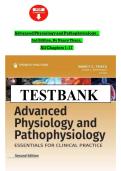
Advanced Physiology and Pathophysiology,
= = =


2nd Edition, By Nancy Tkacs,
= = = =


All Chapters 1-17
= =


TEST BANK =

,TABLE OF CONTENT
= =


Chapter=1=The=Foundational=Concepts=of=Clinical=Practice= Cha

pter=2=Chemical=and=Biochemical=Foundations

Chapter=3=Molecular=Biology,=Genetics,=and=Genetic=Diseases=

Chapter=4=Cell=Physiology=and=Pathophysiology

Chapter=5=Infectious=Disease

Chapter=6=The=Immune=System=and=Leukocyte=Function= Chapt

er=7=Neoplasia

Chapter=8=Blood=and=Clotting= Chap

ter=9=Circulation

Chapter=10=Heart

Chapter=11=Lungs

Chapter=12=Kidneys

Chapter=13=Gastrointestinal=Tract= C

hapter=14=Liver

Chapter=15=Nervous=System= Chapt

er=16=Musculoskeletal=System= Chap

ter=17=Endocrine=System

,Chapter 1. THE FOUNDATIONAL CONCEPTS OF
= = = = = =


CLINICALPRACTICE
==


1.
The= characteristic,= localized= cardinal=signs=of=acute= inflammatio
n= include:
A) fever.

B) fatigue.
C) redness.

D) granuloma.


2.
The=vascular,=hemodynamic=stage=of=acute=inflammation=is= initi
ated=by=momentary=vasoconstriction=followed=by=vasodilation= th
A) at=bleeding.
causes=localized:

B) congestion.
C) pale=skin.

D) coolness.


3.
The=cellular=stage=of=acute=inflammation=is=marked=by=the=
movement=of=leukocytes=into=the=area.=Which=of=the=followin
g= cells=arrives=early=in=great=numbers?
A) Basophils
B) Lymphocytes

C) Neutrophils
D) Platelets

, 4.
The=phagocytosis=process=involves=three=distinct=steps.=What
=is= the=initial=step=in=the=process?
A) Engulfment
B) Intracellular=killing

C) Antigen=margination
D) Recognition=and=adherence


5.
Which=of=the=following=mediators=of=inflammation=causes=increas
ed= capillary=permeability=and=pain?
A) Serotonin

B) Histamine

C) Bradykinin
D) Nitric=oxide


6.
Inflammatory=exudates=are=a=combination=of=several=typ
es.= Which=of=the=following=exudates=is=composed=of=enme
A) shed = necrotic=cells?
Serous
B) Fibrinous

C) Suppurative
D) Membranous


7. The=acute-
phase=systemic=response=usually=begins=within=hours=of= the=onset
=of=inflammation=and=includes:
A) fever=and=lethargy.
B) decreased=C-reactive=protein.
C) positive=nitrogen= balance.

D) low=erythrocyte= sedimentation= rate.


8. In=contrast=to=acute=inflammation,=chronic=inflammation=i
s
characterized=by=which=of=the=following=phenomena?


Libro relacionado
 image
Nancy Tkacs, PhD, RN, Linda Herrmann, PhD, RN, ACHPN, AGACNP-BC, GNP-BC, FAANP, Randall Johnson, PhD, RN Advanced Physiology and Pathophysiology
Edición: 2024 ISBN: 9780826167545 Edición: Desconocido

Información del documento

Subido en
25 de febrero de 2026
Número de páginas
110
Escrito en
2025/2026
Tipo
Examen
Contiene
Preguntas y respuestas
$9.99

¿Documento equivocado? Cámbialo gratis Dentro de los 14 días posteriores a la compra y antes de descargarlo, puedes elegir otro documento. Puedes gastar el importe de nuevo.
Escrito por estudiantes que aprobaron
Inmediatamente disponible después del pago
Leer en línea o como PDF

Seller avatar
Los indicadores de reputación están sujetos a la cantidad de artículos vendidos por una tarifa y las reseñas que ha recibido por esos documentos. Hay tres niveles: Bronce, Plata y Oro. Cuanto mayor reputación, más podrás confiar en la calidad del trabajo del vendedor.
Speeddocs
4.7
(3)
Vendido
13
Seguidores
1
Artículos
223
Última venta
2 semanas hace


Por qué los estudiantes eligen Stuvia

Creado por compañeros estudiantes, verificado por reseñas

Calidad en la que puedes confiar: escrito por estudiantes que aprobaron y evaluado por otros que han usado estos resúmenes.

¿No estás satisfecho? Elige otro documento

¡No te preocupes! Puedes elegir directamente otro documento que se ajuste mejor a lo que buscas.

Paga como quieras, empieza a estudiar al instante

Sin suscripción, sin compromisos. Paga como estés acostumbrado con tarjeta de crédito y descarga tu documento PDF inmediatamente.

Student with book image

“Comprado, descargado y aprobado. Así de fácil puede ser.”

Alisha Student

Preguntas frecuentes