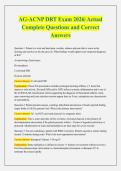
AG-ACNP DRT Exam 2026| Actual
Complete Questions and Correct
Answers
Question 1: Patient c/o wrist and hand pain, swollen, redness and pain that is worse in the
morning and resolves as the day goes on. What findings would support your suspected diagnosis
of RA?
A) narrowing of joint space
B) osteophyes
C) elevated ESR
D) juxta-articular
Correct Answer: C) elevated ESR
Explanation: Classic RA presentation includes prolonged morning stiffness (>1 hour) that
improves with activity. Elevated ESR (and/or CRP) reflects systemic inflammation and is one of
the ACR/EULAR classification criteria supporting the diagnosis of rheumatoid arthritis. Joint-
space narrowing and juxta-articular erosions appear later on X-ray; osteophytes are characteristic
of osteoarthritis.
Question 2: Patient presents nausea, vomiting, dehydrated and anxious. Friends reported finding
empty bottle of ASA by patient's bed. What is the primary intervention?
Correct Answer: AC via OGT (activated charcoal via orogastric tube)
Explanation: This is acute salicylate (ASA) overdose. Activated charcoal is the primary GI
decontamination intervention if the patient presents within 1–2 hours of ingestion and airway is
protected. Alkalinization of urine and hemodialysis are later steps for severe toxicity.
Question 3: You are examining a patient with PMH of seizures. Patients sustains a seizure lasting
around 12 minutes during exam. What is the most appropriate intervention?
Correct Answer: diazepam (Valium) 5-10 mg IV
Explanation: Status epilepticus is defined as seizure >5 minutes (or recurrent without recovery).
First-line pharmacologic intervention is a benzodiazepine (lorazepam or diazepam IV) to
terminate the seizure rapidly.
,Question 4: urine Na 28, serum osmolality 250, urine osmolality 115. Suspected cause?
Correct Answer: SIADH
Explanation: Low serum osmolality (250 mOsm/kg) with inappropriately high urine osmolality
(115 >100) and urine Na >20 mEq/L in a euvolemic patient is diagnostic of SIADH (syndrome
of inappropriate antidiuretic hormone secretion).
Question 5: True or False: Barium enema is indicated in the conservative management of
diverticulitis.
Correct Answer: False
Explanation: Barium enema is contraindicated in acute diverticulitis because of risk of
perforation and barium peritonitis. CT with IV/PO contrast is the imaging of choice.
Question 6: Patient has low diastolic rumble murmur in the left lateral position with no radiation.
What murmur do you suspect?
Correct Answer: mitral stenosis
Explanation: The classic murmur of mitral stenosis is a low-pitched diastolic rumble best heard
at the apex in the left lateral decubitus position, often with an opening snap.
Question 7: Which of the following labs would you not expect to see in a patient that presents
with Cushing's:
A) hypokalemia
B) glucosuria
C) hypernatremia
D) hypoglycemia
Correct Answer: D) hypoglycemia
Explanation: Cushing syndrome causes hyperglycemia (glucosuria), hypokalemia
(mineralocorticoid effect), and hypernatremia. Hypoglycemia is not expected and would suggest
adrenal insufficiency instead.
Question 8: At what age do males start colonoscopy every 10 years?
Correct Answer: 50
Explanation: Per USPSTF and ACG guidelines (at the time these questions were written),
average-risk men and women begin screening colonoscopy at age 50 and repeat every 10 years if
normal.
Question 9: Which of the following drugs cause lupus-like symptoms:
, A) beta blocker
B) ASA
C) procanamide
D) sertaline
Correct Answer: procainamide (listed as “procanamide”)
Explanation: Procainamide is a classic drug associated with drug-induced lupus erythematosus
(positive ANA, anti-histone antibodies).
Question 10: 35 yo. F presents to ED with c/o b/l wrist pain. You suspect spousal abuse. You
notice a handgun in the patients purse. What would be your next action?
A) contact social services about spousal abuse
B) take the handgun away from the patient
C) call security to ensure safety
D) call the police and report a dangerous weapon
Correct Answer: C) call security to ensure safety
Explanation: Immediate safety of staff and patient takes precedence. Hospital security should be
called to secure the weapon before addressing social services or mandatory reporting.
Question 11: You patient is worried about insurance coverage and asks you for advice on
Medicaid. You instruct the patient that Medicaid pays:
A) patient pays 80% of bill
B) for individuals that cannot afford health care
C) after other insurance companies or third-party payers have paid
Correct Answer: after insurance and third-party payers have paid
Explanation: Medicaid is the payer of last resort and coordinates benefits after all other
insurance has paid.
Question 12: Stephen, 47 years old, comes to your office complaining of intense pain in the right
eye which has worsened since he woke up this morning. During the eye exam, you find copious
tearing and redness in his right eye. Which of the following would confirm the most likely
diagnosis?
A) Tonometry
B) AV nicking
Complete Questions and Correct
Answers
Question 1: Patient c/o wrist and hand pain, swollen, redness and pain that is worse in the
morning and resolves as the day goes on. What findings would support your suspected diagnosis
of RA?
A) narrowing of joint space
B) osteophyes
C) elevated ESR
D) juxta-articular
Correct Answer: C) elevated ESR
Explanation: Classic RA presentation includes prolonged morning stiffness (>1 hour) that
improves with activity. Elevated ESR (and/or CRP) reflects systemic inflammation and is one of
the ACR/EULAR classification criteria supporting the diagnosis of rheumatoid arthritis. Joint-
space narrowing and juxta-articular erosions appear later on X-ray; osteophytes are characteristic
of osteoarthritis.
Question 2: Patient presents nausea, vomiting, dehydrated and anxious. Friends reported finding
empty bottle of ASA by patient's bed. What is the primary intervention?
Correct Answer: AC via OGT (activated charcoal via orogastric tube)
Explanation: This is acute salicylate (ASA) overdose. Activated charcoal is the primary GI
decontamination intervention if the patient presents within 1–2 hours of ingestion and airway is
protected. Alkalinization of urine and hemodialysis are later steps for severe toxicity.
Question 3: You are examining a patient with PMH of seizures. Patients sustains a seizure lasting
around 12 minutes during exam. What is the most appropriate intervention?
Correct Answer: diazepam (Valium) 5-10 mg IV
Explanation: Status epilepticus is defined as seizure >5 minutes (or recurrent without recovery).
First-line pharmacologic intervention is a benzodiazepine (lorazepam or diazepam IV) to
terminate the seizure rapidly.
,Question 4: urine Na 28, serum osmolality 250, urine osmolality 115. Suspected cause?
Correct Answer: SIADH
Explanation: Low serum osmolality (250 mOsm/kg) with inappropriately high urine osmolality
(115 >100) and urine Na >20 mEq/L in a euvolemic patient is diagnostic of SIADH (syndrome
of inappropriate antidiuretic hormone secretion).
Question 5: True or False: Barium enema is indicated in the conservative management of
diverticulitis.
Correct Answer: False
Explanation: Barium enema is contraindicated in acute diverticulitis because of risk of
perforation and barium peritonitis. CT with IV/PO contrast is the imaging of choice.
Question 6: Patient has low diastolic rumble murmur in the left lateral position with no radiation.
What murmur do you suspect?
Correct Answer: mitral stenosis
Explanation: The classic murmur of mitral stenosis is a low-pitched diastolic rumble best heard
at the apex in the left lateral decubitus position, often with an opening snap.
Question 7: Which of the following labs would you not expect to see in a patient that presents
with Cushing's:
A) hypokalemia
B) glucosuria
C) hypernatremia
D) hypoglycemia
Correct Answer: D) hypoglycemia
Explanation: Cushing syndrome causes hyperglycemia (glucosuria), hypokalemia
(mineralocorticoid effect), and hypernatremia. Hypoglycemia is not expected and would suggest
adrenal insufficiency instead.
Question 8: At what age do males start colonoscopy every 10 years?
Correct Answer: 50
Explanation: Per USPSTF and ACG guidelines (at the time these questions were written),
average-risk men and women begin screening colonoscopy at age 50 and repeat every 10 years if
normal.
Question 9: Which of the following drugs cause lupus-like symptoms:
, A) beta blocker
B) ASA
C) procanamide
D) sertaline
Correct Answer: procainamide (listed as “procanamide”)
Explanation: Procainamide is a classic drug associated with drug-induced lupus erythematosus
(positive ANA, anti-histone antibodies).
Question 10: 35 yo. F presents to ED with c/o b/l wrist pain. You suspect spousal abuse. You
notice a handgun in the patients purse. What would be your next action?
A) contact social services about spousal abuse
B) take the handgun away from the patient
C) call security to ensure safety
D) call the police and report a dangerous weapon
Correct Answer: C) call security to ensure safety
Explanation: Immediate safety of staff and patient takes precedence. Hospital security should be
called to secure the weapon before addressing social services or mandatory reporting.
Question 11: You patient is worried about insurance coverage and asks you for advice on
Medicaid. You instruct the patient that Medicaid pays:
A) patient pays 80% of bill
B) for individuals that cannot afford health care
C) after other insurance companies or third-party payers have paid
Correct Answer: after insurance and third-party payers have paid
Explanation: Medicaid is the payer of last resort and coordinates benefits after all other
insurance has paid.
Question 12: Stephen, 47 years old, comes to your office complaining of intense pain in the right
eye which has worsened since he woke up this morning. During the eye exam, you find copious
tearing and redness in his right eye. Which of the following would confirm the most likely
diagnosis?
A) Tonometry
B) AV nicking