Basic Elements
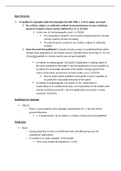
To qualify for copyright under the Copyright Act, RSC 1985, c. C-42 to apply, you must:
1. Be a citizen, subject, or ordinarily resident (some permanence to your residency)
person in Canada (/treaty country (defined in s.2) (s. 5(1)(a))
In the case of cinematographic work: (s. 5(1)(b))
If a corporation created it, they must be headquartered in Canada
(/treaty country) at time of making
If a natural person created it, be a citizen, subject or ordinarily
resident
2. Have the work first published in Canada (/treaty country) or published there within
30 days from publication in non-treaty country (?double check non treaty) (s. 5(1.1))
(if you first publish in a treaty country you can get copyright)
in relation to subparagraph 2.2(1)(a)(i) (“publication is making copies of
the work available to the public”), the first publication in such quantity as
to satisfy the reasonable demands of the public, having regard to the
nature of the work, occurred in a treaty country, or (s. 5(1)(c)(i))
have to make copies available to the public in such a quantity as
to satisfy the reasonable demands of the public
In relation to subparagraph 2.2(1)(a)(ii) or (iii) (“publication is
construction of an architectural work, or incorporation of the artistic work
into the architectural work”), the first publication occurred in a treaty
country(s. 5(1)(c)(ii)).
Qualifying For Copyright
Mascot
o There is a presumption that copyright requirements of s. 5 are met unless
proved otherwise.
s. 5 requirements: (1) an author is a citizen, (2) the work was published
Publication
Oscar
o Issuing statuettes to only a small limited and controlled group was not
considered “publication”.
o To publish is to make available “to the public”
This is now statutorily backed by s. 2.2(1)
, o The size/selectiveness of the group may be a determination of whether the
group is “public”
o Held that the issuance of many statuettes to award winners was not "publishing"
them, because it was not an offer of reproduction to the public, as the issuance
and use is very limited and controlled.
Infabrics
o A “publication” makes the work available to the public, even if the work was
already previously available to the public.
o Appearance of compromise between s. 3(1) (simply need to prove there was a
“publication”), and s. 2.2(1) (there needs to be a publication to the public), with
weight given to the aspect of public.
Robert D. Sutherland Architects Ltd
o The defendant infringed on the copyright of the plaintiff’s plan by attaching the
plans to a contract in a public registrar
o Obiter:
The plans fell under the definition of artistic work.
The Sutherland plan was designed specifically for the lot of land in
question, therefore unique.
o Ratio:
The act of “making public” is enough to amount to publication.
Publication has a low threshold and is not restricted by a concept of
“public” being of a sufficient quantity
Corporeal and Incorporeal
In Re Dickens
o Copyright in an unpublished work was an incorporeal right of property, which
subsisted independently of the actual manuscript. Just because it was held by
the trustee, did not mean the trustee had copyright/moral right.
o Copyright is incorporeal. Transferring the physical work does not necessarily
transfer the copyright nor moral right
Fixation
Canadian Admiral
o For copyright to exist in a "work" it must be expressed to some extent at least in
some material form, capable of identification and having a more or less
permanent endurance (interpreted from s. 2 and 3)
, All the works included in the definitions of "artistic work" and "literary
work" must be printed, reduced to writing or otherwise graphically
produced or reproduced.
Likewise, in regard to "dramatic works" there is the requirement that the
scenic arrangements or acting form must be fixed in writing or otherwise.
Cinematographic productions, which are also dramatic works, are
obviously "fixers otherwise" since they involved the making of films.
Gould Estate
o A person's oral statements in a speech, interview or conversation are not
recognized in that form as literary creations and do not attract copyright
protection (Walter v. Lane).
The person who makes notes or report of the speech is the author of the
report and obtains copyright in the report
o Spontaneous speeches are not copyrightable, but the one who affixes the speech
gains copyright
Originality/Expression/Idea
University of London Press
o The work only needed to be an original expression of thought—not necessarily
inventive. Therefore, could use the same math questions.
o Doesn't require knowledge that is unique to only the author
o Does require that some creative input, skill, labor and judgement
Time expended can't be the test, or else a poem written quickly wouldn't
be able to get copyright.
o Must originate from the author, not copied from another source
o A work may be copyrightable if it originates from an author who has exercised
some form of skill and judgement of the material, regardless of how unoriginal
the material being worked upon is.
o Without the skill and judgement, it may be simply and idea/fact, not an
expression.
Fletcher
o Facts:
Plaintiff made patterned diaper. Defendant made a patterned diaper, not
the same, but similar to the plaintiff’s. Plaintiff claimed infringement on
her patterned diapers.
September 1989 the plaintiff designed a pattern for a cloth diaper and
marketed the pattern under the trademark "Snappy Nappy".
, From March to August 1990, the defendant or parties connected with the
defendant purchased 5 shipments of the pattern.
In spring 1991, the plaintiff discovered that the defendant had
commenced producing a diaper pattern under the trademark Baby
Precious.
Although the pattern cover for BP was dissimilar to the cover of
the plaintiff's, she believed her pattern to have been copied and
brought proceedings for infringement of her copyright.
o Issue:
Had the defendant infringed upon the copyright of the patterned diaper?
o Held:
There was a copyright infringement on the patterned diaper.
o Reasons:
Copyright protected the expression of ideas (the patterned diaper), not
the ideas themselves (designed diapers)
Plaintiff's work is both literary and artistic, and has material form.
The Snappy Nappy was the result of the plaintiff's personal labour.
o Ratio:
An idea is not copyrightable, only the expression of the idea.
Boutin
o SCC: Non-literal copyright infringement because it was lacking in sufficient
objective originality
o For liability to exist, not enough that Boutin borrowed an idea. It has to be
shown that the infringing work copies the original such that anyone who sees it
is given the same idea as that given by the original (King Features Syndicate Inc.
v. Lechter)
Ratio:
o To determine whether there is a copying, determine whether there was:
1. Access: There needs to be a link between the copy and the original so that
it may be established that the original was the source of the copy
2. Similarity/Substantial copying: There must be a sufficient objective
similarity between the original and the copy to be considered a
reproduction or adaptation. It does not need to be perfectly identical.
And idea is not copyrightable, only the expression.
Baker
To qualify for copyright under the Copyright Act, RSC 1985, c. C-42 to apply, you must:
1. Be a citizen, subject, or ordinarily resident (some permanence to your residency)
person in Canada (/treaty country (defined in s.2) (s. 5(1)(a))
In the case of cinematographic work: (s. 5(1)(b))
If a corporation created it, they must be headquartered in Canada
(/treaty country) at time of making
If a natural person created it, be a citizen, subject or ordinarily
resident
2. Have the work first published in Canada (/treaty country) or published there within
30 days from publication in non-treaty country (?double check non treaty) (s. 5(1.1))
(if you first publish in a treaty country you can get copyright)
in relation to subparagraph 2.2(1)(a)(i) (“publication is making copies of
the work available to the public”), the first publication in such quantity as
to satisfy the reasonable demands of the public, having regard to the
nature of the work, occurred in a treaty country, or (s. 5(1)(c)(i))
have to make copies available to the public in such a quantity as
to satisfy the reasonable demands of the public
In relation to subparagraph 2.2(1)(a)(ii) or (iii) (“publication is
construction of an architectural work, or incorporation of the artistic work
into the architectural work”), the first publication occurred in a treaty
country(s. 5(1)(c)(ii)).
Qualifying For Copyright
Mascot
o There is a presumption that copyright requirements of s. 5 are met unless
proved otherwise.
s. 5 requirements: (1) an author is a citizen, (2) the work was published
Publication
Oscar
o Issuing statuettes to only a small limited and controlled group was not
considered “publication”.
o To publish is to make available “to the public”
This is now statutorily backed by s. 2.2(1)
, o The size/selectiveness of the group may be a determination of whether the
group is “public”
o Held that the issuance of many statuettes to award winners was not "publishing"
them, because it was not an offer of reproduction to the public, as the issuance
and use is very limited and controlled.
Infabrics
o A “publication” makes the work available to the public, even if the work was
already previously available to the public.
o Appearance of compromise between s. 3(1) (simply need to prove there was a
“publication”), and s. 2.2(1) (there needs to be a publication to the public), with
weight given to the aspect of public.
Robert D. Sutherland Architects Ltd
o The defendant infringed on the copyright of the plaintiff’s plan by attaching the
plans to a contract in a public registrar
o Obiter:
The plans fell under the definition of artistic work.
The Sutherland plan was designed specifically for the lot of land in
question, therefore unique.
o Ratio:
The act of “making public” is enough to amount to publication.
Publication has a low threshold and is not restricted by a concept of
“public” being of a sufficient quantity
Corporeal and Incorporeal
In Re Dickens
o Copyright in an unpublished work was an incorporeal right of property, which
subsisted independently of the actual manuscript. Just because it was held by
the trustee, did not mean the trustee had copyright/moral right.
o Copyright is incorporeal. Transferring the physical work does not necessarily
transfer the copyright nor moral right
Fixation
Canadian Admiral
o For copyright to exist in a "work" it must be expressed to some extent at least in
some material form, capable of identification and having a more or less
permanent endurance (interpreted from s. 2 and 3)
, All the works included in the definitions of "artistic work" and "literary
work" must be printed, reduced to writing or otherwise graphically
produced or reproduced.
Likewise, in regard to "dramatic works" there is the requirement that the
scenic arrangements or acting form must be fixed in writing or otherwise.
Cinematographic productions, which are also dramatic works, are
obviously "fixers otherwise" since they involved the making of films.
Gould Estate
o A person's oral statements in a speech, interview or conversation are not
recognized in that form as literary creations and do not attract copyright
protection (Walter v. Lane).
The person who makes notes or report of the speech is the author of the
report and obtains copyright in the report
o Spontaneous speeches are not copyrightable, but the one who affixes the speech
gains copyright
Originality/Expression/Idea
University of London Press
o The work only needed to be an original expression of thought—not necessarily
inventive. Therefore, could use the same math questions.
o Doesn't require knowledge that is unique to only the author
o Does require that some creative input, skill, labor and judgement
Time expended can't be the test, or else a poem written quickly wouldn't
be able to get copyright.
o Must originate from the author, not copied from another source
o A work may be copyrightable if it originates from an author who has exercised
some form of skill and judgement of the material, regardless of how unoriginal
the material being worked upon is.
o Without the skill and judgement, it may be simply and idea/fact, not an
expression.
Fletcher
o Facts:
Plaintiff made patterned diaper. Defendant made a patterned diaper, not
the same, but similar to the plaintiff’s. Plaintiff claimed infringement on
her patterned diapers.
September 1989 the plaintiff designed a pattern for a cloth diaper and
marketed the pattern under the trademark "Snappy Nappy".
, From March to August 1990, the defendant or parties connected with the
defendant purchased 5 shipments of the pattern.
In spring 1991, the plaintiff discovered that the defendant had
commenced producing a diaper pattern under the trademark Baby
Precious.
Although the pattern cover for BP was dissimilar to the cover of
the plaintiff's, she believed her pattern to have been copied and
brought proceedings for infringement of her copyright.
o Issue:
Had the defendant infringed upon the copyright of the patterned diaper?
o Held:
There was a copyright infringement on the patterned diaper.
o Reasons:
Copyright protected the expression of ideas (the patterned diaper), not
the ideas themselves (designed diapers)
Plaintiff's work is both literary and artistic, and has material form.
The Snappy Nappy was the result of the plaintiff's personal labour.
o Ratio:
An idea is not copyrightable, only the expression of the idea.
Boutin
o SCC: Non-literal copyright infringement because it was lacking in sufficient
objective originality
o For liability to exist, not enough that Boutin borrowed an idea. It has to be
shown that the infringing work copies the original such that anyone who sees it
is given the same idea as that given by the original (King Features Syndicate Inc.
v. Lechter)
Ratio:
o To determine whether there is a copying, determine whether there was:
1. Access: There needs to be a link between the copy and the original so that
it may be established that the original was the source of the copy
2. Similarity/Substantial copying: There must be a sufficient objective
similarity between the original and the copy to be considered a
reproduction or adaptation. It does not need to be perfectly identical.
And idea is not copyrightable, only the expression.
Baker