

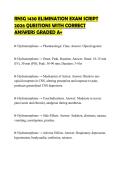
RNSG 1430 ELIMINATION EXAM SCRIPT
2026 QUESTIONS WITH CORRECT
ANSWERS GRADED A+
⩥ Hydromorphone → Pharmacologic Class. Answer: Opioid agonist
⩥ Hydromorphone → Onset, Peak, Duration. Answer: Onset: 10-15 min
(IV), 30 min (PO); Peak: 30-90 min; Duration: 3-4 hr
⩥ Hydromorphone → Mechanism of Action. Answer: Binds to mu-
opioid receptors in CNS, altering perception and response to pain;
produces generalized CNS depression.
⩥ Hydromorphone → Uses/Indications. Answer: Moderate to severe
pain (acute and chronic), analgesia during anesthesia.
⩥ Hydromorphone → Side Effects. Answer: Sedation, dizziness, nausea,
vomiting, constipation, pruritus.
⩥ Hydromorphone → Adverse Effects. Answer: Respiratory depression,
hypotension, bradycardia, confusion, seizures.
,⩥ Hydromorphone → Contraindications. Answer: Severe respiratory
depression, acute asthma, paralytic ileus, hypersensitivity.
⩥ Hydromorphone → Client/Family Education. Answer: Avoid alcohol
and CNS depressants; may cause drowsiness/dizziness; change positions
slowly; take with food to reduce GI upset; risk of dependence.
⩥ Hydromorphone → Priority Assessments. Answer: Assess pain, level
of consciousness, respiratory rate/depth, blood pressure, and risk for
opioid misuse.
⩥ Hydromorphone → Implementation Priorities. Answer: Administer
with caution; dilute IV doses; monitor closely during titration; have
naloxone available for overdose.
⩥ Hydromorphone → Monitoring Priorities. Answer: Monitor
respiratory status, BP, HR, bowel function, and pain relief. Watch for
signs of tolerance, dependence, or abuse.
⩥ Oxycodone → Therapeutic Class. Answer: Opioid analgesic
⩥ Oxycodone → Pharmacologic Class. Answer: Opioid agonist
,⩥ Oxycodone → Onset, Peak, Duration. Answer: Onset: 10-15 min
(PO); Peak: 60-90 min; Duration: 3-6 hr (immediate release), 12 hr
(extended release)
⩥ Oxycodone → Mechanism of Action. Answer: Binds to opioid
receptors in the CNS, altering perception and response to pain while
producing CNS depression.
⩥ Oxycodone → Uses/Indications. Answer: Moderate to severe pain
requiring long-term opioid treatment when alternatives are inadequate.
⩥ Oxycodone → Side Effects. Answer: Constipation, nausea, vomiting,
sedation, dizziness, pruritus.
⩥ Oxycodone → Adverse Effects. Answer: Respiratory depression,
hypotension, tolerance, dependence, abuse.
⩥ Oxycodone → Contraindications. Answer: Severe respiratory
depression, paralytic ileus, acute/severe asthma.
⩥ Oxycodone → Client/Family Education. Answer: Swallow ER tablets
whole; avoid alcohol/CNS depressants; may cause drowsiness/dizziness;
encourage fluids and fiber to prevent constipation.
, ⩥ Oxycodone → Priority Assessments. Answer: Assess pain, RR, BP,
level of consciousness, and bowel function.
⩥ Oxycodone → Implementation Priorities. Answer: Give with food to
minimize GI upset; ER formulations must not be crushed/chewed;
naloxone should be available.
⩥ Oxycodone → Monitoring Priorities. Answer: Monitor respiratory
status, sedation level, and pain relief; assess for misuse/abuse.
⩥ Tramadol → Therapeutic Class. Answer: Centrally acting analgesic
⩥ Tramadol → Pharmacologic Class. Answer: Opioid agonist +
serotonin/norepinephrine reuptake inhibitor (SNRI-like)
⩥ Tramadol → Onset, Peak, Duration. Answer: Onset: 1 hr (PO); Peak:
2-3 hr; Duration: 4-6 hr
⩥ Tramadol → Mechanism of Action. Answer: Binds to mu-opioid
receptors and inhibits reuptake of serotonin/norepinephrine, altering pain
perception.
⩥ Tramadol → Uses/Indications. Answer: Moderate to moderately
severe pain.
2026 QUESTIONS WITH CORRECT
ANSWERS GRADED A+
⩥ Hydromorphone → Pharmacologic Class. Answer: Opioid agonist
⩥ Hydromorphone → Onset, Peak, Duration. Answer: Onset: 10-15 min
(IV), 30 min (PO); Peak: 30-90 min; Duration: 3-4 hr
⩥ Hydromorphone → Mechanism of Action. Answer: Binds to mu-
opioid receptors in CNS, altering perception and response to pain;
produces generalized CNS depression.
⩥ Hydromorphone → Uses/Indications. Answer: Moderate to severe
pain (acute and chronic), analgesia during anesthesia.
⩥ Hydromorphone → Side Effects. Answer: Sedation, dizziness, nausea,
vomiting, constipation, pruritus.
⩥ Hydromorphone → Adverse Effects. Answer: Respiratory depression,
hypotension, bradycardia, confusion, seizures.
,⩥ Hydromorphone → Contraindications. Answer: Severe respiratory
depression, acute asthma, paralytic ileus, hypersensitivity.
⩥ Hydromorphone → Client/Family Education. Answer: Avoid alcohol
and CNS depressants; may cause drowsiness/dizziness; change positions
slowly; take with food to reduce GI upset; risk of dependence.
⩥ Hydromorphone → Priority Assessments. Answer: Assess pain, level
of consciousness, respiratory rate/depth, blood pressure, and risk for
opioid misuse.
⩥ Hydromorphone → Implementation Priorities. Answer: Administer
with caution; dilute IV doses; monitor closely during titration; have
naloxone available for overdose.
⩥ Hydromorphone → Monitoring Priorities. Answer: Monitor
respiratory status, BP, HR, bowel function, and pain relief. Watch for
signs of tolerance, dependence, or abuse.
⩥ Oxycodone → Therapeutic Class. Answer: Opioid analgesic
⩥ Oxycodone → Pharmacologic Class. Answer: Opioid agonist
,⩥ Oxycodone → Onset, Peak, Duration. Answer: Onset: 10-15 min
(PO); Peak: 60-90 min; Duration: 3-6 hr (immediate release), 12 hr
(extended release)
⩥ Oxycodone → Mechanism of Action. Answer: Binds to opioid
receptors in the CNS, altering perception and response to pain while
producing CNS depression.
⩥ Oxycodone → Uses/Indications. Answer: Moderate to severe pain
requiring long-term opioid treatment when alternatives are inadequate.
⩥ Oxycodone → Side Effects. Answer: Constipation, nausea, vomiting,
sedation, dizziness, pruritus.
⩥ Oxycodone → Adverse Effects. Answer: Respiratory depression,
hypotension, tolerance, dependence, abuse.
⩥ Oxycodone → Contraindications. Answer: Severe respiratory
depression, paralytic ileus, acute/severe asthma.
⩥ Oxycodone → Client/Family Education. Answer: Swallow ER tablets
whole; avoid alcohol/CNS depressants; may cause drowsiness/dizziness;
encourage fluids and fiber to prevent constipation.
, ⩥ Oxycodone → Priority Assessments. Answer: Assess pain, RR, BP,
level of consciousness, and bowel function.
⩥ Oxycodone → Implementation Priorities. Answer: Give with food to
minimize GI upset; ER formulations must not be crushed/chewed;
naloxone should be available.
⩥ Oxycodone → Monitoring Priorities. Answer: Monitor respiratory
status, sedation level, and pain relief; assess for misuse/abuse.
⩥ Tramadol → Therapeutic Class. Answer: Centrally acting analgesic
⩥ Tramadol → Pharmacologic Class. Answer: Opioid agonist +
serotonin/norepinephrine reuptake inhibitor (SNRI-like)
⩥ Tramadol → Onset, Peak, Duration. Answer: Onset: 1 hr (PO); Peak:
2-3 hr; Duration: 4-6 hr
⩥ Tramadol → Mechanism of Action. Answer: Binds to mu-opioid
receptors and inhibits reuptake of serotonin/norepinephrine, altering pain
perception.
⩥ Tramadol → Uses/Indications. Answer: Moderate to moderately
severe pain.

