Edrftgyihu jiuh
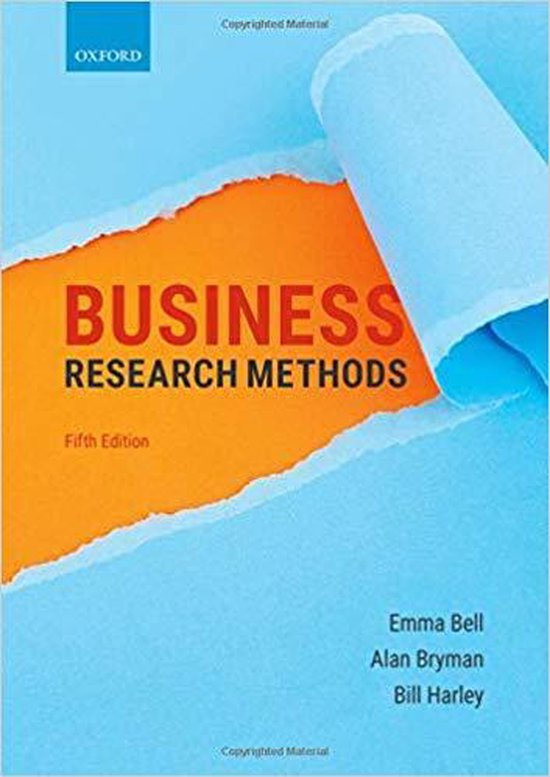
Business Research
ST
Methods, 5th Edition
UV
TEST BANK
IA
Emma Bell
_A
Alan Bryman
Bill Harley
PP
────────────────────────────────────────────────────
Comprehensive Test Bank and Case Notes
RO
Manual for Instructors and Students
||| ||| || ||| || | || ||| | || ||| |
VE
9780198809876
© Emma Bell, Alan Bryman, & Bill Harley. All rights
D?
reserved. Reproduction or distribution without
permission is prohibited.
© MEDGEEK
, Edrftgyihu jiuh
Business Research Methods — Test Bank & Case Notes
Manual
Emma Bell, Alan Bryman and Bill Harley
ISBN: 9780198809876
ST
Chapter 1: The Nature and Process Of Business Research
Chapter 2: Business Research Strategies
UV
Chapter 3: Research Designs
Chapter 4: Planning A Research Project and Developing Research
Chapter 5: Getting Started: Reviewing the Literature
Chapter 6: Ethics in Business Research
Chapter 7: Writing Up Business Research
IA
Chapter 8: The Nature of Quantitative Research
Chapter 9: Sampling in Quantitative Research
Chapter 10: Structured Interviewing
_A
Chapter 11: Self-Completion Questionnaires
Chapter 12: Asking Questions
Chapter 13: Quantitative Research Using Naturally Occurrences
Chapter 14: Secondary Analysis and Official Statistics
Chapter 15: Quantitative Data Analysis
PP
Chapter 16: Using IBM SPSS Statistics
Chapter 17: The Nature of Qualitative Research
Chapter 18: Sampling in Qualitative Research
Chapter 19: Ethnography and Participant Observation
RO
Chapter 20: Interviewing in Qualitative Research
Chapter 21: Focus Groups
Chapter 22: Language in Qualitative Research
Chapter 23: Documents as Sources of Data
Chapter 24: Qualitative Data Analysis
VE
Chapter 25: Computer-Assisted Qualitative Data Analysis
Chapter 26: Breaking Down the Quantitative/Qualitative
Chapter 27: Mixed Methods Research: Combining Quantitative
D?
© MEDGEEK
, Bell, Bryman & Harley: Business Research Methods, 5th edition
Correct answers are marked with an asterisk (*).
Type: multiple response question
Title: Chapter 01 - Question 01
01) Which of the following are reasons to conduct business research? Please select all that apply.
Feedback: Academics conduct research because, in the course of reading the literature on a topic or
reflecting on what is going on in organizations, questions occur to them. They may notice a gap in the
literature or an inconsistency between a number of studies or an unresolved issue in the literature.
Another stimulus is a societal development that provides a point of departure for the development of a
ST
research question.
Page reference: Page 4
*a. There may be a gap or inconsistency in the literature
*b. A societal event may bring the issue to the fore
*c. When an aspect of business or management is inadequately understood
UV
d. Because they have a good feeling about some aspect of business management
Type: true-false
Title: Chapter 01 - Question 02
02) The topics of business research are deeply influenced by the theoretical position adopted by the
researcher:
*a. True
IA
Feedback: The topics of business are deeply influenced by the theoretical position adopted.
Page reference: 5
b. False
Feedback: The topics of business are deeply influenced by the theoretical position adopted.
Page reference: 5
_A
Type: multiple response question
Title: Chapter 01 – Question 03
03) Which of the following is a source of information that contributes to evidence-based
management? Please select all that apply.
Feedback: There are four sources of information that contribute to evidence-based management:
PP
1. practitioner expertise and judgement; 2. evidence from the local context; 3. critical evaluation of
the best available research evidence; 4. perspectives of those who may be affected by a particular
decision (Briner et al. 2009: 19).
Page reference: 7
*a. Practitioner expertise and judgement
*b. Perspectives of those who may be affected by a particular decision
RO
c. Discussions on social media
*d. Evidence from the local context
Type: multiple response question
Title: Chapter 01 – Question 04
04) Which of the following is a reason to conduct a literature review? Please select all that apply.
Feedback: Existing literature represents an important element in all research. When we have a topic
VE
or issue that interests us, we must read further to determine:
• what is already known about the topic;
• what concepts and theories have been applied to it;
• what research methods have been applied in studying it;
• what controversies exist about the topic and about how it is studied;
• what clashes of evidence (if any) exist;
D?
• who the key contributors to research on the topic are.
Page reference: Page 8
*a. To understand what is known about a topic
b. To solve a business problem
*c. To understand what methods have been applied to a topic
*d. To investigate clashes of evidence
, Bell, Bryman & Harley: Business Research Methods, 5th edition
Type: true-false
Title: Chapter 01 - Question 05
05) Concepts are labels we give to aspects of the social world that have common features:
*a. True
Feedback: Concepts are the way that we make sense of the social world. They are labels that we
give to aspects of the social world that seem to have significant common features.
Page reference: 9
b. False
Feedback: Concepts are the way that we make sense of the social world. They are labels that we
ST
give to aspects of the social world that seem to have significant common features.
Page reference: 9
Type: multiple choice question
Title: Chapter 01 – Question 06
UV
06) Which of the following is not a feature of a research question?
a. It guides your literature search
Feedback: research questions are crucial because they will:
• guide your literature search;
• guide your decisions about the kind of research design to employ;
• guide your decisions about what data to collect and from whom;
IA
• guide your analysis of data;
• guide your writing-up of data;
• stop you going on in unnecessary directions; and
• provide your readers with a clear sense of what your research is about.
Page reference: 10
_A
*b. It will determine your research findings
Feedback: research questions are crucial because they will:
• guide your literature search;
• guide your decisions about the kind of research design to employ;
• guide your decisions about what data to collect and from whom;
PP
• guide your analysis of data;
• guide your writing-up of data;
• stop you going on in unnecessary directions; and
• provide your readers with a clear sense of what your research is about.
Page reference: 10
RO
c. It will guide decisions about which research design to employ
Feedback: research questions are crucial because they will:
• guide your literature search;
• guide your decisions about the kind of research design to employ;
• guide your decisions about what data to collect and from whom;
• guide your analysis of data;
• guide your writing-up of data;
VE
• stop you going on in unnecessary directions; and
• provide your readers with a clear sense of what your research is about.
Page reference: 10
d. It will guide your decisions about what data to collect and from whom
Feedback: research questions are crucial because they will:
D?
• guide your literature search;
• guide your decisions about the kind of research design to employ;
• guide your decisions about what data to collect and from whom;
• guide your analysis of data;
• guide your writing-up of data;
• stop you going on in unnecessary directions; and
Business Research
ST
Methods, 5th Edition
UV
TEST BANK
IA
Emma Bell
_A
Alan Bryman
Bill Harley
PP
────────────────────────────────────────────────────
Comprehensive Test Bank and Case Notes
RO
Manual for Instructors and Students
||| ||| || ||| || | || ||| | || ||| |
VE
9780198809876
© Emma Bell, Alan Bryman, & Bill Harley. All rights
D?
reserved. Reproduction or distribution without
permission is prohibited.
© MEDGEEK
, Edrftgyihu jiuh
Business Research Methods — Test Bank & Case Notes
Manual
Emma Bell, Alan Bryman and Bill Harley
ISBN: 9780198809876
ST
Chapter 1: The Nature and Process Of Business Research
Chapter 2: Business Research Strategies
UV
Chapter 3: Research Designs
Chapter 4: Planning A Research Project and Developing Research
Chapter 5: Getting Started: Reviewing the Literature
Chapter 6: Ethics in Business Research
Chapter 7: Writing Up Business Research
IA
Chapter 8: The Nature of Quantitative Research
Chapter 9: Sampling in Quantitative Research
Chapter 10: Structured Interviewing
_A
Chapter 11: Self-Completion Questionnaires
Chapter 12: Asking Questions
Chapter 13: Quantitative Research Using Naturally Occurrences
Chapter 14: Secondary Analysis and Official Statistics
Chapter 15: Quantitative Data Analysis
PP
Chapter 16: Using IBM SPSS Statistics
Chapter 17: The Nature of Qualitative Research
Chapter 18: Sampling in Qualitative Research
Chapter 19: Ethnography and Participant Observation
RO
Chapter 20: Interviewing in Qualitative Research
Chapter 21: Focus Groups
Chapter 22: Language in Qualitative Research
Chapter 23: Documents as Sources of Data
Chapter 24: Qualitative Data Analysis
VE
Chapter 25: Computer-Assisted Qualitative Data Analysis
Chapter 26: Breaking Down the Quantitative/Qualitative
Chapter 27: Mixed Methods Research: Combining Quantitative
D?
© MEDGEEK
, Bell, Bryman & Harley: Business Research Methods, 5th edition
Correct answers are marked with an asterisk (*).
Type: multiple response question
Title: Chapter 01 - Question 01
01) Which of the following are reasons to conduct business research? Please select all that apply.
Feedback: Academics conduct research because, in the course of reading the literature on a topic or
reflecting on what is going on in organizations, questions occur to them. They may notice a gap in the
literature or an inconsistency between a number of studies or an unresolved issue in the literature.
Another stimulus is a societal development that provides a point of departure for the development of a
ST
research question.
Page reference: Page 4
*a. There may be a gap or inconsistency in the literature
*b. A societal event may bring the issue to the fore
*c. When an aspect of business or management is inadequately understood
UV
d. Because they have a good feeling about some aspect of business management
Type: true-false
Title: Chapter 01 - Question 02
02) The topics of business research are deeply influenced by the theoretical position adopted by the
researcher:
*a. True
IA
Feedback: The topics of business are deeply influenced by the theoretical position adopted.
Page reference: 5
b. False
Feedback: The topics of business are deeply influenced by the theoretical position adopted.
Page reference: 5
_A
Type: multiple response question
Title: Chapter 01 – Question 03
03) Which of the following is a source of information that contributes to evidence-based
management? Please select all that apply.
Feedback: There are four sources of information that contribute to evidence-based management:
PP
1. practitioner expertise and judgement; 2. evidence from the local context; 3. critical evaluation of
the best available research evidence; 4. perspectives of those who may be affected by a particular
decision (Briner et al. 2009: 19).
Page reference: 7
*a. Practitioner expertise and judgement
*b. Perspectives of those who may be affected by a particular decision
RO
c. Discussions on social media
*d. Evidence from the local context
Type: multiple response question
Title: Chapter 01 – Question 04
04) Which of the following is a reason to conduct a literature review? Please select all that apply.
Feedback: Existing literature represents an important element in all research. When we have a topic
VE
or issue that interests us, we must read further to determine:
• what is already known about the topic;
• what concepts and theories have been applied to it;
• what research methods have been applied in studying it;
• what controversies exist about the topic and about how it is studied;
• what clashes of evidence (if any) exist;
D?
• who the key contributors to research on the topic are.
Page reference: Page 8
*a. To understand what is known about a topic
b. To solve a business problem
*c. To understand what methods have been applied to a topic
*d. To investigate clashes of evidence
, Bell, Bryman & Harley: Business Research Methods, 5th edition
Type: true-false
Title: Chapter 01 - Question 05
05) Concepts are labels we give to aspects of the social world that have common features:
*a. True
Feedback: Concepts are the way that we make sense of the social world. They are labels that we
give to aspects of the social world that seem to have significant common features.
Page reference: 9
b. False
Feedback: Concepts are the way that we make sense of the social world. They are labels that we
ST
give to aspects of the social world that seem to have significant common features.
Page reference: 9
Type: multiple choice question
Title: Chapter 01 – Question 06
UV
06) Which of the following is not a feature of a research question?
a. It guides your literature search
Feedback: research questions are crucial because they will:
• guide your literature search;
• guide your decisions about the kind of research design to employ;
• guide your decisions about what data to collect and from whom;
IA
• guide your analysis of data;
• guide your writing-up of data;
• stop you going on in unnecessary directions; and
• provide your readers with a clear sense of what your research is about.
Page reference: 10
_A
*b. It will determine your research findings
Feedback: research questions are crucial because they will:
• guide your literature search;
• guide your decisions about the kind of research design to employ;
• guide your decisions about what data to collect and from whom;
PP
• guide your analysis of data;
• guide your writing-up of data;
• stop you going on in unnecessary directions; and
• provide your readers with a clear sense of what your research is about.
Page reference: 10
RO
c. It will guide decisions about which research design to employ
Feedback: research questions are crucial because they will:
• guide your literature search;
• guide your decisions about the kind of research design to employ;
• guide your decisions about what data to collect and from whom;
• guide your analysis of data;
• guide your writing-up of data;
VE
• stop you going on in unnecessary directions; and
• provide your readers with a clear sense of what your research is about.
Page reference: 10
d. It will guide your decisions about what data to collect and from whom
Feedback: research questions are crucial because they will:
D?
• guide your literature search;
• guide your decisions about the kind of research design to employ;
• guide your decisions about what data to collect and from whom;
• guide your analysis of data;
• guide your writing-up of data;
• stop you going on in unnecessary directions; and