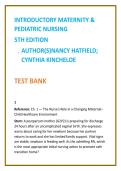
INTRODUCTORY MATERNITY &
PEDIATRIC NURSING
5TH EDITION
• AUTHOR(S)NANCY HATFIELD;
CYNTHIA KINCHELOE
TEST BANK
Ch. 1 — The Nurse’s Role in a Changing Maternal–Child
Healthcare Environment
1
Reference
Ch. 1 — The Nurse’s Role in a Changing Maternal–Child
Healthcare Environment
Stem
A 2-day postpartum client who had a vaginal birth calls the
,nurse sounding anxious and says, “My baby seems to want to
feed all the time and I’m so tired.” The mother’s vital signs by
phone report are BP 118/70, HR 88, T 98.4°F. The client is a first-
time mother who lives with her partner and expresses concern
about breastfeeding. Which nursing response best reflects
family-centered care and immediate prioritization?
A. Arrange an urgent clinic appointment for the mother and
newborn the next day to assess feeding.
B. Coach the mother through immediate calming and
positioning strategies via phone, assess feeding cues, and plan
prompt in-person lactation support.
C. Advise the mother that frequent feeding is normal and to call
back if the baby’s temperature increases.
D. Suggest the mother give formula between breastfeeding
sessions to lengthen sleep periods.
Correct answer
B
Rationales
Correct (B): Coaching immediate calming and positioning via
phone addresses the mother’s anxiety, assesses current feeding
effectiveness, and arranges prompt lactation support — aligning
with family-centered care and the RN’s role in assessment,
teaching, and coordination. It balances immediate safety
(ensuring effective feeding) with planning for follow-up support.
A: Scheduling for the next day delays immediate assessment
and support when the mother is anxious and needs immediate
,guidance; not the best immediate priority.
C: Telling the mother that frequent feeding is normal without
assessing effectiveness or maternal anxiety minimizes her
concerns and misses opportunity for timely teaching.
D: Recommending formula without assessing breastfeeding
difficulties or informing on safe supplementation undermines
breastfeeding support and is premature.
Teaching point
Address maternal anxiety, assess feeding now, and arrange
timely lactation support.
Citation
Hatfield, N., & Kincheloe, C. (2023). Introductory maternity &
pediatric nursing (5th ed.). Ch. 1.
2
Reference
Ch. 1 — The Nurse’s Role in a Changing Maternal–Child
Healthcare Environment
Stem
A 4-year-old child with mild asthma arrives for a well visit;
respiratory rate is 24/min, no retractions, and parents report 1-
week increased nighttime coughing controlled with usual
inhaler (albuterol PRN). The clinic LPN asks the RN whether the
child should receive inhaler education now. Which action by the
RN best demonstrates appropriate delegation and support?
, A. Tell the LPN to provide routine inhaler technique teaching
and document teaching.
B. Explain that inhaler skill teaching is within RN scope,
demonstrate technique, then ask LPN to reinforce and
document the reinforcement.
C. Ask the LPN to schedule a separate teaching visit with a
respiratory therapist and make no further arrangements.
D. Instruct the LPN to hand the parents a medication insert and
tell them to read it at home.
Correct answer
B
Rationales
Correct (B): The RN retains responsibility for initial teaching and
assessment of inhaler technique (a nursing judgment task).
Demonstrating the technique then delegating reinforcement to
the LPN is safe, promotes team function, and ensures
competency is verified.
A: Delegating the entire initial teaching to an LPN is
inappropriate because the initial assessment/teaching that
requires clinical judgment should be performed by the RN.
C: Referring to a respiratory therapist without immediate
patient teaching delays care and fails to use available team
members appropriately.
D: Giving only written materials without demonstration is
inadequate for assessing and teaching a young child’s inhaler
technique.
PEDIATRIC NURSING
5TH EDITION
• AUTHOR(S)NANCY HATFIELD;
CYNTHIA KINCHELOE
TEST BANK
Ch. 1 — The Nurse’s Role in a Changing Maternal–Child
Healthcare Environment
1
Reference
Ch. 1 — The Nurse’s Role in a Changing Maternal–Child
Healthcare Environment
Stem
A 2-day postpartum client who had a vaginal birth calls the
,nurse sounding anxious and says, “My baby seems to want to
feed all the time and I’m so tired.” The mother’s vital signs by
phone report are BP 118/70, HR 88, T 98.4°F. The client is a first-
time mother who lives with her partner and expresses concern
about breastfeeding. Which nursing response best reflects
family-centered care and immediate prioritization?
A. Arrange an urgent clinic appointment for the mother and
newborn the next day to assess feeding.
B. Coach the mother through immediate calming and
positioning strategies via phone, assess feeding cues, and plan
prompt in-person lactation support.
C. Advise the mother that frequent feeding is normal and to call
back if the baby’s temperature increases.
D. Suggest the mother give formula between breastfeeding
sessions to lengthen sleep periods.
Correct answer
B
Rationales
Correct (B): Coaching immediate calming and positioning via
phone addresses the mother’s anxiety, assesses current feeding
effectiveness, and arranges prompt lactation support — aligning
with family-centered care and the RN’s role in assessment,
teaching, and coordination. It balances immediate safety
(ensuring effective feeding) with planning for follow-up support.
A: Scheduling for the next day delays immediate assessment
and support when the mother is anxious and needs immediate
,guidance; not the best immediate priority.
C: Telling the mother that frequent feeding is normal without
assessing effectiveness or maternal anxiety minimizes her
concerns and misses opportunity for timely teaching.
D: Recommending formula without assessing breastfeeding
difficulties or informing on safe supplementation undermines
breastfeeding support and is premature.
Teaching point
Address maternal anxiety, assess feeding now, and arrange
timely lactation support.
Citation
Hatfield, N., & Kincheloe, C. (2023). Introductory maternity &
pediatric nursing (5th ed.). Ch. 1.
2
Reference
Ch. 1 — The Nurse’s Role in a Changing Maternal–Child
Healthcare Environment
Stem
A 4-year-old child with mild asthma arrives for a well visit;
respiratory rate is 24/min, no retractions, and parents report 1-
week increased nighttime coughing controlled with usual
inhaler (albuterol PRN). The clinic LPN asks the RN whether the
child should receive inhaler education now. Which action by the
RN best demonstrates appropriate delegation and support?
, A. Tell the LPN to provide routine inhaler technique teaching
and document teaching.
B. Explain that inhaler skill teaching is within RN scope,
demonstrate technique, then ask LPN to reinforce and
document the reinforcement.
C. Ask the LPN to schedule a separate teaching visit with a
respiratory therapist and make no further arrangements.
D. Instruct the LPN to hand the parents a medication insert and
tell them to read it at home.
Correct answer
B
Rationales
Correct (B): The RN retains responsibility for initial teaching and
assessment of inhaler technique (a nursing judgment task).
Demonstrating the technique then delegating reinforcement to
the LPN is safe, promotes team function, and ensures
competency is verified.
A: Delegating the entire initial teaching to an LPN is
inappropriate because the initial assessment/teaching that
requires clinical judgment should be performed by the RN.
C: Referring to a respiratory therapist without immediate
patient teaching delays care and fails to use available team
members appropriately.
D: Giving only written materials without demonstration is
inadequate for assessing and teaching a young child’s inhaler
technique.