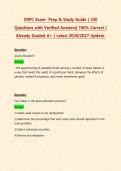
CRPC Exam- Prep & Study Guide | 330
Questions with Verified Answers| 100% Correct |
Already Graded A+ | Latest 2026/2027 Update.
Question:
Asset allocation? i,-
Answer:
- the apportioning of available funds among a number of asset classes in
i,- i,- i,- i,- i,- i,- i,- i,- i,- i,- i,- i,- i,-
a way that meets the needs of a particular client, dampens the effects of
i,- i,- i,- i,- i,- i,- i,- i,- i,- i,- i,- i,- i,- i,-
periodic market fluctuations, and meets investment goals
i,- i,- i,- i,- i,- i,-
Question:
Four steps in the asset allocation process?
i,- i,- i,- i,- i,- i,-
Answer:
1) select asset classes to be represented
i,- i,- i,- i,- i,- i,- i,-
2) determine the percentage that each asset class should represent in the
i,- i,- i,- i,- i,- i,- i,- i,- i,- i,- i,- i,-
total portfolio
i,-
3) Select individual securities
i,- i,- i,-
4) Review and rebalance
i,- i,- i,-
,Question:
Strategic Asset Allocation?
i,- i,-
Answer:
- determine asset mix that provides optimal balance of expected risk and
i,- i,- i,- i,- i,- i,- i,- i,- i,- i,- i,- i,-
ROR i,-
- asset classes selected and % weight determined
i,- i,- i,- i,- i,- i,- i,- i,-
- Used to develop long-term allocation policy
i,- i,- i,- i,- i,- i,-
- utilizes rebalancing to maintain targeted weight
i,- i,- i,- i,- i,- i,-
Question:
Tactical Asset Allocation?
i,- i,-
Answer:
- used to develop short term strategies to exploit changes in market
i,- i,- i,- i,- i,- i,- i,- i,- i,- i,- i,- i,-
conditions i,-
- ofter viewed as a contrarian strategy
i,- i,- i,- i,- i,- i,- i,-
- periodic revisions of asset mix; moving funds from over valued
i,- i,- i,- i,- i,- i,- i,- i,- i,- i,- i,-
investments to undervalued investments i,- i,- i,- i,-
- market timing strategy
i,- i,- i,-
Question:
Core-Satellite asset allocation? i,- i,-
Answer:
,70-80% invested in broad index fund or etfs
i,- i,- i,- i,- i,- i,- i,- i,-
- remaining satellite consists of actively managed MF's in niches such as
i,- i,- i,- i,- i,- i,- i,- i,- i,- i,- i,- i,-
sector funds or alt investments like hedge funds
i,- i,- i,- i,- i,- i,- i,-
Question:
Contrarian Strategy? i,-
Answer:
Question:
Dollar-Cost averaging? i,-
Answer:
- investing regular amounts at regular intervals
i,- i,- i,- i,- i,- i,-
- reduce market timing risk, improve cost per share
i,- i,- i,- i,- i,- i,- i,- i,-
Question:
Low P/E strategy?
i,- i,-
Answer:
Ratio of 1= fair value
i,- i,- i,- i,-
Ratio > 1= overvalued
i,- i,- i,- i,-
, Ratio < 1= undervalued
i,- i,- i,- i,-
** The long-term average P/E for stocks is 16
i,- i,- i,- i,- i,- i,- i,- i,-
Question:
Bond Investment strategies (2)?
i,- i,- i,-
Answer:
1) Ladder: Owning equal amounts of bonds along with maturities of equal
i,- i,- i,- i,- i,- i,- i,- i,- i,- i,- i,- i,-
intervals; ex. 50k of bonds with 10k each in 2,4,6,8,10 year maturities
i,- i,- i,- i,- i,- i,- i,- i,- i,- i,- i,- i,-
2) Barbell: Owning short-term and long-term bonds, each with a ladder;
i,- i,- i,- i,- i,- i,- i,- i,- i,- i,- i,-
ex. 100k of bonds with 10k each in 1,2,3,4,5 year maturities and in
i,- i,- i,- i,- i,- i,- i,- i,- i,- i,- i,- i,- i,-
16,17,18,19,20 year maturities i,- i,-
Question:
Systematic Risk? i,-
Answer:
P-purchasing power risk i,- i,-
R- reinvestment risk
i,- i,-
I- interest rate risk
i,- i,- i,-
M- market risk
i,- i,- i,-
E- exchange rate risk
i,- i,- i,-
Questions with Verified Answers| 100% Correct |
Already Graded A+ | Latest 2026/2027 Update.
Question:
Asset allocation? i,-
Answer:
- the apportioning of available funds among a number of asset classes in
i,- i,- i,- i,- i,- i,- i,- i,- i,- i,- i,- i,- i,-
a way that meets the needs of a particular client, dampens the effects of
i,- i,- i,- i,- i,- i,- i,- i,- i,- i,- i,- i,- i,- i,-
periodic market fluctuations, and meets investment goals
i,- i,- i,- i,- i,- i,-
Question:
Four steps in the asset allocation process?
i,- i,- i,- i,- i,- i,-
Answer:
1) select asset classes to be represented
i,- i,- i,- i,- i,- i,- i,-
2) determine the percentage that each asset class should represent in the
i,- i,- i,- i,- i,- i,- i,- i,- i,- i,- i,- i,-
total portfolio
i,-
3) Select individual securities
i,- i,- i,-
4) Review and rebalance
i,- i,- i,-
,Question:
Strategic Asset Allocation?
i,- i,-
Answer:
- determine asset mix that provides optimal balance of expected risk and
i,- i,- i,- i,- i,- i,- i,- i,- i,- i,- i,- i,-
ROR i,-
- asset classes selected and % weight determined
i,- i,- i,- i,- i,- i,- i,- i,-
- Used to develop long-term allocation policy
i,- i,- i,- i,- i,- i,-
- utilizes rebalancing to maintain targeted weight
i,- i,- i,- i,- i,- i,-
Question:
Tactical Asset Allocation?
i,- i,-
Answer:
- used to develop short term strategies to exploit changes in market
i,- i,- i,- i,- i,- i,- i,- i,- i,- i,- i,- i,-
conditions i,-
- ofter viewed as a contrarian strategy
i,- i,- i,- i,- i,- i,- i,-
- periodic revisions of asset mix; moving funds from over valued
i,- i,- i,- i,- i,- i,- i,- i,- i,- i,- i,-
investments to undervalued investments i,- i,- i,- i,-
- market timing strategy
i,- i,- i,-
Question:
Core-Satellite asset allocation? i,- i,-
Answer:
,70-80% invested in broad index fund or etfs
i,- i,- i,- i,- i,- i,- i,- i,-
- remaining satellite consists of actively managed MF's in niches such as
i,- i,- i,- i,- i,- i,- i,- i,- i,- i,- i,- i,-
sector funds or alt investments like hedge funds
i,- i,- i,- i,- i,- i,- i,-
Question:
Contrarian Strategy? i,-
Answer:
Question:
Dollar-Cost averaging? i,-
Answer:
- investing regular amounts at regular intervals
i,- i,- i,- i,- i,- i,-
- reduce market timing risk, improve cost per share
i,- i,- i,- i,- i,- i,- i,- i,-
Question:
Low P/E strategy?
i,- i,-
Answer:
Ratio of 1= fair value
i,- i,- i,- i,-
Ratio > 1= overvalued
i,- i,- i,- i,-
, Ratio < 1= undervalued
i,- i,- i,- i,-
** The long-term average P/E for stocks is 16
i,- i,- i,- i,- i,- i,- i,- i,-
Question:
Bond Investment strategies (2)?
i,- i,- i,-
Answer:
1) Ladder: Owning equal amounts of bonds along with maturities of equal
i,- i,- i,- i,- i,- i,- i,- i,- i,- i,- i,- i,-
intervals; ex. 50k of bonds with 10k each in 2,4,6,8,10 year maturities
i,- i,- i,- i,- i,- i,- i,- i,- i,- i,- i,- i,-
2) Barbell: Owning short-term and long-term bonds, each with a ladder;
i,- i,- i,- i,- i,- i,- i,- i,- i,- i,- i,-
ex. 100k of bonds with 10k each in 1,2,3,4,5 year maturities and in
i,- i,- i,- i,- i,- i,- i,- i,- i,- i,- i,- i,- i,-
16,17,18,19,20 year maturities i,- i,-
Question:
Systematic Risk? i,-
Answer:
P-purchasing power risk i,- i,-
R- reinvestment risk
i,- i,-
I- interest rate risk
i,- i,- i,-
M- market risk
i,- i,- i,-
E- exchange rate risk
i,- i,- i,-