CH 3 Practice Test JB Learning EMT-JB
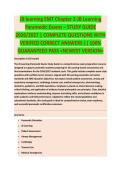
Learning Paramedic Exams – STUDY GUIDE
2026/2027 | COMPLETE QUESTIONS WITH
VERIFIED CORRECT ANSWERS || 100%
GUARANTEED PASS <NEWEST VERSION>
Description (≈150 words)
The JB Learning Paramedic Exams Study Guide is a comprehensive exam preparation resource
designed to support paramedic students preparing for JB Learning–based assessments and
final examinations for the 2026/2027 academic cycle. This guide includes complete exam-style
questions with verified correct answers, aligned with JB Learning paramedic curriculum
standards and EMS education objectives. Key topics include patient assessment, airway and
respiratory management, cardiology, trauma care, medical emergencies, pharmacology,
obstetrics, pediatrics, and EMS operations. Emphasis is placed on clinical decision-making,
critical thinking, and application of evidence-based prehospital care principles. Clear, detailed
explanations reinforce understanding, improve test-taking skills, and enhance confidence in
both academic and field performance. Updated to reflect the newest guidelines and
educational standards, this study guide is ideal for comprehensive review, exam readiness,
and successful paramedic certification outcomes.
Key Terms
• Paramedic Education
• JB Learning
• Patient Assessment
• Airway Management
• Cardiology
• Trauma Care
• Medical Emergencies
, • EMS Pharmacology
• Prehospital Care
• Obstetrics & Pediatrics
• EMS Operations
• Clinical Decision-Making
• Evidence-Based Practice
• Emergency Medical Services
• Exam Preparation
Chapter 3 Practice Test
1. Acting in such a way as to make another person fear immediate bodily harm is called:
A) libel.
B) assault.
C) battery.
D) negligence.
B
2. An EMT would _most_ likely be held liable for abandonment if he or she:
A) refused to care for a violent patient who is armed with a knife.
B) remained at the hospital for 30 minutes to give a patient report.
C) did not make provisions for continued care of an injured patient.
D) terminated care of a competent adult patient at his or her request.
C
3. As an EMT, the performance of your duties will be compared to that of:
A) another EMT.
B) the general public.
C) the medical director.
D) a paramedic supervisor.
A
4. For a do not resuscitate (DNR) order to be valid, it must:
A) be dated within the previous 24 months.
B) clearly state the patient's medical problem.
Learning Paramedic Exams – STUDY GUIDE
2026/2027 | COMPLETE QUESTIONS WITH
VERIFIED CORRECT ANSWERS || 100%
GUARANTEED PASS <NEWEST VERSION>
Description (≈150 words)
The JB Learning Paramedic Exams Study Guide is a comprehensive exam preparation resource
designed to support paramedic students preparing for JB Learning–based assessments and
final examinations for the 2026/2027 academic cycle. This guide includes complete exam-style
questions with verified correct answers, aligned with JB Learning paramedic curriculum
standards and EMS education objectives. Key topics include patient assessment, airway and
respiratory management, cardiology, trauma care, medical emergencies, pharmacology,
obstetrics, pediatrics, and EMS operations. Emphasis is placed on clinical decision-making,
critical thinking, and application of evidence-based prehospital care principles. Clear, detailed
explanations reinforce understanding, improve test-taking skills, and enhance confidence in
both academic and field performance. Updated to reflect the newest guidelines and
educational standards, this study guide is ideal for comprehensive review, exam readiness,
and successful paramedic certification outcomes.
Key Terms
• Paramedic Education
• JB Learning
• Patient Assessment
• Airway Management
• Cardiology
• Trauma Care
• Medical Emergencies
, • EMS Pharmacology
• Prehospital Care
• Obstetrics & Pediatrics
• EMS Operations
• Clinical Decision-Making
• Evidence-Based Practice
• Emergency Medical Services
• Exam Preparation
Chapter 3 Practice Test
1. Acting in such a way as to make another person fear immediate bodily harm is called:
A) libel.
B) assault.
C) battery.
D) negligence.
B
2. An EMT would _most_ likely be held liable for abandonment if he or she:
A) refused to care for a violent patient who is armed with a knife.
B) remained at the hospital for 30 minutes to give a patient report.
C) did not make provisions for continued care of an injured patient.
D) terminated care of a competent adult patient at his or her request.
C
3. As an EMT, the performance of your duties will be compared to that of:
A) another EMT.
B) the general public.
C) the medical director.
D) a paramedic supervisor.
A
4. For a do not resuscitate (DNR) order to be valid, it must:
A) be dated within the previous 24 months.
B) clearly state the patient's medical problem.