Edrftgyihu jiuh
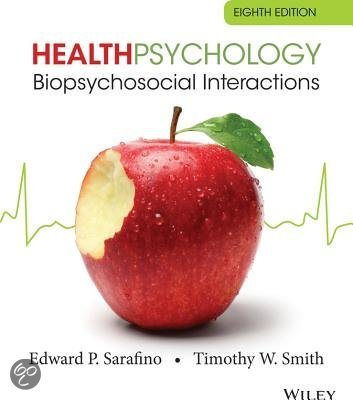
Health Psychology
Biopsychosocial Interactions
ST
8th Edition
UV
TEST BANK
IA
_A
Edward P. Sarafino
Timothy W. Smith
PP
────────────────────────────────────────────────────
Comprehensive Test Bank for Instructors
RO
and Students
© Edward P. Sarafino & Timothy W. Smith. All rights
reserved. Reproduction or distribution without
VE
permission is prohibited.
D?
||| ||| || ||| || | || ||| | || ||| |
9781118425206
© Medgeek
, Edrftgyihu
Test Bankjiuh
— Health Psychology: Biopsychosocial Interactions, 8th Edition
— Sarafino and Smith
Description
This test bank corresponds to the 8th edition of Health Psychology:
Biopsychosocial Interactions by Edward P. Sarafino and Timothy W. Smith. It
ST
follows the official textbook structure and supports assessment of
biopsychosocial models of health, stress and coping, health behaviors, pain
management, chronic illness, and future directions in health psychology.
UV
Table of Contents
Chapter 1: An Overview of Psychology and Health
Chapter 2: The Body’s Physical Systems
Chapter 3: Stress: Its Meaning, Impact, and Sources
Chapter 4: Stress, Biopsychosocial Factors, and Illness
IA
Chapter 5: Coping With and Reducing Stress
Chapter 6: Health-Related Behavior and Health Promotion
Chapter 7: Substance Use and Abuse
Chapter 8: Nutrition, Weight Control and Diet, Exercise, and Safety
_A
Chapter 9: Using Health Services
Chapter 10: In the Hospital: The Setting, Procedures, and Effects on Patients
Chapter 11: The Nature and Symptoms of Pain
Chapter 12: Managing and Controlling Clinical Pain
PP
Chapter 13: Serious and Disabling Chronic Illnesses: Causes, Management,
and Coping
Chapter 14: Heart Disease, Stroke, Cancer, and AIDS: Causes, Management,
and Coping
RO
Chapter 15: What’s Ahead for Health Psychology?
VE
D?
© Medgeek
, Chapter 1
TEST QUESTIONS
True or False
F 1. Advances in medical treatment were responsible for a sharp decrease
(4) in infectious diseases at the turn of the 20th century.
T 2. Today, accidental injury is the leading cause of death in children and
ST
(5) adolescents in the United States.
F 3. During the Middle Ages, the influence of the Church resulted in many
(6) major advancements in medical knowledge.
UV
F 4. “Risk factors” are those biological or behavioral characteristics that are
(9) known to cause a disease.
T 5. In the past, practitioners of psychosomatic medicine generally used a
(10) psychoanalytic model to explain a physical symptom.
IA
T 6. One of the goals of health psychology is to have an effect on public
(11) policy.
_A
T 7. The biopsychosocial model of health and illness is actually an extension
(13) of the biomedical model.
T 8. The "systems" approach assumes simple systems are embedded
(15) within complex systems.
PP
F 9. Although sociocultural research has found differences in health beliefs
(20) across cultures, disease patterns themselves do not differ.
F 10. Quasi-experimental designs allow us to make causal conclusions from
RO
(25) existing groups.
VE
D?
1
, Matching
Match one of the following with descriptions given in questions one to five.
a. Hippocrates
b. Plato
c. Galen
d. St. Thomas Aquinas
e. Descartes
c 1. From his work, which included dissection, this second century
ST
(6) physician felt that pathologies could be localized in parts of the body.
d 2. An Italian philosopher, he saw the mind and body as an interrelated unit.
(6)
UV
b 3. He was among the Greek philosophers to propose that the mind and body
(5) are separate entities.
a 4. Called "the father of medicine," his humoral theory for the origin of
(5) disease was influential for centuries.
IA
e 5. He described in mechanical terms the functioning of the body's actions
(6) and sensations such as pain.
_A
Match the following with descriptions given in questions 6 through 10
a. epidemiology
b. public health
c. medical sociology
d. medical anthropology
PP
e. health psychology
e 6. Provides direct service to patients in the management of their illnesses
(12) or engages in research and teaching.
RO
a 7. Concerned with the incidence and prevalence of illnesses.
(17)
b 8. Organizes health education or provides community health services.
(18)
VE
c 9. May conduct studies of health care services and how they are organized.
(18)
d 10. May conduct studies on the medical practices in different cultures.
(18)
D?
2
Health Psychology
Biopsychosocial Interactions
ST
8th Edition
UV
TEST BANK
IA
_A
Edward P. Sarafino
Timothy W. Smith
PP
────────────────────────────────────────────────────
Comprehensive Test Bank for Instructors
RO
and Students
© Edward P. Sarafino & Timothy W. Smith. All rights
reserved. Reproduction or distribution without
VE
permission is prohibited.
D?
||| ||| || ||| || | || ||| | || ||| |
9781118425206
© Medgeek
, Edrftgyihu
Test Bankjiuh
— Health Psychology: Biopsychosocial Interactions, 8th Edition
— Sarafino and Smith
Description
This test bank corresponds to the 8th edition of Health Psychology:
Biopsychosocial Interactions by Edward P. Sarafino and Timothy W. Smith. It
ST
follows the official textbook structure and supports assessment of
biopsychosocial models of health, stress and coping, health behaviors, pain
management, chronic illness, and future directions in health psychology.
UV
Table of Contents
Chapter 1: An Overview of Psychology and Health
Chapter 2: The Body’s Physical Systems
Chapter 3: Stress: Its Meaning, Impact, and Sources
Chapter 4: Stress, Biopsychosocial Factors, and Illness
IA
Chapter 5: Coping With and Reducing Stress
Chapter 6: Health-Related Behavior and Health Promotion
Chapter 7: Substance Use and Abuse
Chapter 8: Nutrition, Weight Control and Diet, Exercise, and Safety
_A
Chapter 9: Using Health Services
Chapter 10: In the Hospital: The Setting, Procedures, and Effects on Patients
Chapter 11: The Nature and Symptoms of Pain
Chapter 12: Managing and Controlling Clinical Pain
PP
Chapter 13: Serious and Disabling Chronic Illnesses: Causes, Management,
and Coping
Chapter 14: Heart Disease, Stroke, Cancer, and AIDS: Causes, Management,
and Coping
RO
Chapter 15: What’s Ahead for Health Psychology?
VE
D?
© Medgeek
, Chapter 1
TEST QUESTIONS
True or False
F 1. Advances in medical treatment were responsible for a sharp decrease
(4) in infectious diseases at the turn of the 20th century.
T 2. Today, accidental injury is the leading cause of death in children and
ST
(5) adolescents in the United States.
F 3. During the Middle Ages, the influence of the Church resulted in many
(6) major advancements in medical knowledge.
UV
F 4. “Risk factors” are those biological or behavioral characteristics that are
(9) known to cause a disease.
T 5. In the past, practitioners of psychosomatic medicine generally used a
(10) psychoanalytic model to explain a physical symptom.
IA
T 6. One of the goals of health psychology is to have an effect on public
(11) policy.
_A
T 7. The biopsychosocial model of health and illness is actually an extension
(13) of the biomedical model.
T 8. The "systems" approach assumes simple systems are embedded
(15) within complex systems.
PP
F 9. Although sociocultural research has found differences in health beliefs
(20) across cultures, disease patterns themselves do not differ.
F 10. Quasi-experimental designs allow us to make causal conclusions from
RO
(25) existing groups.
VE
D?
1
, Matching
Match one of the following with descriptions given in questions one to five.
a. Hippocrates
b. Plato
c. Galen
d. St. Thomas Aquinas
e. Descartes
c 1. From his work, which included dissection, this second century
ST
(6) physician felt that pathologies could be localized in parts of the body.
d 2. An Italian philosopher, he saw the mind and body as an interrelated unit.
(6)
UV
b 3. He was among the Greek philosophers to propose that the mind and body
(5) are separate entities.
a 4. Called "the father of medicine," his humoral theory for the origin of
(5) disease was influential for centuries.
IA
e 5. He described in mechanical terms the functioning of the body's actions
(6) and sensations such as pain.
_A
Match the following with descriptions given in questions 6 through 10
a. epidemiology
b. public health
c. medical sociology
d. medical anthropology
PP
e. health psychology
e 6. Provides direct service to patients in the management of their illnesses
(12) or engages in research and teaching.
RO
a 7. Concerned with the incidence and prevalence of illnesses.
(17)
b 8. Organizes health education or provides community health services.
(18)
VE
c 9. May conduct studies of health care services and how they are organized.
(18)
d 10. May conduct studies on the medical practices in different cultures.
(18)
D?
2